I never thought my own son would break my heart on a Tuesday morning, but there it was, glowing on my phone screen like a tiny bomb.
“Don’t wait for us at Christmas. We’re going to Carol’s parents. They matter more than you do.”
Before that message, my life was ordinary, predictable. I was sixty-eight years old, living alone in the house my late husband, Robert, and I had bought forty years ago. Robert had been gone for three years, but I’d built a routine. Morning coffee on the porch, volunteering at the library on Tuesdays and Thursdays, Sunday dinners I’d cook for Brad, my only son, and his wife, Carol, whenever they had time, which lately wasn’t often.
I’d noticed the changes slowly. Brad used to call every few days. Then it became once a week, then every two weeks. When he did call, Carol was always there in the background, and the conversations felt stiff, rehearsed. “Mom, we can’t make it Sunday” became his favorite phrase.
Still, I told myself it was normal. He was thirty-four, building his career in real estate. Carol worked in marketing. They were busy. But then came the requests.
“Mom, could you help us with the down payment for the new car? Just $15,000. We’ll pay you back.” I said yes. Robert’s life insurance and our savings meant I could afford it.
“Mom, Carol’s student loans are killing us. Could you help? Maybe $20,000.” Again, I said yes. What else was the money for if not to help my child?
“Mom, we’re renovating the kitchen. The contractor needs $30,000 upfront.” That time I hesitated. $55,000 in six months seemed like a lot, but Brad’s voice had been so strained. “We wouldn’t ask if we weren’t desperate. Mom, please.” So I transferred the money.
After that, the calls stopped almost entirely. When I finally reached out, Carol answered Brad’s phone. “He’s busy, Margaret. He’ll call you back.” He never did.
Then came Thanksgiving. “We can’t make it, Mom. Carol’s parents are hosting.” They never showed up, never called. When I texted Brad, he responded two days later with a thumbs-up emoji. A thumbs up to his mother. I spent Thanksgiving alone, reheating a store-bought turkey breast.
I told myself Christmas would be different. Christmas was always our special time. When Brad was little, we’d stay up until midnight decorating the tree together. I spent weeks preparing. I bought presents, made his favorite snickerdoodles with extra cinnamon. I texted twice to confirm. “Yeah, Mom. We’ll be there.”
Then Tuesday morning, the message arrived. They matter more than you do. Not we’d rather spend it with them. A direct declaration. You don’t matter.
I sat at my kitchen table, my coffee growing cold. For twenty minutes I stared at my phone, fingers hovering over the keyboard. I wanted to call him, demand an explanation, ask what I’d done wrong. But something stopped me. A memory of Robert near the end, when the cancer had made him brutally honest. “Maggie,” he’d said, “people show you who they are. Believe them the first time.” Brad had just shown me exactly who he was.
I didn’t cry. I didn’t call. Instead, I opened my laptop, logged into my bank account, and looked at the accounts I’d opened for Brad over the years: the savings account I’d deposited into since he was born, the investment account Robert and I had set up, the money market account. My fingers were steady. I closed every single one.
$347,000. That was how much I’d saved for Brad over thirty-four years. Robert and I had started the first account the day he was born, $100 a month, no exceptions. With three clicks, I’d transferred every penny into a new account, one with only my name on it.
The joint account we’d opened two years ago, the one Brad had convinced me we needed for emergencies, showed a balance of $83,000. He had full access. I removed his name and transferred that money too. $430,000. Now completely out of his reach.
My heart was pounding. What had I just done?
I opened a spreadsheet and started documenting everything. $15,000 for the car, never mentioned again. $20,000 for student loans. $30,000 for a kitchen I’d never been invited to see. $10,000 last April for taxes. $12,000 in June for medical bills. $87,000 in eighteen months. None of it repaid. None of it even acknowledged.
I felt sick. Not because of the money, but because of what it meant. My son had been using me systematically. I remembered Carol’s face at Brad’s wedding five years ago, charming, calling me Mom. But there had been a moment when I’d overheard her talking to her sister. “Brad’s loaded, you know. His mom’s sitting on Robert’s whole estate.” At the time, I’d brushed it off. Now the memory felt darker.
The hurt hit me then, sharp and sudden. This was my son, the baby I’d held through countless sleepless nights, the man who’d just told me I didn’t matter. Tears came finally, hot and angry. I cried for the son I’d lost, if he’d ever really been the person I thought he was.
When the tears stopped, I felt different. Clearer. I wasn’t going to be the pathetic mother who kept giving while her child took. I returned to my computer. I needed a lawyer, someone who specialized in family law and estate planning, and documentation: every text, every email, every bank statement. By midnight I had everything organized in a folder.
My phone buzzed. A text from Brad. “See you soon.” He didn’t know yet. Didn’t know I’d closed the accounts. He thought everything was still the same. I smiled. Just a little. Let him come. I’d be ready.
Wednesday morning, I sat in the office of Patricia Thornton, attorney at law. Everything about it said competence. I walked her through the timeline: the money, the growing distance, the cruel message, the accounts I’d closed.
“You did the right thing closing those accounts,” she said, “but we need to move quickly. If your son has been accessing joint accounts, he may try to empty others. Any credit card where he’s an authorized user? Do you have life insurance? Is he listed as a beneficiary?”
“Yes. He’s the sole beneficiary.”
For the next hour, we went through everything. Her expression grew darker with each page. “Mrs. Harrison, this is financial exploitation. He and his wife have been systematically extracting your assets.”
“Can I get the money back?”
“Unlikely. You’d have to prove it was a loan, not a gift. But we can prevent future losses.” She counted three steps on her fingers. “First, change your will. Remove Brad as executor and beneficiary. Second, revoke all powers of attorney. Third, document everything from this point forward.”
“He’s still my son,” I said.
“This isn’t about punishment. It’s about protection. You have the right to keep what’s yours.” Then she looked at me seriously. “He texted last night, you said. ‘See you soon.’ When he realizes the accounts are closed, he’ll come. Don’t let him into your house if you don’t feel safe. Don’t meet with him alone.”
I pulled into my driveway at noon. A familiar car was parked on the street. Brad’s BMW. He was here already. He knew. I texted Helen next door. “Brad is here. If you hear shouting, please come over.” She responded immediately. “I’m watching. Say the word.”
Brad turned at the sound of my door. His face was flushed, his jaw tight. “Mom,” he said, but it wasn’t a greeting. It was an accusation. He blocked my path. “What the hell did you do?”
“I don’t know what you mean.”
“The accounts, Mom. The college fund, the investment account, the savings account. They’re all gone.”
“They’re not gone. I moved them.”
“You moved $300,000 without telling me!”
“I didn’t need to tell you. It’s my money.”
“It’s my money! You saved it for me.”
“It was for your future,” I said. “But your future doesn’t include treating me like I don’t matter.”
For a second I saw something flicker in his eyes. Guilt. But then Carol’s voice cut through the air. “Brad, did you ask her yet?” She walked up the driveway like she owned it. “Margaret, we need to talk.”
“There’s nothing to talk about.”
Carol stepped closer, blocking me. “You just stole $300,000 from your son.”
“I didn’t steal anything. That money was always mine.”
“You promised it to him. His college fund, his inheritance. You can’t just take it back.”
“I can, and I did.”
Brad grabbed my arm, firmly enough that I stopped moving. “Mom, what’s going on with you? This isn’t like you.”
“Let go of me.” Something in my voice made him release me. “You want an explanation? I’m tired of being used. $87,000 in eighteen months. Car, student loans, kitchen renovation, taxes, medical bills. How much of that have you paid back?”
They were quiet.
“And then you send me a message saying Carol’s parents matter more than I do on Christmas. So yes, I moved my money where only I can access it, because apparently I can’t trust my own son.”
“Mom, that message was harsh. I apologize, but closing the accounts is extreme. Let’s go inside and talk like adults.”
“You’re not coming into my house. Not today.”
Carol’s eyes narrowed. “You’re being ridiculous, Margaret. We’re family.”
“Family doesn’t treat each other the way you’ve treated me.”
“Oh, please,” Carol snapped. “You’ve been playing the victim for months. Do you know how exhausting it is?”
“Get off my property. Both of you.”
“Fine,” Carol grabbed Brad’s arm. “But you’ll regret this, Margaret. That money should be Brad’s. We need it.”
“Why?” I asked. “Why do you need it so desperately? What debts are you really in? Because this isn’t about student loans, is it? What did you do with all that money?”
Carol’s face went pale. Brad looked away. And suddenly I knew there was something bigger here.
“Get out,” I said quietly. “And don’t come back until you’re ready to tell me the truth.”
I watched them drive away. Only then did my legs start to shake. I stumbled inside and locked the door, then slid down to the floor and let out a breath I didn’t know I’d been holding. I’d seen the real panic in Carol’s eyes. What had they gotten themselves into? And what would they do next?
Thursday I signed the new will, leaving everything to a mix of charities and my late husband’s sister, Aunt Jean. Brad was mentioned only to explicitly exclude him. “This takes effect immediately,” Patricia said.
Sunday morning, my phone rang. Unknown number. “Mrs. Harrison, this is Detective Morris from the County Sheriff’s Office. I’m calling about a fraud investigation involving your son, Bradley Harrison.”
Twenty minutes later, Detective Morris sat in my living room, a man in his forties with tired eyes. “Mrs. Harrison, are you aware that your son filed for bankruptcy seven months ago? He and his wife listed debts totaling just over $600,000. The court appointed a trustee to review their assets.”
$600,000. The number echoed in my head.
“During the review, the trustee found irregularities. Large cash deposits that weren’t declared.” He pulled out a folder. Inside were Brad’s bank statements, highlighted in yellow, the deposits from me. $15,000. $20,000. $30,000. “He didn’t report any of this to the court. That’s bankruptcy fraud. A federal crime.”
I felt nauseous. “I didn’t know. I swear.”
“I believe you. That’s why I’m here. We need documentation of every transfer you made, and we need to know if he made false claims about why he needed the money.”
I thought of the student loans that probably didn’t exist, the medical bills never shown to me. “He lied. About everything.”
“Did you recently close several accounts your son had access to?”
“Yes.”
“That probably saved you from losing a lot more. The trustee would have seized any joint assets. Your son may have been planning to drain those accounts before they were discovered.” He stood to leave, then paused. “Mrs. Harrison, you did nothing wrong here. Parents want to help their children. Your son exploited that. This is on him, not you.”
Monday afternoon, the doorbell rang. Through the peephole I saw Carol alone, holding a small wrapped gift. I didn’t open the door. “Margaret, I know you’re in there. I brought you a peace offering, your favorite chocolates. Brad has been miserable all weekend. Don’t let one bad text message ruin everything. Family forgives.” The manipulation was so obvious now. I said nothing. After five minutes, the sweetness drained from her face. She set the gift down roughly and left. The chocolates were cheap grocery-store brand, not the expensive ones she claimed were my favorite. She hadn’t even tried.
At lunch with my library friends Helen, Susan, and Dorothy, I told them enough: the money, the cruel message, the confrontation. Susan’s eyes were hard with recognition. “My daughter tried something similar five years ago. I cut her off completely. Best decision I ever made. She came back and apologized eventually. But she had to hit bottom first.”
“What if Brad doesn’t come back?” I whispered.
Helen’s voice was gentle. “Then he doesn’t. Margaret, you can’t set yourself on fire to keep someone else warm. Not even your child.” Something in me broke open, and I started crying right there in the restaurant. My friends surrounded me. They didn’t judge.
Wednesday evening, a week before Christmas, they came back together. I was decorating my small tree when the doorbell rang. I opened the door but stood in the doorway, blocking entry.
“Mom, please, just hear us out,” Brad said. “Five minutes.”
“You have five minutes out here.”
Carol delivered a rehearsed speech. “We came to apologize. The text message was cruel. We see that now. We want to start over. We’ll come for Christmas. We’ll spend the whole day with you.”
“In exchange for what?”
“What?”
“This doesn’t sound like an apology. It sounds like a negotiation. You realize the accounts are closed and you need them reopened.”
“That’s not—” Carol started.
“I spoke to Detective Morris.”
The effect was immediate. Brad went pale. “You talked to the police.”
“They contacted me about your bankruptcy fraud investigation. About the $600,000 in debt you never mentioned. About how you’ve been lying to the court.”
“We were desperate,” Carol’s voice cracked, the calm facade shattering. “The creditors calling every day. We were drowning, Margaret.”
“So you lied to me.”
“We did what we had to do.”
I looked at my son. “Brad, look at me. Did you ever love me? Or was I just a bank account?”
There were tears in his eyes. “I was ashamed. I didn’t want you to know how badly I’d screwed up. So I took your money and told myself it was temporary. I’m so sorry, Mom.”
For a moment I almost believed him. Then Carol spoke. “This is all very touching, but if you testify against Brad, he could go to federal prison. Is that what you want? To destroy your own son’s life?”
The manipulation was so naked. “I didn’t destroy anything. Brad did, by lying, by committing fraud. Now he has to face the consequences.”
Carol stepped forward, her face twisted. “You selfish— You’re sitting on Robert’s whole fortune while we’re losing everything!”
“Both of you. Now. If you’re not gone in ten seconds, I’m calling the police.”
Brad grabbed Carol’s arm. “Let’s go.” They left, Carol still arguing as they got into the car. I locked the door and checked every window, my heart pounding. They’d shown their true faces. I called Detective Morris and left a voicemail. Then I called Patricia.
“They came to your house? Margaret, I want you to file for a restraining order tomorrow. They threatened you. They’re under federal investigation. They’re desperate and angry. This is when people become dangerous.”
The restraining order hearing was scheduled for the Monday before Christmas. I sat in the courtroom with Patricia beside me as Brad and Carol entered with a sharp-looking attorney who tried to negotiate a delay. The judge, a gray-haired woman named Rodriguez, was having none of it. “We’re proceeding.”
Patricia walked the judge through everything: the documented transfers, the closed accounts, the cruel text, the threatening visits. “Mrs. Harrison has also been contacted by federal authorities investigating bankruptcy fraud allegations against her son.”
Brad’s attorney stood. “Your Honor, this is a family disagreement blown out of proportion. He loves his mother. He simply wants to reconcile.”
“Is that so?” Judge Rodriguez looked at Brad. “Mr. Harrison, did you send your mother a text saying, and I quote, ‘They matter more than you do’?”
“I was upset. I didn’t mean—”
“Did you accept approximately $87,000 from your mother over eighteen months? Did you repay any of it?” Silence. “Did you file for bankruptcy seven months ago? Did you report the money you received from your mother to the court?”
“No, but I didn’t think I had to. It was a gift, not a loan.”
“A gift you now claim to have a right to. A gift you confronted your mother about when she closed her own accounts.”
Carol leaned forward. “Your Honor, may I speak? Margaret is being vindictive. She’s upset that we chose to spend Christmas with my family. This whole thing is revenge.”
“Mrs. Harrison,” the judge interrupted, “did you visit your mother-in-law’s home last Wednesday and call her selfish?”
Carol’s face went white. “That was taken out of context.”
“Did you or did you not use those words?”
“Yes.”
The judge looked at me. “Mrs. Harrison, would you like to add anything?”
I stood, my voice steady. “I loved my son. I gave him everything. I never asked for anything in return except respect and honesty. He couldn’t give me even that. He lied. He manipulated. And when I finally protected myself, he and his wife came to my home twice to threaten and intimidate me. I don’t want to punish him. I want to be safe.”
The judge reviewed her notes. “Based on the evidence and testimony, I’m granting the restraining order. Mr. and Mrs. Harrison are prohibited from contacting Margaret Harrison for one year. They must stay at least 500 feet away from her home, workplace, and vehicle.” The gavel came down.
Brad’s head dropped into his hands. I stood and walked out, Patricia beside me. “You did beautifully in there.”
“I just told the truth.”
“The truth is powerful, especially against lies.”
Outside, the winter air was cold and clean. Christmas decorations hung from every lamppost, reminders of the holiday I’d be spending alone. But I wasn’t sad. I was free. My phone buzzed. Helen. “How did it go?” I smiled and texted back. “I won.”
Three weeks later, on a cold January morning, the news wasn’t about protection. It was about justice. “The federal prosecutor has formally charged Brad with bankruptcy fraud,” Patricia said. “Three counts. Up to five years in prison.”
“What about Carol?”
“She’s named as a co-conspirator, but she’s cooperating with prosecutors in exchange for immunity. She’s testifying against Brad.” Of course she was. “The bankruptcy trustee has seized their house. They’re being evicted next month. They have nothing, Margaret.”
I should have felt something. But I felt only a cold, clear certainty. This was justice. “Brad tried to contact you last week, four times through intermediaries, asking if you’d help with his legal fees.”
“What did you tell them?”
“That you have a restraining order, and any further contact would be reported to the police.”
February brought more news. Carol had filed for divorce, moved back in with her parents, and given an interview to a local news website about escaping a toxic marriage, portraying herself as another victim. Brad was living in a cheap apartment, working two jobs to pay for a public defender.
In March, I ran into Carol’s mother, Linda, at the grocery store. “He’s your son, Margaret. How can you stand by and watch him lose everything?”
“He took everything from me first. My money, my trust, my dignity. He made his choices.”
“You’re heartless.”
“No,” I said quietly. “I’m finally putting myself first.” I walked away.
Brad’s trial lasted three days in April. I didn’t attend, but Patricia gave me daily updates. The evidence was overwhelming: bank records, emails where Brad discussed hiding assets, the trustee’s testimony. Even Carol testified, describing conversations where Brad had explicitly talked about using his mother’s money without reporting it. The jury deliberated four hours. Guilty on all counts. Three years in federal prison, eligible for parole in eighteen months with restitution. Restitution he didn’t have.
“How do you feel?” Patricia asked.
“Like it’s over. Finally over.”
In May, a letter came from Brad, forwarded through Patricia. Seven pages, handwritten. He apologized. He detailed the gambling addiction that had started small and spiraled out of control, the debts, the panic, the way Carol had pushed him to ask me for more. He blamed himself, Carol, his addiction. At the end, he asked for forgiveness. Not money. Just forgiveness. I read it three times, then put it in a drawer and didn’t respond. Maybe someday I would forgive him. But not today. Today I was healing.
Summer came with golden warmth. My life had changed in ways I hadn’t expected. Helen introduced me to her book club, a group of smart, funny, irreverent women. Susan convinced me to volunteer at the local women’s shelter, teaching financial literacy classes, helping others recognize financial abuse. Dorothy and I started watercolor classes on Saturday mornings. In June I took a trip to Maine I’d been putting off for years, five days in a coastal cottage, and loved every minute alone. I started dating again, nothing serious, coffee with a retired teacher named Frank who never asked about my son. It was nice to feel wanted for myself, not my money.
I heard about Brad through the grapevine. He’d been transferred to a minimum-security facility, working in the prison library. Carol had moved to Arizona, posting photos of resort pools, though Helen’s hairdresser’s sister worked at that resort and said Carol was actually a cocktail waitress barely scraping by. When Linda ran into Helen, she said, “Carol won’t speak to us anymore. After she testified against Brad, she cut us all off.”
In August, another letter from Brad, shorter. “Mom, I don’t expect you to respond. I’ve been sober for six months. I’m attending GA meetings. I understand now what I did to you. You deserved better. I hope you’re happy.” I folded it and put it with the first one, unacknowledged.
September brought my sixty-ninth birthday. Helen threw me a surprise party, my book club and neighbors, cake and champagne. They gave me silly gifts, a T-shirt that said “Nevertheless, she persisted,” a mug reading WORLD’S OKAYEST PAINTER. I laughed until I cried. That night, alone on my porch with wine, I thought about the past year. I’d lost my son, yes, but I’d gained myself back. I’d learned that love shouldn’t cost everything. That boundaries weren’t selfish. That family wasn’t always blood. Sometimes family was Helen showing up with soup, Susan texting me funny memes, Dorothy making me laugh in art class.
In October, Carol was arrested in Arizona for writing bad checks, multiple counts, from closed accounts. Her expensive lawyer wasn’t returning her calls. History repeating itself. I felt nothing.
In November, Brad’s parole officer called. Brad would be released in December, two months early for good behavior. He was moving to Ohio to live with his father’s brother in Cleveland. The letter came a week later, just facts and a promise to stay far away. “I won’t bother you anymore, Mom. I’m sorry for everything. Please be happy.” I read it once and put it with the others, then closed the drawer and went to meet Helen for lunch.
So here I am, nearly seventy years old, living proof that it’s never too late to stand up for yourself. I learned that love without respect is manipulation. That family doesn’t give you the right to take advantage. That sometimes the bravest thing you can do is say no to the people you love most. My son made his choices. I made mine. I don’t regret protecting myself. My life was full. My heart was healing. And I was finally happy.
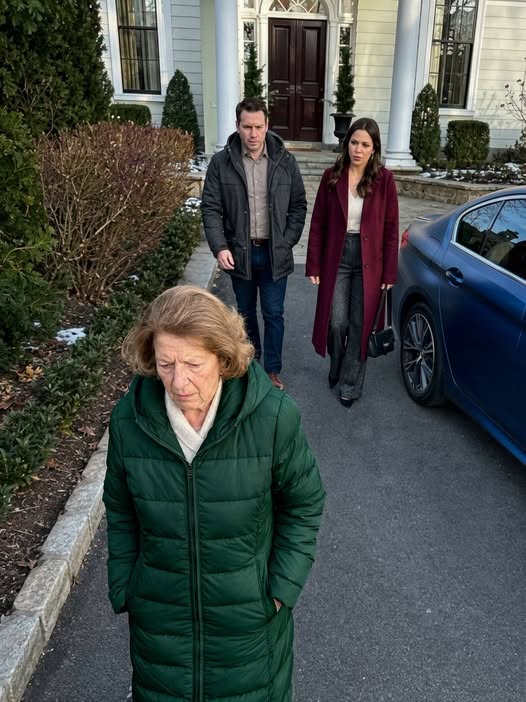
The Awakening in the Snow
The winter after the court proceedings settled in like a thick blanket of frost over my small suburb. For months, the silence of my home had been a refuge, but as the first anniversary of Brad’s sentencing approached, the quiet began to turn heavy.
One snowy Tuesday in early December, I decided to tackle the attic—a task I had avoided since my husband, Arthur, passed away six years ago. Up there, beneath exposed rafters and smelling of old pine and dust, sat boxes of Brad’s childhood.
I opened a cardboard crate labelled “Brad – Elementary.” Inside were finger paintings, report cards praising his bright smile, and a ceramic mug shaped like a lopsided frog he’d made for me in the third grade. On it, in crooked white paint, was written: “To Mom, the best person in the world.”
I sat on a wooden chest in the cold attic, holding that ugly little mug, and finally allowed myself to weep. Not the quiet, controlled tears I’d shed in Patricia’s office or the courtroom, but deep, wracking sobs for the boy he used to be before greed, addictions, and toxic relationships hollowed him out.
Later that week, Frank came over with a thermos of hot cider. We sat by the fire, watching the snow fall outside the living room window.
“You’re quiet today, Margaret,” Frank said gently, setting his cup down.
“I spent the morning looking at old photo albums,” I admitted, staring into the flames. “It’s hard reconciling the child who cried when he stepped on an ant with the man who looked me in the eye and told me his new life mattered more than mine.”
Frank reached across the space between our chairs and took my hand. His grip was warm and steady. “Parenting is a gamble, Margaret. You sow the seeds, you nourish the soil, but you can’t control which way the branch bends once the wind hits it.”
“Did I spoil him?” I asked, a question that had haunted my sleepless nights. “Did Arthur and I give him too much?”
“Giving love and support isn’t a flaw,” Frank replied softly. “What happened to Brad was a sequence of his own choices. You gave him a foundation; he chose to tear it down.”
That evening, after Frank left, I made a decision. I took the seven-page letter Brad had written from prison out of the nightstand drawer. I didn’t burn it, nor did I write back. Instead, I wrote a entry in my journal: I cannot rewrite your past, Brad. But I refuse to let it consume my present.
Shadows of the Past
By early spring, life had established a comfortable rhythm. My financial literacy class at the women’s shelter had expanded to a twice-weekly seminar. Seeing young women—some barely out of their teens, others in their fifties—regain their independence after financial abuse gave my days a profound sense of purpose.
However, tranquility in a small town is fragile.
In late April, while leaving the community center after art class with Dorothy, a battered blue sedan pulled into the parking lot. The driver’s side door creaked open, and a woman stepped out. It took me several seconds to recognize her.
It was Carol.
She looked entirely different from the manicured, sharp-tongued woman who had sat across from me in court. Her hair was dark now, cut short, and she wore a faded canvas jacket. She looked exhausted, lines of stress etched deep around her eyes and mouth.
“Margaret,” she called out, her voice trembling slightly.
Dorothy immediately stepped in front of me, her painting easel held like a shield. “You stay right there. There’s a restraining order—”
“The restraining order was for Brad and me together, and it expired two months ago,” Carol said quickly, holding up two hands in surrender. “I’m not here to hurt anyone. I just… I needed to talk to you, Margaret. Please.”
I touched Dorothy’s shoulder. “Give us a moment, Dorothy. Stand by the main doors, please.”
Once Dorothy moved a short distance away, I turned to Carol, keeping my posture rigid. “You have five minutes, Carol. Say what you came to say.”
Carol swallowed hard, wrapping her arms around herself against the spring breeze. “I came back to settle some things with my parents before I leave the state for good. But I couldn’t leave without saying… I’m sorry.”
I scoffed softly, unable to hide the bitterness. “You testified against Brad to save your own skin, Carol. You blamed him for everything, then you went to Arizona and got arrested for writing bad checks. Don’t come here playing the penitent daughter-in-law.”
“I know how it looks,” Carol whispered, tears welling in her eyes. “And I’m not asking for your money or your forgiveness. I was toxic, Margaret. Brad and I… we fed the worst parts of each other. When the money ran out, the lies were all we had left. I thought if I blamed him, I could start over. But you can’t run away from who you are.”
She pulled an envelope from her pocket and held it out. “This is a money order for twelve hundred dollars. It’s every cent I’ve saved working night shifts at a diner in Phoenix. It’s not even a fraction of what Brad took, but… it’s a start.”
I looked at the envelope, then up at her face. The arrogance that had once defined her was completely gone, replaced by a hollow exhaustion.
“Keep your money, Carol,” I said quietly. “Give it to the court for your restitution fees. I don’t want your money. I wanted integrity, and it came too late.”
“Margaret, please—”
“I hope you get the help you need, Carol. Truly,” I said, my voice calm and devoid of anger. “But our lives crossed paths for the last time today.”
Without waiting for a response, I turned and walked toward the building where Dorothy was waiting. I didn’t look back.
Echoes Across the Distance
Summer brought warm breezes and green hills. In July, I received a thick manila envelope in the mail from Cleveland, Ohio. The return address read Estate of Arthur Harrison Sr.—my late husband’s brother, Uncle Thomas.
Inside was a formal letter from a law firm, alongside a handwritten note from Brad’s uncle.
Dear Margaret, Thomas had written. Brad has been living with us for six months now. He works thirty-five hours a week at a local hardware store and attends his recovery meetings religiously. He hasn’t asked for a dime. When his grandfather’s trust paid out its final distribution to the family last month, Brad received his small share—$14,000. He requested that the entire sum be transferred directly to your bank account via the estate executor. He knows it doesn’t clear his debt, but he insisted.
Below the note was an official cashier’s check made out to Margaret Harrison for $14,000.
I held the check in my hands for a long time.
In the past, any gesture from Brad had felt like a hook with bait attached—a calculation designed to pull me back into his chaos. But this was different. There was no accompanying letter asking for a reply, no phone call, no emotional appeal. Just a quiet transfer of funds.
I called Patricia that afternoon.
“Is there any legal reason I shouldn’t accept this?” I asked her over the phone.
“None at all, Margaret,” Patricia replied. “It’s legitimate restitution. He gave up his legal right to those funds voluntarily. If he’s making amends, letting him pay you back is actually part of his recovery process.”
That evening, I sat down at my desk with my bank book. The $87,000 Brad had stolen over eighteen months had crippled my retirement savings at the time, forcing me to budget stringently. The $14,000 didn’t make me whole financially, but symbolically, it felt like a heavy stone lifted off my shoulders.
Instead of putting the money back into my personal savings, I transferred the full amount to the local women’s shelter to establish a permanent scholarship fund for women escaping financial control. I named it the New Beginnings Foundation.
When Helen came over for dinner that weekend, I showed her the receipt from the shelter.
“You gave it all away?” Helen asked, pausing with her wine glass halfway to her mouth.
“I didn’t need the money to feel secure anymore, Helen,” I smiled, serving the roasted vegetables. “I built my security back on my own terms. That money was tied to pain. Now, it’s tied to freedom for six young women who need a clean break.”
Helen shook her head, a soft smile spreading across her face. “Margaret Harrison, you are the toughest, most stubborn, most wonderful woman I know.”
The Crossroads
In November, just before my seventieth birthday, a phone call shattered the comfortable quiet of my evening.
“Mrs. Harrison?” A smooth, professional voice asked. “My name is Dr. Aris Thorne. I’m calling from MetroHealth Hospital in Cleveland.”
My heart did a familiar, sickening flip. “Is this about Brad?”
“Yes, ma’am. Mr. Harrison was involved in a serious workplace accident at the warehouse this afternoon. A forklift malfunctioned. He suffered severe internal trauma and is currently in intensive care.”
The room seemed to tilt. The old motherly instinct—the one I had buried under layers of legal documents, court orders, and emotional boundaries—surged to the surface with frightening force.
“Is he… is he conscious?” I managed to ask, my hands shaking against the receiver.
“He is critical, Mrs. Harrison. He underwent surgery two hours ago. He has asked for you several times.”
After hanging up, I sat on the edge of my bed for nearly twenty minutes, staring at the floor. The wall I had spent two years building felt fragile against the raw reality of life and death.
I called Frank. Within thirty minutes, he was at my front door with his car running.
“Are you sure you want to go?” Frank asked gently as he loaded my bag into the trunk. “You don’t owe him anything, Margaret.”
“I know I don’t,” I said, looking out at the dark highway ahead of us. “I’m not going because I owe him. I’m going because I don’t want to live with unresolved grief if he doesn’t make it.”
The drive to Cleveland took four hours through a pouring rainstorm. When we arrived at the hospital, the smell of antiseptic and the low hum of monitors brought back memories of the hospital rooms where Arthur had spent his final days.
Uncle Thomas was sitting in the ICU waiting room. When he saw me, he stood up and hugged me tightly. “He’s been fighting hard, Margaret. The doctors say the next twenty-four hours are critical.”
I walked slowly into the ICU unit. Brad lay in the bed, surrounded by monitors, tubes, and the rhythmic beeping of the heart monitor. His face was pale, bruised, and lined with pain. He looked so frail—not like the intimidating, angry man who had stood on my porch yelling at me, but like a shadow of himself.
I took a chair beside the bed and sat down. Gently, carefully, I reached out and touched his hand. His skin was cold.
His eyelids fluttered, opening slowly. It took him a few seconds to focus on me.
“Mom?” he whispered, his voice dry and raspy beneath the oxygen mask. “Are you… am I dreaming?”
“No, Brad. I’m here,” I said softly.
Tears leaked from the corners of his eyes, running down into his hair. “You came.”
“I came.”
“I’m so sorry, Mom,” he croaked, struggling to speak. “For everything. I destroyed… everything.”
“Shh,” I whispered, squeezing his hand gently. “Don’t talk right now. Save your strength.”
“I don’t expect… forgiveness,” he stammered, fighting through the pain. “I just… needed you to know… I was trying to fix it.”
“I know you were,” I said. And in that moment, looking at my injured son, the last embers of anger inside me finally burned out, leaving only a quiet, sad peace. “I know, Brad.”
A Harvest of Peace
Brad survived the night, and over the next three weeks, his condition stabilized. The recovery would be long—months of physical therapy to walk properly again—but he was out of danger.
I stayed in Cleveland for five days, sitting with him each afternoon. We didn’t talk about the past, the money, or Carol. We talked about simple things: the weather, the books he had read while in prison, the work he was doing at the hardware store. For the first time in over a decade, our conversations were free from hidden motives, guilt, or demands.
On the day I was scheduled to return home, Brad sat up in his hospital chair, his leg in a heavy brace.
“Mom,” he said, looking at me directly. “When I get out of here and finish rehab, I’m staying in Cleveland. Uncle Thomas offered me a permanent position at his shop once I’m mobile.”
I nodded. “That sounds like a good plan, Brad.”
“I know we can’t go back to how things were,” he continued, his voice steady. “And I know I don’t have the right to be a regular part of your life. But… can I call you sometimes? Just to let you know how I’m doing?”
I looked at him, measuring my feelings carefully. The boundary was still there, but it was no longer a wall built out of fear; it was a doorway with a lock to which I held the key.
“You can call me on Sunday afternoons, Brad,” I said calmly. “If you keep moving forward, we can take it one step at a time.”
He nodded, tears swimming in his eyes. “Thank you, Mom.”
Now, it is late spring once again. I am sitting on my back porch, watching the sunset cast long golden rays across my garden. The hydrangeas I planted two years ago are blooming in vibrant shades of blue and purple.
Inside, the phone rings. It’s Sunday, 4:00 PM.
I don’t rush to answer it with anxiety or dread. I finish sipping my tea, enjoy the cool breeze against my skin, and then stand up and walk inside.
My life is quiet, but it is rich. It is filled with friends who love me for who I am, work that helps others find their strength, and a peace that was hard-won through painful truth. I didn’t lose my family; I reshaped it on terms of self-respect and dignity.
I pick up the receiver.
“Hello, Brad,” I say warmly. “Tell me about your week.”
THE END..!