“A liar,” my father said.
The word crossed the courtroom before Gerald Foss could touch his arm.
Judge Okafor looked down at the folder again. “That is not what I asked.”
Foss rose halfway from his chair. “Your Honor, we haven’t been served with whatever document she’s handed up.”
“You will have an opportunity to examine it,” the judge said. “Sit down.”
He sat.
I had spent months imagining the moment my father might finally hear the truth about me. I thought I would feel victorious. Instead, I felt the edge of the defense table pressing into my palm and wondered whether I had made a terrible mistake.
The judge turned to page two. She checked the number printed there against a second document behind it. Then she looked at the clerk.
“Please call the number on the certification. Use the court’s line.”
Foss stood again. “Your Honor—”
“The number is publicly listed,” she said. “Counsel may check that for himself.”
The clerk took the page.
Dad leaned toward Foss. I couldn’t hear what he said, but I knew the shape of it. He had used that same tight smile while explaining to Gran why I wouldn’t come home for Christmas, as if my absence were proof that I didn’t love her.
Lauren sat behind him in the first row of the gallery. She kept her eyes on her hands.
For three months, her affidavit had lived in my head. She had written that Gran became confused after a fall. She had written that I visited the house alone. She had written that Gran seemed frightened whenever my name came up.
I had read each sentence so often that I could recall where it sat on the page.
The clerk spoke quietly into the telephone. Judge Okafor waited. Nobody moved.
Then the clerk covered the receiver and nodded.
“Identity and certification confirmed, Your Honor.”
The judge closed the folder, though she left one finger between its pages.
“Ms. White,” she said to me, “did you prepare this submission yourself?”
“Yes, Your Honor.”
“And you understand what you’ve placed before the court?”
“I do.”
My father gave a small laugh. “She’s always enjoyed a costume.”
Judge Okafor’s eyes lifted to him.
“Your daughter is the Army officer who reported the fraud at the center of your own claim.”
Foss turned sharply toward me.
Dad blinked once. “What fraud?”
“The allegation you brought here,” the judge said. “That she forged military records to influence your mother.”
“I never said she committed fraud against the Army.”
“You said she invented an assignment, fabricated her travel records, and used those documents to make your mother believe she was unavailable to review the will.”
Foss put a hand on Dad’s sleeve. Dad pulled away.
“That is what happened.”
Judge Okafor opened the folder again. “These records have been independently certified. Your daughter’s assignment was real. The complaint about these records originated with her. She reported that someone was using her identity and altering her service documents.”
For the first time since we entered the courtroom, Dad looked at me without smiling.
He thought the folder contained an impressive rank, a secret medal, something dramatic he could dismiss as irrelevant. I could see him searching for that argument.
He hadn’t yet understood whose signature was on the altered documents.
The judge had.
Three weeks after Gran’s funeral, my commander called me into her office. Two papers lay on her desk. One was a travel authorization I had never seen. The other was a request to release information about my assignment to a private attorney.
Both carried my name. The travel authorization carried a copy of my signature.
It was a good copy.
I told my commander it was false. She reported it, and my access was frozen while investigators checked how the documents had been created. Dad later described that review to relatives as proof the Army didn’t trust me.
I let him.
At the time, I believed he had simply used the false papers to strengthen his lawsuit. It took me longer to understand why he needed them in the first place.
Judge Okafor addressed Foss. “You may review the certification now. You may also ask for time to respond.”
Foss approached the bench. He read the first page quickly, then returned to the beginning and read it slowly. His cheeks lost color.
“Your Honor,” he said, “I need a few minutes with my client.”
“You may have ten.”
As he returned to the table, Dad whispered, “What is it?”
Foss kept his voice low. “I need to know who supplied the travel authorization.”
Dad looked toward the gallery.
Lauren raised her head.
That was the first time I saw my sister look frightened of him.
The judge called a recess. Dad and Foss went through the side door to confer. Lauren stayed seated. I closed my briefcase, though it held little now besides an old envelope and a packet of tissues.
My hands had begun to shake.
Lauren crossed the aisle.
“You gave her everything?” she asked.
“Enough.”
Her gaze fell to the briefcase. “The grocery bills?”
I looked up at her. Of all the things she might have asked, I hadn’t expected that.
“Why?”
She swallowed. “I kept one.”
I remembered those bills arriving under my bedroom door. They came folded into thirds, each with a due date in Dad’s neat handwriting. When I left home, I took the last one with me. It had followed me through apartments, barracks, and two moves overseas. I couldn’t have said why I’d kept it. Perhaps I wanted proof that those Sunday nights had happened.
“Did you keep it to help him?” I asked.
“No.” Lauren glanced toward the door Dad had used. “I kept it because I knew he’d say it never happened.”
Before I could answer, the clerk asked us to take our places.
Dad returned with Foss. Whatever had passed between them had wiped the confidence from Foss’s face. Dad’s jaw remained set. He could still endure a bad document, I thought, if he believed he could explain it away.
Judge Okafor came back to the bench.
“Mr. Foss,” she said, “have you had sufficient time to confer?”
“For the moment, Your Honor.”
“Does your client maintain that the defendant forged the military travel authorization attached to the complaint?”
Foss hesitated. “We request leave to withdraw that allegation.”
Dad turned toward him. “Gerald.”
Foss did not turn back. “We withdraw it.”
“On what basis?”
“We can no longer establish its authenticity.”
Dad pushed his chair away from the table. “She probably had it changed after we filed.”
Judge Okafor waited until he stopped speaking.
“Mr. White, the certification tracks the document to an account created with your business email address.”
A whisper passed through the gallery.
Dad looked at Foss. “My office handles hundreds of accounts.”
“The account was accessed from a computer registered to your company,” the judge continued. “That alone does not establish who used it. You should stop making factual assertions until you have spoken with your attorney.”
Her restraint unsettled him more than anger would have.
He had brought the case to federal court because he believed the setting would frighten me. Foss had framed the suit as a claim for damages and a constructive trust over the property, arguing that I had exploited my military position across state lines to secure Gran’s will. The house remained in probate in North Carolina. This court could hear certain claims against me, but it could not simply pull the house out of that proceeding and hand Dad the keys.
Foss knew that. Dad had never wanted to wait for a legal ruling. He wanted enough pressure to make me sign the deed myself.
“Ms. White,” Judge Okafor said, “you’ve asked to recall your sister. Is that still your request?”
“Yes, Your Honor.”
Foss stood. “I object to repeated questioning of a witness who’s already testified.”
“I’ve reviewed her affidavit,” the judge said. “There are material discrepancies between it and the records now before me. She will answer a limited number of questions.”
Lauren walked to the witness chair. She had cried during her earlier testimony, just enough to make her voice tremble when she described Gran’s confusion. Now she looked exhausted. She tucked a strand of hair behind her ear, then tucked it again.
I approached with a single page.
“Lauren,” I said, “you stated that Gran was frightened whenever I visited. Did Gran tell you that?”
“She said she was worried about you.”
“Those are different things.”
“I thought she meant—”
“What did she say?”
Lauren looked toward Dad.
“Look at the witness,” Judge Okafor told him.
Dad’s face hardened.
Lauren drew a breath. “Gran said she was worried you’d lose your job.”
“Did she say why?”
“She said someone had sent letters about you.”
“Did she tell you who?”
“No.”
I placed the page on the display stand. It was a copy of Lauren’s affidavit, with one sentence marked.
“Here, you wrote, ‘My grandmother became visibly distressed after visits from my sister.’ Which visits did you mean?”
Lauren’s eyes moved across her own words.
“The one in May,” she said.
“I was overseas in May.”
“I know that now.”
“You knew it then. You sent me a birthday message that month.”
Foss rose. “Argumentative.”
“Sustained,” the judge said. “Ask your next question.”
I had spent nights deciding how hard to press Lauren. She had signed the affidavit. She had sat beside Dad while he tried to take Gran’s home. I wanted her to feel the harm she had done.
Then I saw her gripping the arms of the witness chair.
“Who helped you prepare this affidavit?” I asked.
“Dad.”
“Did you read it before signing?”
“Yes.”
“All of it?”
She hesitated. “He read it to me.”
“That isn’t what I asked.”
“No.”
Dad made a sound of disgust.
Lauren’s head snapped up. For a moment I saw the girl who once stood in the hallway holding the necklace she’d received for Christmas, unable to meet my eyes.
“Why did you sign it?” I asked.
She pressed her lips together. “He said Gran’s medical bills had left debts against the house. He said you’d be personally responsible if you kept it. He said this would settle everything.”
“He told you you were helping me?”
“Yes.”
“You could have asked me.”
“I did.” Her voice cracked. “Twice.”
I stared at her.
“Your old number,” she said. “He told me you’d changed it because you didn’t want us contacting you.”
I remembered two missed calls from an unknown number during a week when I had been moving between assignments. No voicemail. I’d assumed they were sales calls.
It didn’t excuse her signature. She knew what an affidavit was. But the distance between us had given Dad room to speak for both of us.
Judge Okafor leaned forward. “Ms. White, did your grandmother have outstanding medical debts secured by this property?”
“Not that I know of, Your Honor.”
Lauren turned to me. “He showed me a statement.”
“From where?”
“White Development.”
I felt the air leave my chest.
White Development was Dad’s company. It had appeared on the grocery bills he slipped under my door. Gran had complained years ago that he kept sending her paperwork she didn’t understand, but she had always waved away my questions. “I’ve got my own lawyer, sweetheart,” she would say. “Let me be stubborn.”
“Did you keep the statement?” I asked Lauren.
She shook her head. “Dad said it was a copy.”
“What amount?”
“One hundred and eighty-six thousand dollars.”
Dad stood. “She doesn’t understand business records.”
“Sit down,” Judge Okafor said.
He sat, but he was breathing hard.
I asked Lauren one final question. “When did you first learn that Gran had left me the house?”
“At the reading.”
“Did Dad tell you what to say afterward?”
Lauren looked straight at me. “He told me to remember which one of us would still be family when this was over.”
The words landed harder than her affidavit had.
I had expected loyalty to Dad. I hadn’t known it had been demanded so plainly.
Judge Okafor excused her. Lauren returned to the gallery and chose a seat several rows behind Dad.
I opened the old envelope from my briefcase.
The grocery invoice lay inside, its corners soft from years of being unfolded. Gran had found a copy shortly before she died. She had called me after midnight, angry in a way I had rarely heard.
“Do you remember what he charged you for milk?” she asked.
I laughed, thinking it was a strange question from an old woman who should have been asleep.
“Why?”
“Because I’ve seen that paper before.”
She wouldn’t explain. Two days later, she asked me to visit her attorney. When I couldn’t get leave immediately, she said she would handle it and tell me when I arrived.
I never got the chance.
Until the investigation into my military records, I hadn’t understood what she meant.
Judge Okafor watched me place the invoice beside a recent company statement.
“Your Honor,” I said, “I request admission of these documents for the limited purpose described in my filing.”
Foss came forward to examine them. His eyes caught on the headings. He looked at Dad, then at me.
“Objection to relevance,” he said, though his voice lacked conviction.
“The plaintiff alleges that the defendant exerted financial pressure on the decedent,” Judge Okafor said. “I’ll allow the documents provisionally.”
The first invoice charged sixteen-year-old me for food and rent. The second, sent to Gran years later, listed management fees, household costs, and advances against the same property Dad now wanted.
Both carried a code in the upper right corner: BW-17.
Foss frowned. “A filing code doesn’t prove these bills are connected.”
“No,” I said. “It told investigators where to look.”
The Army inquiry began with the forged travel authorization. When investigators asked how Dad’s office obtained a copy of my signature, I showed them the old invoice. His company had made me sign a payment agreement when I was seventeen. I had never received a copy, but I remembered signing it. They found it in the account files produced during discovery.
They also found Gran’s account.
For years, Dad’s company had billed her for services she had not requested. Some charges paid for improvements to his properties. Others covered Lauren’s car and the country club account. The records made it look as though Gran owed him money, when her own funds had been paying his expenses.
Gran had noticed. She had asked an independent accountant to examine the bills, then changed her will. Her attorney kept the accountant’s report separate from the estate papers because Gran wanted the investigation finished before she confronted her son.
She died before that could happen.
Dad had sued me to take a house he was afraid he might owe money to.
The room was quiet as I explained it. I heard a chair creak somewhere behind me. I could not look at Lauren.
Foss examined the statement. “Your Honor, these are disputed transactions. My client denies any wrongdoing.”
“He is entitled to deny it,” Judge Okafor said. “He is also entitled to be careful about doing so under oath.”
Dad’s face reddened. “Mother knew about the fees.”
I turned to him. “Did she know about Lauren’s car?”
He said nothing.
“Did she know you billed her for the renovation at your office?”
“That property benefited the family.”
“Her house?”
“Our family.”
Gran had asked me, once, what I would do if she left me something valuable. I told her to spend her money while she was alive.
She laughed. “You can say that because you don’t know what I’m asking.”
I thought she was teasing. She had been trying to decide whether I understood that the house could come with a fight.
Judge Okafor called for the accountant’s certification. The clerk handed it up. Foss reviewed his own copy, stopping at a page I knew too well. Gran had written a note across the bottom in her slanted handwriting:
I asked Benjamin to explain these charges. He told me I was forgetting things again.
I had read that sentence alone in my apartment. Seeing Foss read it in front of Dad made it feel newly real.
Dad stared at the table.
Gran’s fall had happened. She had sometimes forgotten appointments and misplaced her glasses. He had taken those ordinary moments and made them useful. When she questioned a bill, he told her she was confused. When she changed her will, he said I had confused her.
I had wondered why she left me the house. Now I understood part of it. She trusted me to hear her questions.
Judge Okafor turned to Dad. “Mr. White, did you know your mother had engaged an accountant?”
“No.”
“Did you know she disputed these charges?”
“She complained about everything near the end.”
“Did you disclose her complaint to your attorney when you alleged she could no longer manage her finances?”
Dad looked at Foss. “I told you she was confused.”
Foss lowered his eyes to his notes.
The judge made a small mark on the papers before her. I watched her pick up the pen she had dropped earlier. It left a thin blue line where her hand paused.
“Ms. White,” she said, “we still need to address the complaints sent to your command.”
I had known we would.
Those letters hurt more than the lawsuit. Dad had called me names all my life; I knew how to bear them from him. But the allegations reached people who had trusted me with work I cared about. My commander had followed procedure. My colleagues had their own reasons to be cautious. None of that made the hallway silence easy.
“The investigation found that the complaints included the altered travel authorization,” I said. “The Army notified me last week that my access has been restored.”
Dad looked startled. He had been counting on the freeze continuing.
“Were you disciplined?” the judge asked.
“No, Your Honor.”
“Were you cleared of the allegation that you forged the records?”
“Yes.”
She looked at the certification again.
“Your father has described you repeatedly as a low-ranking soldier who lacked the means to understand or resist these proceedings. The record establishes that you are a commissioned officer. It also establishes that you identified the false records and reported them before this suit was filed.”
Dad waved a hand. “People get commissions every day.”
I knew exactly what he was doing. He was shrinking the truth to the size he could stand.
Judge Okafor’s voice remained level. “Your daughter has spent months cooperating with an investigation that could have ended her career. You continued to describe that investigation as evidence against her after being told why it began.”
I had never told him I reported it. He had known anyway. Someone at White Development received a request to preserve records six weeks before the hearing. Foss had obtained the same notice through the case. Dad could have asked one honest question. Instead, he had pressed harder.
That was why the recording device appeared beneath his jacket at the birthday party. He needed a new statement from me, one he could use if the forged papers failed.
“You set me up in that kitchen,” he said, as though he had reached the same thought.
“No,” I said. “You brought the recorder.”
“I was protecting myself.”
“So was I.”
Foss touched Dad’s arm again. This time Dad let him.
The judge recessed to review the parties’ filings. We were ordered to return after lunch.
Outside the courtroom, the hall filled with shoes striking tile, phones coming on, whispers that stopped when I passed. I had imagined that getting the truth before a judge would make my chest feel lighter. It didn’t. The case could still take months. The estate would still have to be resolved in North Carolina. Dad still knew where Gran’s house stood, and I still had to walk through its front door someday.
I found a bench beside a window.
Lauren approached with two paper cups of coffee. She offered me one. I took it, though I didn’t want coffee.
“I didn’t know about the bills,” she said.
“I believe you.”
“I should have read what I signed.”
“Yes.”
She nodded. She didn’t ask me to make it easier for her.
After a while, she said, “He told me you stopped answering Gran.”
“I wrote to her every week when I was away.”
“I know that now. Her lawyer showed me the letters.”
“Why didn’t you tell me?”
Lauren rubbed the cardboard seam of her cup. “I was still hoping Dad had an explanation.”
I could hear the shame in her voice. I also remembered how quickly Dad could turn disagreement into exile. He had given Lauren everything he withheld from me, and each gift had taught her what she stood to lose.
“He might have had one,” I said. “You could have asked him to give it under oath.”
A faint smile crossed her face and disappeared.
“I found something else,” she said.
From her handbag, she took a folded invoice. It was almost identical to mine, dated the Christmas I received the envelope instead of a gift. At the bottom, beside Dad’s handwritten balance, Lauren had added a small sum in blue ink.
“What’s that?”
“The price of the necklace he gave me,” she said. “I worked it out that night.”
I looked at her.
“I thought if I knew the difference, I could pay you back someday.” She pressed the paper flat. “I never did.”
I didn’t know what to say. She hadn’t protected me then. Her guilt hadn’t paid my rent or made our father kinder. Still, that number meant she had seen what happened. For years I’d thought nobody had.
“I don’t need you to pay for a necklace,” I said.
“I know.”
“Tell the truth when they ask you again.”
“I will.”
She left the invoice with me and walked back down the hall.
Foss appeared a few minutes later. He stopped at a respectful distance.
“My client has authorized me to withdraw the complaint,” he said.
“Only the complaint?”
“We’re discussing the remaining claims.”
I almost laughed. Dad would have liked to step out of court with his allegations erased and his options intact.
“I won’t sign the house over,” I said.
“I understand.”
Foss looked older than he had that morning.
“There may be disciplinary questions about the document my office filed,” he said. “I’m reviewing how it came to us.”
I couldn’t tell whether he was warning me or himself.
“What did he tell you about me?” I asked.
Foss shifted his folder to his other hand. “That you’d signed away your interest in the property before your grandmother died. That you later used her confusion to obtain a new will.”
“I never signed anything.”
“I’m beginning to understand that.”
He walked away before I could answer.
When court resumed, Foss stood immediately. He withdrew the allegation about my military records and said his client would dismiss the suit. Judge Okafor asked whether the dismissal would bar Dad from bringing the same claims again. Foss requested a short pause. He and Dad spoke in harsh whispers.
Dad kept looking at me. I couldn’t read his expression. He had lost the easy certainty he brought into the room, but losing a case would not make him generous.
Foss rose. “With prejudice, Your Honor.”
Dad shut his eyes.
The judge took her time. She reviewed the signed stipulation, then asked me whether I consented. My hands were steady when I said yes.
Dad could no longer use this suit to make me surrender Gran’s house.
Judge Okafor signed the dismissal. She also directed the clerk to preserve the disputed documents and send the relevant record to the appropriate authorities. She made clear that she was deciding nothing about criminal responsibility or the accounting of Gran’s estate. Those questions belonged elsewhere.
Dad began to protest. Foss stopped him with one word: “Benjamin.”
It was the first time that day I had heard anyone speak to my father as if he might have to listen.
Judge Okafor looked at me before she left the bench.
“Ms. White,” she said, “the dismissal is entered. You may want counsel for what follows in the estate proceeding.”
“Yes, Your Honor.”
Her earlier question stayed with me. Do you know what your daughter is?
Dad had spent his life supplying answers for other people. A disappointment. A debtor. A grunt. A schemer. The judge had seen a record he could no longer talk over.
I hadn’t wanted my military service displayed in court. The work was mine, earned far from him, and I hated that he had forced it into this room. But it had led investigators to the false papers. The false papers had led to the old signature. And that signature had led us back to Gran’s questions.
Outside, reporters waited near the courthouse doors. I saw them through the glass and stopped. Lauren came up beside me.
“Come this way,” she said.
She knew a side exit from the morning she arrived with Dad. She led me down a narrow stairwell and out into the bright afternoon behind the building. For a moment we stood there without speaking, listening to traffic.
“Will you go to the house?” she asked.
“After I speak to Gran’s lawyer.”
“I’ll go with you if you want.”
I wasn’t ready to give her an answer. “I’ll let you know.”
She accepted it.
Months passed before the estate was settled. The accountant’s work had to be finished. Dad’s company disputed charges, produced more records, and eventually repaid money to the estate. Other questions remained with investigators. I gave statements. Lauren corrected her affidavit and gave one of her own. Our father stopped calling us.
My access was restored, but returning to work was awkward at first. A few colleagues apologized. Others acted as if the silence in the hallways had never happened. My commander asked whether I needed leave to handle the estate. I took four days.
On the last of them, Lauren and I drove to Gran’s house in Winston-Salem.
The grass was too high. Dust lined the windowsills. A garden chair lay on its side beneath the oak tree. I had expected the rooms to feel strange after everything that happened. Instead, I knew precisely where Gran would have set her keys.
Lauren went to open the back windows. I stood in the kitchen with a box of Gran’s letters.
Near the bottom was a note I had missed when her lawyer first gave me the box. She had written my name on the envelope, then crossed it out and written it again. Inside was a single sheet.
I know you will ask why I left you the house. You were the one who came when I asked you to listen. You never made me feel foolish for asking. Keep it if it brings you peace. If it doesn’t, let it go. I love you either way.
I read it twice.
For months, the house had been evidence. A sum on an accountant’s report. The thing Dad wanted badly enough to put my career at risk. Gran had known it might become all those things. She had left me permission to choose what happened afterward.
Lauren came in carrying the fallen garden chair. She set it upright by the door.
“Did you find something?” she asked.
“Just a note.”
She saw my face and didn’t ask to read it.
We worked until late afternoon. Before leaving, I put Gran’s letter in my pocket and went out to the porch. Lauren switched off the kitchen lights behind me. The yard was quiet except for the scrape of her chair across the boards.
I sat beside her. Neither of us spoke for a while.
Then I looked up at the oak Gran had loved since before I was born. One low branch nearly touched the roof. It would need trimming.
For the first time, I could think about that small job without hearing my father’s voice.
The King Recognized the Pendant My Husband Wanted Hidden, and His Whisper Revealed the Mother the Palace Had Mourned for Twenty Years.
“Don’t shame me tonight.”
Cedric tightened his fingers around Elena’s wrist as they stood atop the palace staircase.
Pain flashed beneath her skin, but his polished smile never wavered.
Below them, noble carriages rolled across the sunlit marble courtyard.
Golden banners snapped in the crisp spring wind.
Bright banquet music poured through the open doors behind them.
Elena tried pulling her hand free.
Cedric only squeezed harder.
“You’re hurting me.”
“Then stop resisting.”
A duchess climbed the stairs with two laughing daughters.
Cedric immediately released Elena and bowed graciously.
“Lady Harcourt, you look magnificent.”
“So do you, Lord Cedric.”
The duchess glanced at Elena’s patched blue dress.
Her pleasant expression sharpened with curiosity.
Cedric stepped between them.
“My wife prefers simple clothing.”
Elena felt the lie strike harder than an insult.
She had not chosen the dress.
Cedric had dismissed the seamstress that morning and locked away the green gown Elena had purchased with her own savings.
He wanted everyone to see exactly what he believed she was.
Poor.
Uneducated.
Unworthy of standing beside him.
Lady Harcourt offered Elena a thin smile before entering the palace.
Cedric leaned close again.
“You will speak only when addressed.”
“I know how conversations work.”
“Not conversations like these.”
His gaze moved toward her throat.
The old silver pendant rested above her collarbone.
It resembled half of a rising sun, with narrow rays engraved along its curved edge.
“I told you to remove that.”
“It belonged to my mother.”
“It looks cheap.”
“It is the only thing she left me.”
Cedric’s jaw tightened.
Tonight mattered more to him than any previous royal banquet.
King Aldren planned to appoint a new minister overseeing the northern estates.
Cedric believed the position belonged to him.
He had spent months purchasing introductions, flattering councilors, and reminding everyone that his father once served the Crown.
Elena had been invited because royal protocol required spouses to attend.
Cedric had made his resentment clear.
“You represent me tonight,” he said.
“I represent myself.”
“That attitude is exactly what worries me.”
A trumpet sounded inside the palace.
Cedric took her elbow and guided her through the doorway.
His grip looked courteous from a distance.
Up close, it felt like a warning.
The royal hall blazed beneath floating golden candles.
Musicians performed from a balcony framed by white roses.
Crystal goblets chimed on silver trays.
Hundreds of guests moved beneath painted ceilings depicting dragons, battles, and crowned rulers.
Elena slowed despite herself.
She had seen the palace only from outside its gates.
Her mother once promised to bring her here.
That promise had died with her twelve years earlier.
Cedric tugged her forward.
“Keep moving.”
A nobleman greeted him beside the dance floor.
Cedric straightened instantly.
“Councilor Vale, an honor.”
“Cedric, I heard you financed the bridge repairs.”
“A small service to the kingdom.”
Elena knew the repairs had never begun.
Cedric had announced the donation publicly, then delayed transferring the money.
He hoped the appointment would come before anyone questioned him.
Councilor Vale turned toward Elena.
“And this must be your mysterious wife.”
“Elena,” she said, extending her hand.
Cedric interrupted before Vale could respond.
“She was raised far from court.”
His tone made the explanation sound like an apology.
“Very far,” he added.
Councilor Vale looked uncomfortable.
Elena withdrew her hand.
“I was raised in Briar Glen.”
“Where is that?” Vale asked.
“Near the western mills.”
Cedric laughed softly.
“She means beyond the western mills.”
Several nearby guests smiled.
Elena heard the cruelty concealed beneath their politeness.
Briar Glen was a working town of millers, blacksmiths, teachers, and farmers.
Cedric spoke its name like it described a disease.
“My mother taught at the public school,” Elena said.
“How admirable,” Lady Harcourt replied.
Her voice suggested otherwise.
“She must have been very dedicated.”
“She was.”
Cedric placed his palm against Elena’s back.
The pressure pushed her away from the group.
“My wife needs water.”
“I don’t.”
“You do now.”
He steered her toward a dragon-carved pillar beside the hall.
Then he abandoned her and returned to Councilor Vale.
Elena remained alone while jeweled guests flowed around her.
Silk skirts whispered across the polished floor.
Perfume and roasted herbs filled the warm air.
Across the hall, Cedric laughed with people who had ignored him months earlier.
He looked comfortable without her.
Perhaps that was the point.
A woman wearing an emerald gown approached with two companions.
Her jeweled fan opened with a snap.
She studied Elena’s faded cloak.
“Are you waiting for someone?”
“My husband.”
The woman followed Elena’s gaze.
Her eyebrows lifted.
“Lord Cedric married you?”
“He did.”
“How unexpected.”
One companion covered a smile with her glove.
The noblewoman pointed toward Elena’s mended sleeve.
“She looks utterly lost.”
They moved away before Elena could answer.
Their laughter blended into the music.
Elena stared at the marble beneath her shoes.
She remembered Cedric before his inheritance.
He had arrived in Briar Glen after his carriage axle broke during a storm.
Elena had found him injured beside the road.
Her mother was already ill, yet they gave him their only guest room.
Cedric stayed for three weeks.
He had seemed gentle then.
He listened when Elena discussed books, schools, and distant cities.
After her mother died, his letters became her bridge beyond grief.
When he proposed, Elena believed kindness had returned to claim her.
Marriage revealed something colder.
Cedric had not wanted a partner.
He wanted gratitude without questions.
He wanted devotion without dignity.
A burst of applause rose near the musicians.
Elena blinked and returned to the present.
She would endure one evening.
Tomorrow, she would confront Cedric privately.
She would demand access to the household accounts.
She would ask why her letters to Briar Glen kept disappearing.
She would refuse another public humiliation.
If he laughed, she would leave.
The decision steadied her breathing.
A young servant noticed her from beside the banquet tables.
He carried a tray of silver cups through the dancers.
Someone bumped his shoulder, making water tremble near each rim.
He apologized, regained his balance, and continued toward Elena.
“Would you like some water?”
“Yes, please.”
His kindness surprised her.
She accepted the nearest cup.
The pendant tapped softly against its silver edge.
Sunlight crossed the windows and caught the pendant’s engraved rays.
The servant froze.
His courteous smile vanished.
The tray began rattling in his hands.
Water jumped over the rims.
Elena reached forward.
“Are you all right?”
He stared at her necklace.
His face had lost every trace of color.
“What is it?” Elena asked.
The servant stepped backward.
One goblet toppled from the tray.
It struck the floor with a ringing crash.
Nearby guests turned toward them.
The servant whispered something Elena could not hear.
Then he bowed so deeply that his tray nearly slipped again.
“Forgive me.”
“For what?”
He retreated through the crowd without answering.
Elena watched him hurry toward a side passage.
A palace guard saw him coming and opened the door.
Before it closed, the servant pointed directly toward her.
Cedric appeared moments later.
He pushed between startled guests and seized Elena’s wrist.
His smile was gone.
“What did you do?”
“Nothing.”
“The servant ran to the royal corridor.”
“He recognized my pendant.”
Cedric’s eyes dropped toward the relic.
For the first time, Elena saw fear within them.
Not embarrassment.
Not irritation.
Fear.
“We’re leaving,” he said.
“The king hasn’t arrived.”
“We’re leaving now.”
The pendant grew strangely warm against her chest.
Elena covered it with one hand.
Beneath her fingers, something moved inside the silver.
A hidden mechanism clicked once.
Cedric heard it.
His grip tightened.
“Take that necklace off.”
“No.”
“Elena, give it to me.”
“You called it worthless.”
“I was wrong.”
The banquet music stopped in the middle of a note.
Royal spears struck the marble with a thunderous clang.
The enormous doors opened.
King Aldren entered beneath the brilliant banners.
Every guest bowed.
Elena tried lowering her head, but Cedric pulled her toward the nearest exit.
A second line of guards entered behind the king.
The servant stood among them.
He leaned toward the captain and pointed again.
King Aldren followed his gesture.
His gaze found Elena.
Then it dropped to her pendant.
The king stopped.
The royal procession nearly collided behind him.
His face became utterly still.
“Seal every exit.”
The palace doors slammed shut.
Iron bolts thundered into place.
Gasps spread through the hall.
Cedric released Elena’s wrist as though she had burned him.
Guards locked the side doors.
Nobles recoiled from Elena, leaving a widening circle around her.
King Aldren walked directly toward that empty space.
He ignored Cedric’s stammering bow.
He ignored Councilor Vale.
He ignored every whispered question.
The pendant pulsed warmly beneath Elena’s hand.
Faint golden symbols appeared around its silver rays.
King Aldren stopped several feet away.
His voice emerged low and unsteady.
“Where did you get that?”
Elena released Cedric’s hand completely.
She stepped toward the king.
“It belonged to my mother.”
The symbols brightened.
A hidden clasp shifted beneath Elena’s thumb.
The pendant opened with a piercing metallic snap.
Warm golden light swept across the polished floor.
Every noble bowed in panic.
Cedric staggered backward.
Inside the pendant rested a tiny painted portrait.
King Aldren stared at the woman’s face.
His stern expression collapsed into stunned recognition.
His lips formed a name the entire hall heard.
“Marianne.”
Elena’s heartbeat seemed to stop.
That was her mother’s name.
She lifted her eyes toward the king.
“Why does the king know?”
Phase Two: Rising Tension
King Aldren did not answer immediately.
His gaze remained fixed upon the miniature portrait.
Grief moved across his face with such force that Elena almost looked away.
Behind him, the royal guards waited with lowered spears.
Nobody else moved.
Even the floating candles seemed motionless above the hall.
“Your mother was Marianne?” the king asked.
“Yes.”
“Marianne Vale?”
“Marianne Hart.”
The king’s expression tightened.
“That was not her birth name.”
Cedric stepped forward.
“Your Majesty, my wife is confused.”
King Aldren finally looked at him.
The temperature inside the hall seemed to drop.
“Did I address you?”
Cedric bowed quickly.
“No, Your Majesty.”
“Then remain silent.”
Elena had never seen Cedric obey anyone so quickly.
The king raised one hand toward her pendant.
He stopped before touching it.
“May I?”
Elena hesitated.
Every instinct told her to close the relic and run.
Yet her mother had guarded this object through hunger, illness, and endless moves.
Whatever truth lived inside it had finally opened.
Elena nodded.
King Aldren held the pendant carefully.
He turned it toward the sunlight.
The engraved rays formed a complete royal crest around the portrait.
A murmur traveled through the guests.
Councilor Vale stepped closer.
“That crest was destroyed.”
The king’s head snapped toward him.
“It was hidden.”
Vale lowered his eyes.
“Of course, Your Majesty.”
Elena studied the portrait.
She had seen it countless times, but never beneath direct sunlight.
Golden lines now surrounded her mother’s painted face.
Tiny letters appeared along the inner rim.
The king read them silently.
His breathing became uneven.
“What does it say?” Elena asked.
A woman in a dark ceremonial gown approached from the royal party.
Gray streaked her black hair.
A chain of office crossed her shoulders.
“The inscription identifies the bearer,” she said.
“Who are you?” Elena asked.
“Margaret Thorne, Keeper of the Royal Archives.”
Cedric made another attempt to intervene.
“This must be some misunderstanding.”
Margaret examined him with open dislike.
“Ancient royal seals rarely suffer misunderstandings.”
“It could be counterfeit.”
Elena turned toward Cedric.
His face glistened with sweat.
“You said it looked cheap.”
“I was trying to protect you.”
“From what?”
“From exactly this.”
He gestured toward the guards and staring nobles.
Elena almost laughed.
Only minutes earlier, he had wanted the palace to notice him.
Now he looked desperate to become invisible.
King Aldren returned the pendant to her.
“Captain Rowan, clear the western council chamber.”
Cedric’s voice cracked.
“Why?”
The king ignored him again.
“Bring Lady Elena, Lord Cedric, Councilor Vale, and Archivist Thorne.”
He looked toward the servant.
“Bring Thomas as well.”
The young servant bowed.
“Yes, Your Majesty.”
Guests began whispering as the guards formed a passage.
Elena remained in place.
“I want an answer before I go anywhere.”
The captain stiffened.
Cedric stared at her in horror.
Nobody spoke to the king with such bluntness.
King Aldren surprised them all.
“You deserve one.”
“Then tell me how you knew her.”
He studied Elena’s face.
Something in his gaze softened.
“She was my younger sister.”
The words crossed the hall like a blade.
Elena heard several people gasp.
Cedric stumbled against a banquet table.
A crystal goblet tipped and shattered.
Elena remained still.
The king’s sister had vanished twenty-two years earlier.
Even children in Briar Glen knew that story.
Princess Marianne had disappeared during the Northern Rebellion.
The Crown claimed rebels attacked her carriage near the mountain pass.
No body was ever recovered.
Each year, bells rang across the kingdom on the disappearance anniversary.
Elena’s mother always closed the windows that morning.
She never explained why.
“That’s impossible,” Elena whispered.
“I once believed the same.”
“My mother was a schoolteacher.”
“She loved teaching.”
“She grew up near Millstone River.”
“She was born in this palace.”
Elena shook her head.
“No.”
King Aldren did not argue.
He simply waited.
Memories began changing shape inside her mind.
Her mother’s perfect handwriting.
Her knowledge of court history.
The scar along her shoulder, which she blamed on a childhood riding accident.
Her refusal to visit large towns.
Her habit of checking every door twice before sleeping.
The way she cried when royal bells echoed through Briar Glen.
Elena closed the pendant.
“You’re mistaken.”
Margaret Thorne spoke gently.
“The crest responded to your touch.”
“That proves nothing.”
“It responds only to Marianne’s bloodline.”
Cedric backed another step away.
Elena saw calculation replacing panic in his eyes.
He glanced from her to the king, then toward the watching ministers.
His posture changed.
“Elena,” he said softly, “perhaps we should hear them.”
The false tenderness sickened her.
Minutes earlier, he had treated her like a stain upon his name.
Now royal blood had made her worth defending.
She turned from him.
“I’ll hear the king.”
Captain Rowan escorted them across the hall.
Nobles bowed as Elena passed.
Some appeared frightened.
Others looked fascinated.
Lady Harcourt and her daughters bent lower than everyone else.
The woman with the jeweled fan avoided Elena’s eyes.
The western council chamber overlooked the palace gardens.
Sunlight filled the room through tall windows.
A long oak table stood beneath portraits of former rulers.
One portrait showed a young King Aldren beside a smiling girl.
Elena stopped beneath it.
The girl wore Elena’s pendant.
Her face matched the miniature exactly.
King Aldren entered behind her.
“That was painted one month before she vanished.”
Elena stared upward.
Her mother looked seventeen.
She wore a white riding dress and held a book against her chest.
“She hated posing,” Aldren said.
“She said portraits turned people into furniture.”
Elena’s throat tightened.
Her mother had used those exact words whenever neighbors requested family pictures.
Cedric approached Elena carefully.
“This changes nothing between us.”
She faced him.
“It changes what you think I’m worth.”
“That’s unfair.”
“Is it?”
He lowered his voice.
“We should face this together.”
“You tried dragging me from the palace.”
“I sensed danger.”
“You demanded my pendant.”
“I wanted to keep you safe.”
“You hurt me.”
His eyes flicked toward the bruises forming around her wrist.
King Aldren noticed them.
His expression darkened.
“How did that happen?”
Elena covered the marks.
Cedric answered first.
“She became overwhelmed on the staircase.”
The lie came easily.
It always did.
King Aldren looked at Elena.
“Is that true?”
Cedric’s gaze warned her.
For two years, Elena had protected him from consequences.
She excused his cruelty as stress.
She concealed his debts from friends.
She pretended their marriage remained loving.
Silence had become the cage she maintained herself.
“No,” she said.
Cedric’s face hardened.
“Elena.”
“You grabbed me because you thought I would embarrass you.”
“That is not what happened.”
“You locked away my gown.”
“I selected appropriate clothing.”
“You wanted them to ridicule me.”
Cedric glanced toward the king.
“Your Majesty, marital disagreements can sound terrible without context.”
“So provide the context,” Aldren said.
Cedric swallowed.
Before he could respond, guards opened the chamber doors.
Thomas entered carrying the silver tray.
Margaret followed with a wooden archive case.
Behind them came an elderly man wearing a physician’s red sash.
King Aldren gestured toward the table.
“Begin.”
Margaret unlocked the case.
Inside rested documents, faded maps, and another half-sun pendant.
Elena instinctively touched her own.
The two pieces were identical except for their direction.
One represented sunrise.
The other represented sunset.
Margaret placed the royal pendant beside Elena’s.
Their edges aligned perfectly.
Together they formed a complete golden sun.
A mechanism clicked inside both halves.
A narrow compartment opened beneath the archive pendant.
Within it lay a folded letter.
King Aldren went pale.
“What is that?” Elena asked.
Margaret’s hands trembled.
“Something the archive was ordered never to open without Marianne’s half.”
“Who gave that order?”
“Your grandfather, King Edmund.”
The physician stepped closer.
“He believed Marianne survived.”
King Aldren stared at the sealed letter.
“I searched for twenty years.”
Elena heard accusation beneath his grief.
Margaret lowered her head.
“The king feared someone inside the palace helped the rebels.”
“Someone did,” Councilor Vale said quietly.
Everyone turned toward him.
He stood beside the window, looking older than he had in the banquet hall.
Cedric’s attention sharpened.
King Aldren’s voice became dangerous.
“What do you know?”
Vale did not answer.
Instead, he looked at Elena.
“Your mother made me promise.”
“Promise what?”
“That I would never lead the Crown to her.”
King Aldren crossed the chamber in three strides.
“You knew she lived?”
“Not where.”
“You knew enough.”
“I knew she escaped.”
Aldren grabbed the councilor’s coat.
Guards reached for their weapons.
Elena expected violence.
Instead, Vale whispered something that stopped the king cold.
“She believed you ordered the attack.”
Aldren released him.
The chamber fell silent again.
Elena looked between them.
Cedric moved nearer to the documents.
Nobody noticed except Thomas.
The servant quietly shifted his tray, blocking Cedric’s hand.
Cedric glared at him.
Thomas did not move.
Margaret broke the letter’s brittle seal.
“Perhaps this explains everything.”
Phase Three: Confrontation
Margaret unfolded the letter across the table.
The paper had yellowed, but the ink remained dark.
King Edmund’s royal seal covered the final page.
“Read it aloud,” Aldren said.
Margaret began.
“My children will inherit a kingdom divided by ambition, fear, and unfinished vengeance.”
Her voice filled the chamber.
“Marianne believes Aldren betrayed her, while Aldren believes rebels murdered Marianne.”
“Both beliefs serve the same hidden enemy.”
Elena looked toward the king.
His hands had curled into fists.
Margaret continued.
“The attack was arranged by Chancellor Silas Vale.”
Councilor Vale closed his eyes.
Cedric stared at him.
The elderly councilor seemed suddenly unable to stand.
Thomas pulled out a chair.
Vale lowered himself into it.
Margaret read on.
“Silas intended to kill Marianne and accuse the northern rebels.”
“He then planned to control Aldren through grief and war.”
“My guards recovered evidence after Marianne escaped.”
“However, Silas commanded half the council and threatened civil conflict.”
“I concealed the evidence while loyal officers searched for my daughter.”
“They failed.”
“If Marianne’s pendant returns, reveal the truth.”
“Protect her bloodline.”
“Trust neither inherited rank nor public loyalty.”
Margaret reached the signature.
“Edmund, King and father.”
King Aldren turned toward Councilor Vale.
“Silas Vale was your father.”
“Yes.”
“You knew.”
“I learned after Marianne disappeared.”
“Why didn’t you come to me?”
“My father controlled my household, my money, and every guard surrounding me.”
“You became a councilor.”
“Years later.”
“You still remained silent.”
Vale looked toward Elena.
“Because Marianne contacted me first.”
Elena gripped the back of a chair.
“When?”
“Nineteen years ago.”
“I was already alive.”
“Yes.”
Vale reached inside his coat.
Captain Rowan drew his sword immediately.
The councilor slowly produced a bundle of letters tied with blue ribbon.
“These belonged to your mother.”
Elena recognized the handwriting before he placed them down.
Her knees weakened.
Cedric reached for her elbow.
She pulled away before he touched her.
“Why would she trust you?” Elena asked.
“Because I helped her escape.”
King Aldren stepped closer.
“Explain everything.”
Vale’s voice trembled.
He had been fourteen during the ambush.
His father brought him to the northern pass to witness what power required.
Silas planned to murder Marianne inside her carriage.
Young Adrian Vale panicked and loosened the princess’s horse.
Marianne fled through the trees while soldiers pursued her.
Adrian sent them toward the river.
He then watched his father burn the carriage.
Marianne survived with an arrow wound in her shoulder.
She reached Briar Glen under the name Marianne Hart.
Years later, she found Adrian through a trusted school inspector.
She asked whether Aldren participated in the conspiracy.
Adrian could not prove his innocence.
His father had forged orders bearing the prince’s seal.
Marianne feared returning would endanger her daughter.
“She thought hiding protected you,” Vale told Elena.
“She died believing her brother wanted her dead?”
Vale looked down.
“Yes.”
King Aldren turned toward the window.
His reflection hovered against the sunlit gardens.
For several moments, he said nothing.
Elena saw his shoulders shake once.
He steadied them before facing the room again.
“What happened to your father’s evidence?”
“I preserved what I could.”
Vale removed a small key from the ribbon.
“A locked vault beneath my family chapel contains his ledgers.”
Cedric spoke suddenly.
“This confession appears remarkably convenient.”
Everyone looked at him.
He straightened beneath their scrutiny.
“Councilor Vale faces accusations of treason.”
“Now he produces letters and blames a dead man.”
Vale’s expression hardened.
“You share your father’s talent for entering rooms where you offer nothing.”
Cedric flushed.
“I’m protecting my wife.”
Elena’s voice remained calm.
“No, you aren’t.”
He turned toward her.
“You don’t understand these people.”
“I understand you.”
“Elena, be reasonable.”
“You insulted my mother’s pendant for two years.”
“I didn’t know what it was.”
“That should not have mattered.”
Cedric’s mouth tightened.
“This is an emotional moment.”
“It became emotional when you bruised me.”
King Aldren glanced toward Captain Rowan.
“Lord Cedric will remain inside the palace until this inquiry concludes.”
Cedric’s face changed.
“Am I under arrest?”
“You are being detained.”
“For holding my wife’s wrist?”
“For attempting to remove a royal artifact after recognizing its significance.”
“I recognized nothing.”
Thomas spoke from beside the table.
“That is untrue.”
Cedric whirled toward him.
“You’re a cup bearer.”
“I served your household last winter.”
Elena studied Thomas.
She had never seen him there.
Cedric had employed dozens of servants and dismissed them constantly.
Thomas placed the tray down.
“You questioned a jeweler about Lady Elena’s pendant.”
Cedric’s face emptied.
Thomas continued.
“The jeweler said its silverwork resembled prohibited royal designs.”
Cedric stepped toward him.
“You were dismissed for stealing.”
“I was dismissed because I heard you.”
“That boy is lying.”
“He reported this months ago,” Margaret said.
Cedric turned toward her.
“What?”
Thomas bowed to Elena.
“I sent a warning through the Briar Glen post office.”
Elena remembered an unsigned letter.
Protect what your mother left you.
She assumed it came from one of Marianne’s former students.
“You wrote that?”
“Yes.”
“Why didn’t you identify yourself?”
“Lord Cedric had already accused me of theft.”
Thomas looked ashamed.
“I thought you would believe him.”
Elena had believed Cedric often enough.
That realization hurt more than the confession.
King Aldren approached Cedric.
“You suspected the pendant had royal origins.”
“No.”
“You consulted a jeweler.”
“Out of curiosity.”
“You tried taking it tonight.”
“Because Elena was attracting attention.”
“You attempted leaving when a royal servant recognized it.”
Cedric’s confident mask fractured.
“I wanted to protect my family.”
Aldren glanced at Elena’s bruised wrist.
“From becoming powerful enough to leave you?”
Cedric looked toward the closed doors.
Captain Rowan signaled the guards.
They moved in front of every exit.
Cedric’s panic became anger.
He pointed at Elena.
“Ask her why she never told me about her mother.”
Elena stared at him.
“I told you everything I knew.”
“You claimed she was a teacher.”
“She was.”
“You concealed her history.”
“She concealed it from me.”
Cedric laughed sharply.
“How convenient.”
King Aldren’s voice cut through the room.
“Enough.”
Cedric ignored him.
“You think these people suddenly love you?”
“They love that necklace.”
“They see a lost princess and a useful symbol.”
“They laughed at you ten minutes ago.”
“Just like you did.”
The words landed cleanly.
Cedric’s anger faltered.
Elena stepped closer.
“You chose my dress.”
“I provided it.”
“You hid my letters.”
His eyes shifted.
King Aldren noticed.
“What letters?”
Elena watched Cedric carefully.
“My friends stopped writing after our wedding.”
Cedric folded his arms.
“People lose contact.”
“They wrote every week.”
“Until they didn’t.”
“You controlled the household post.”
“That is normal estate management.”
Elena remembered the locked drawer inside Cedric’s study.
She had once found blue paper protruding beneath a ledger.
He slammed the drawer before she could inspect it.
“Captain,” she said, “search his rooms.”
Cedric’s face turned gray.
“You have no authority.”
King Aldren answered for her.
“She does here.”
A guard departed immediately.
Cedric faced the king.
“You cannot search my estate without cause.”
“I can search the palace room assigned to you.”
“There’s nothing there.”
Elena heard too much urgency.
Cedric had brought documents for the appointment.
He always carried leverage when seeking favors.
Councilor Vale pushed himself upright.
“What were you promised?”
Cedric frowned.
“What are you talking about?”
“You approached me three months ago.”
Vale’s voice strengthened.
“You offered to destroy records connecting my father to Marianne’s disappearance.”
King Aldren stared at Cedric.
Elena felt the room tilt beneath her.
Cedric shook his head.
“He misunderstood.”
“You demanded my endorsement for the northern ministry,” Vale said.
“I requested support.”
“You threatened me.”
“I reminded you that reputations are fragile.”
“You knew Marianne’s seal appeared in those records.”
Cedric looked toward Elena.
For one second, something almost remorseful crossed his face.
Then survival replaced it.
“I was negotiating.”
“With my mother’s death?”
“I didn’t know she survived.”
“But you knew who she had been.”
“I suspected.”
Elena’s voice dropped.
“Before you married me?”
Cedric said nothing.
That silence answered her.
Every memory rearranged itself.
His broken carriage near Briar Glen.
His convenient recovery inside their cottage.
His intense questions about her mother.
His fascination with the pendant.
His proposal shortly after Marianne’s funeral.
Elena had believed chance brought him into her life.
Now she understood that chance might never have been involved.
“You came looking for her,” Elena said.
Cedric stepped backward.
“No.”
“You knew Marianne Hart lived in Briar Glen.”
“I knew rumors.”
“You found me instead.”
“I fell in love with you.”
“Did you?”
“Yes.”
The answer came quickly.
Too quickly.
Elena opened the pendant.
The miniature portrait caught the sunlight.
“You married me because you wanted this.”
Cedric’s voice broke.
“At first, I wanted answers.”
“And afterward?”
He looked at her bruised wrist.
His silence deepened.
Elena felt grief rise, but she refused to hide from it.
“Afterward, you wanted control.”
Phase Four: Pre-Reversal
The chamber doors opened.
Captain Rowan returned with two guards.
One carried Cedric’s leather document case.
The other held a bundle of intercepted letters.
Elena recognized the blue paper immediately.
Her friend Nora had used that stationery since childhood.
More letters followed beneath it.
Some came from former students of Marianne.
Others carried Briar Glen’s mill stamp.
Every envelope bore Elena’s name.
None had been opened.
Cedric moved toward the guards.
“That property belongs to my household.”
Elena intercepted him.
“My name is written on every envelope.”
“You were grieving.”
“For two years?”
“I was preventing interference.”
“From my friends?”
“From people who encouraged you to distrust me.”
Elena picked up the oldest letter.
Its date came three weeks after her wedding.
She broke the seal.
Nora’s handwriting filled four pages.
She congratulated Elena, described the school’s new roof, and asked whether Cedric treated her kindly.
The final sentence was underlined.
Remember, marriage should never make you smaller.
Elena closed her eyes.
Cedric had not merely isolated her.
He had stolen every warning before it could reach her.
Captain Rowan opened the leather case.
Inside were financial ledgers, private correspondence, and a jeweler’s sketch of Elena’s pendant.
Margaret lifted the drawing.
Notes surrounded the engraved rays.
Probable royal origin.
Possibly connected to the lost princess.
Matching half rumored inside palace archive.
Dated eleven months before Cedric met Elena.
King Aldren read the date twice.
“You knew before entering Briar Glen.”
Cedric’s shoulders sagged.
The performance finally ended.
“My father left debts.”
“That explains greed,” Aldren said.
“It does not excuse deception.”
“I needed the ministerial appointment.”
“You needed my wife,” Elena said.
Cedric faced her.
“I needed the pendant.”
The admission silenced everyone.
His eyes filled with exhausted resentment.
“My family spent generations near the Crown without receiving anything.”
“My father died begging men like Vale for favors.”
“I found references to Marianne Hart while researching his papers.”
“I believed recovering the lost seal would earn a royal reward.”
Elena forced herself to remain steady.
“So you staged the broken carriage.”
“Yes.”
“You entered our home under false pretenses.”
“Yes.”
“You let my dying mother care for you.”
Cedric’s gaze fell.
“She recognized my family name.”
Elena’s breath caught.
“What did she say?”
“She told me to leave you alone.”
Pain pressed behind Elena’s ribs.
Cedric continued before anyone stopped him.
“She knew why I had come.”
“She offered me money to disappear.”
“She had almost nothing.”
“She offered everything.”
Elena remembered finding her mother’s savings box empty after the funeral.
She assumed illness had consumed the money.
Cedric had taken it.
“Did you accept?”
“Yes.”
Elena struck him.
The sound cracked across the chamber.
Cedric staggered but did not raise a hand.
The guards surrounded him immediately.
Elena’s palm burned.
She felt no satisfaction.
Only the devastating clarity of betrayal.
“My mother bought your promise.”
Cedric touched his cheek.
“I returned because I cared about you.”
“You returned because you wanted the pendant.”
“Both can be true.”
“No.”
Her voice remained quiet.
“What you felt required me to stay ignorant.”
“That is possession, not love.”
Cedric’s expression hardened again.
“You would have remained poor without me.”
“I was not ashamed of being poor.”
“You should have been grateful.”
“For what?”
“A locked house?”
“Stolen letters?”
“Public humiliation?”
His nostrils flared.
“I gave you my name.”
King Aldren stepped beside Elena.
“She already had one.”
The power in the room shifted completely.
Cedric saw it happen.
He had entered the banquet believing Elena weakened his status.
Now the king stood at her side while guards waited to remove him.
Yet Elena felt no triumph.
The truth had restored her history while destroying her marriage.
King Aldren ordered Cedric held pending charges of fraud, coercion, and obstruction of royal records.
Captain Rowan secured his wrists.
Cedric resisted only when guards turned him toward the doors.
“Elena, wait.”
She looked at him.
His face had lost every trace of arrogance.
“If you tell them this was a misunderstanding, we can repair things.”
“We?”
“I made mistakes.”
“You built our marriage around one.”
“I did love you.”
“You loved knowing where the pendant was.”
“That isn’t fair.”
“Fairness ended when you accepted my mother’s money.”
Cedric searched her expression for weakness.
He had always found it before.
He had mistaken patience for surrender.
He had mistaken grief for dependence.
He had mistaken love for permission.
“Elena,” he whispered, “please.”
She removed her wedding ring.
For a moment, she remembered the young man beside her mother’s fireplace.
Perhaps some fragment of tenderness had been real.
Real fragments could still belong to a lie.
She placed the ring inside his open palm.
“Do not use my name again.”
Captain Rowan led him away.
The doors closed behind them.
Elena stood motionless.
Everyone waited for her to speak.
She hated that waiting.
It made her grief feel like another public performance.
“I need air.”
King Aldren immediately opened the garden doors.
Elena walked onto the terrace.
Warm sunlight covered the palace grounds.
White roses climbed the stone railing.
Beyond the walls, the capital stretched toward blue hills.
Carriages moved along crowded avenues.
Church bells marked the afternoon hour.
The world continued without acknowledging that hers had broken open.
King Aldren joined her but maintained a respectful distance.
“I am sorry.”
“For Cedric?”
“For everything.”
“You didn’t know.”
“I should have.”
She turned toward him.
“How?”
“I was her brother.”
“She believed you wanted her dead.”
“I allowed court ambition to grow around us.”
“You were barely older than she was.”
“That does not erase the result.”
Elena appreciated the answer.
He did not defend himself.
He did not demand immediate forgiveness.
Inside the chamber, Margaret organized the letters.
Councilor Vale spoke quietly with Captain Rowan.
Thomas collected broken seals from the floor.
Elena touched the pendant.
“Why didn’t my mother tell me?”
Aldren looked toward Marianne’s portrait.
“She may have wanted you to choose your own life.”
“She chose it for me by hiding everything.”
“Fear makes parents confuse protection with silence.”
“Did she ever write to you?”
“Not that I received.”
Elena unfolded one of the letters from Adrian Vale’s bundle.
It was addressed to Aldren.
The seal remained unbroken.
Vale approached the terrace.
“She gave me that after Elena’s birth.”
King Aldren stared at him.
“You kept it?”
“She ordered me to send it only if she died violently.”
“She died from illness,” Elena said.
Vale nodded.
“I obeyed her exact instruction.”
Aldren’s anger returned.
“You hid behind wording.”
“I hid behind fear.”
Vale did not look away.
“My father remained powerful until his death.”
“Even afterward, I feared his allies.”
“Cowardice became habit.”
Elena examined the sealed letter.
“My mother chose the condition.”
Vale lowered his head.
“She did.”
She handed the letter to Aldren.
“It belongs to you.”
His fingers closed around it, but he did not break the seal.
“Read it with me.”
“Why?”
“Because fear separated our family.”
He looked at Elena.
“I will not let another hidden letter decide what remains.”
They returned to the council table.
Margaret handed Aldren a small silver knife.
He opened Marianne’s letter.
Her writing matched Elena’s memories perfectly.
Aldren read aloud.
“My dear brother, I do not know whether you betrayed me.”
“I have replayed that night until memory became poison.”
“The attackers carried orders bearing your seal.”
“Yet my heart remembers the boy who slept outside my room when thunder frightened me.”
Elena looked toward the windows.
Sunlight shone across the painted siblings above them.
Aldren continued.
“I have a daughter named Elena.”
“She laughs before finishing her own jokes.”
“She loves books more than food.”
“She deserves a life beyond royal suspicion.”
“If you are innocent, forgive my absence.”
“If you are guilty, know that she will remain beyond your reach.”
“I still pray the brother I loved was real.”
Aldren stopped reading.
His voice failed.
Elena finished the final line.
“Wherever we are buried, let truth find our children sooner than it found us.”
Silence followed.
Aldren pressed the letter against the table.
“She thought I might be innocent.”
“Yes,” Elena said.
“It was not enough to bring her home.”
“No.”
The truth was not clean enough for perfect comfort.
Marianne had doubted him.
Aldren had failed to find her.
Vale had preserved dangerous secrets.
Elena had trusted the wrong man.
Yet the letter proved love had survived beneath fear.
That mattered.
A royal physician examined the pendant and confirmed the blood seal had responded authentically.
Margaret compared Elena’s birth records with Marianne’s letters.
The dates matched.
The school inspector who carried their messages still lived near Briar Glen.
His testimony could complete the official record.
Aldren offered to announce Elena’s identity that evening.
She refused.
“I will not become entertainment for the same people who mocked me.”
“Then we wait.”
“I want the investigation completed first.”
“It will be.”
“I also want Cedric’s financial records examined.”
Aldren nodded.
“And the appointment he wanted?”
“It was never his.”
Councilor Vale cleared his throat.
“The bridge donation was never paid.”
Aldren’s mouth tightened.
“I suspected as much.”
Elena looked toward the unopened letters.
“I want every servant Cedric dismissed questioned.”
Thomas looked surprised.
“Why?”
“Because I doubt you were the only person he punished for knowing too much.”
Thomas bowed, but Elena stopped him.
“You don’t need to bow to me.”
He straightened awkwardly.
“I may require practice.”
For the first time that evening, Elena smiled.
It was small and unsteady.
Still, it was real.
Phase Five: Reveal and Ending
The royal announcement occurred three weeks later.
By then, the truth no longer depended upon a glowing pendant.
Investigators recovered Silas Vale’s ledgers from the family chapel.
The records documented payments to soldiers who attacked Marianne’s carriage.
Forged orders bearing Aldren’s seal were stored beside them.
The retired school inspector confirmed Marianne’s identity.
He also produced copies of letters Adrian Vale feared delivering.
Cedric’s accounts revealed further deception.
He had borrowed money against Elena’s expected inheritance before proving it existed.
He had also bribed a clerk to intercept inquiries from Briar Glen.
Several former servants testified about threats, withheld wages, and false accusations.
Thomas was formally cleared.
Cedric lost his title after a public tribunal.
He avoided a longer sentence by surrendering his estates to repay those he had harmed.
Elena did not attend the final hearing.
She provided evidence, answered questions, and refused every request for a private meeting.
Cedric sent seven letters from custody.
She returned each unopened.
The palace prepared a grand ceremony for Elena.
She canceled nearly all of it.
There would be no jeweled carriage.
There would be no procession through crowded streets.
There would be no kneeling nobles pretending they had always respected her.
Instead, Elena requested a daytime gathering in the palace courtyard.
Teachers, servants, mill workers, and Briar Glen residents received the first invitations.
Nora arrived wearing the same blue dress she wore at Elena’s wedding.
She crossed the courtyard and hugged Elena without bowing.
“You look exactly the same,” Nora said.
“That sounds disappointing.”
“You know what I mean.”
“I do.”
Nora pulled back.
“I wrote forty-three letters.”
“I found them.”
“I considered riding here and breaking a window.”
“You should have.”
“I knew it.”
They laughed, then cried without warning.
Elena apologized for disappearing.
Nora refused the apology.
“You were isolated, not indifferent.”
The distinction eased something Elena had carried for years.
Thomas attended as a guest rather than a servant.
King Aldren offered him a position with the royal archives.
Thomas accepted after confirming the work involved fewer silver trays.
Archivist Thorne promised nothing.
Councilor Adrian Vale resigned publicly.
He surrendered his inherited seat and opened his family records to investigators.
Many demanded imprisonment.
Elena did not defend him.
She also refused to call his cowardice equal to Cedric’s manipulation.
Adrian had saved Marianne’s life as a frightened boy.
He had failed her repeatedly as an adult.
Both truths remained.
The court sentenced him to supervised service preserving rebellion records.
He accepted without appeal.
Before leaving the capital, he gave Elena Marianne’s letters.
“I do not expect forgiveness,” he said.
“That is wise.”
He nodded.
“Your mother spoke like that.”
Elena’s anger softened, but it did not disappear.
“Did she seem happy?”
“Sometimes.”
“That isn’t an answer.”
“It is the honest one.”
Adrian looked toward the western hills.
“She loved teaching.”
“She loved you completely.”
“She remained afraid until the end.”
“I wish I had given her proof sooner.”
“So do I.”
He bowed his head.
Elena allowed him to leave.
A happy resolution could not erase accountability.
It could only prevent pain from controlling every future choice.
King Aldren struggled with that lesson.
He wanted Elena moved permanently into the palace.
He assigned guards without asking.
He ordered royal tailors to fill her rooms.
He scheduled lessons on etiquette, history, and diplomacy.
Elena canceled every lesson except history.
Then she confronted him inside the same council chamber where the truth emerged.
“You cannot replace Cedric’s cage with a golden one.”
Aldren looked genuinely wounded.
“I am trying to protect you.”
“That sentence has followed me everywhere.”
He absorbed the rebuke.
“What do you want?”
“A house with doors I control.”
“Inside the palace grounds?”
“Near Briar Glen.”
His disappointment was immediate.
Elena continued.
“I will visit.”
“How often?”
“We are negotiating family, not a trade agreement.”
“I have experience with only one of those.”
“Then learn.”
Aldren smiled reluctantly.
They agreed upon a modest royal residence outside Briar Glen.
Elena would retain her place in the succession without taking immediate court duties.
She would receive security, but guards would remain beyond her private grounds.
Most importantly, she would decide when palace life entered her home.
The king accepted each condition.
He failed occasionally.
Once, twelve royal guards arrived for a quiet Sunday lunch.
Elena sent ten back.
Another time, Aldren mailed thirty formal gowns.
She donated twenty-eight to a theater company.
The king complained.
Elena reminded him that Marianne hated posing for portraits.
He stopped complaining.
Their relationship grew through imperfect conversations.
Aldren told stories about Marianne stealing pastries from the royal kitchen.
Elena described her mother teaching exhausted mill children after sunset.
He remembered a fearless princess who climbed towers.
She remembered a patient teacher who repaired books with flour paste.
Together, they met the entire woman neither had known alone.
The pendant remained with Elena.
Margaret offered to place it behind glass in the royal museum.
Elena refused.
“It spent enough years being treated as evidence.”
She wore it when she wanted.
Sometimes it remained inside a wooden box for weeks.
Its meaning belonged to her now.
The royal half stayed inside the archive.
Aldren never suggested joining them permanently.
On the first anniversary of the discovery, Elena reopened Briar Glen’s aging public school.
Royal funds repaired the roof and expanded the library.
However, the building bore no royal crest.
Above the entrance, a simple brass plaque honored Marianne Hart.
It described her as a teacher, mother, and daughter who survived.
Elena insisted upon that order.
Aldren attended without a crown.
He sat beside mill workers and former students.
One elderly woman remembered Marianne teaching her to read.
A blacksmith recalled receiving free lessons after losing two fingers.
A baker remembered Marianne buying lunch for children using her own small salary.
Aldren listened to every story.
Afterward, he stood alone beside the plaque.
Elena joined him.
“You knew a side of her I missed,” he said.
“You knew one I missed.”
“I wish she had come home.”
“So do I.”
“Do you think she would forgive me?”
Elena considered the question carefully.
“I think she would ask difficult questions first.”
Aldren laughed through tears.
“Yes.”
“Then she might forgive you.”
“Might?”
“She was stubborn.”
“That part clearly survived.”
Elena leaned against his shoulder.
It was the first time she initiated such closeness.
Aldren remained perfectly still, afraid movement might end it.
Children raced from the school doors behind them.
Their voices filled the bright afternoon.
For once, royal bells did not make Elena think of secrecy.
They marked the beginning of classes.
Later that evening, she returned to her small house beyond town.
Nora had left soup on the stove.
Two palace guards waited discreetly near the road.
Neither stood inside her gate.
A stack of mail rested on the kitchen table.
Every envelope remained sealed.
Elena ran her fingers across the names.
Old friends.
Former servants.
Teachers seeking funds.
Women who had read reports about Cedric and recognized pieces of their own marriages.
Elena answered as many as she could.
She used her new position to establish legal advocates for isolated spouses.
She funded rural mail protections and servant wage inspections.
She did not become a flawless royal reformer.
Some proposals failed.
Courtiers resisted her.
Newspapers mocked her upbringing and clothing.
Certain nobles who bowed after the reveal never invited her socially.
Elena discovered she preferred their honesty.
Lady Harcourt eventually requested a meeting.
She arrived at Briar Glen wearing plain gray wool.
Her two daughters accompanied her.
All three looked terrified.
“I owe you an apology,” Lady Harcourt said.
“Yes.”
The direct answer startled her.
“I behaved cruelly.”
“You did.”
“I followed the room.”
“That made it easier, not kinder.”
Lady Harcourt lowered her eyes.
Her eldest daughter stepped forward.
“We laughed too.”
Elena remembered their smiles inside the royal hall.
She also remembered how young they were.
“What will you do differently?” Elena asked.
The question produced a longer conversation than any of them expected.
They discussed class, fear, and the safety of joining powerful laughter.
Elena accepted their apology without pretending it erased the moment.
Months later, Lady Harcourt funded scholarships at the school.
Elena required anonymous donations.
Redemption did not need a plaque.
Cedric’s final letter arrived near winter.
Unlike the others, it came through the court tribunal.
The envelope contained no request for reunion.
He admitted staging the accident.
He admitted taking Marianne’s money.
He admitted hiding Elena’s mail because Nora’s letters challenged his control.
He wrote that he had confused being needed with being loved.
Elena read the letter once.
Then she placed it beside the legal papers ending their marriage.
She did not burn it.
Burning felt too dramatic.
She did not save it for sentiment.
She preserved it as evidence of a chapter that had ended.
Cedric’s apology mattered less than Elena once imagined it would.
It could not return her mother’s savings.
It could not restore stolen years.
It could not transform manipulation into love.
Yet it confirmed that her memories were not exaggerated.
Sometimes that confirmation was enough.
Winter passed.
When spring returned, Elena visited the palace for Marianne’s memorial.
The royal hall looked smaller than she remembered.
Golden candles floated above the dancers.
Silver trays moved between guests.
The dragon-carved pillar still stood near the wall.
Elena paused beside it.
Thomas approached wearing the dark blue coat of a junior archivist.
He carried no tray.
“Would you like some water?” he asked.
She smiled at the familiar words.
“Yes, please.”
He handed her a cup.
The pendant tapped softly against the silver rim.
Neither of them flinched.
Across the hall, King Aldren spoke with teachers from Briar Glen.
Nora argued cheerfully with a duke about school funding.
Margaret guarded the archive display with terrifying dedication.
The room had not changed completely.
Power still shaped every conversation.
Old prejudices lingered beneath polished manners.
However, Elena no longer stood alone within it.
A young woman in a mended dress waited near the musicians.
Several nobles passed her without speaking.
Elena crossed the floor.
The woman noticed her pendant and began bowing.
“Please don’t,” Elena said.
The woman straightened nervously.
“My name is Claire.”
“Elena.”
“I know.”
Claire’s cheeks reddened.
“My father repairs palace clocks.”
“That sounds more useful than most court positions.”
Claire laughed.
The sound drew disapproving glances.
Elena laughed with her.
When the orchestra began, they joined the dancers.
No one asked whether Claire belonged there.
Not while Elena held her hand.
Later, King Aldren found Elena on the palace staircase.
Sunset painted the courtyard gold.
Carriages rolled beneath fluttering banners.
For a moment, the place resembled the evening that changed everything.
Aldren leaned against the railing.
“You disappeared.”
“I needed quiet.”
“Are you leaving?”
“Tomorrow morning.”
“You could stay another week.”
“You said that last time.”
“It remains an excellent suggestion.”
“My school board meets Monday.”
“A royal meeting outranks it.”
“Not in my house.”
He surrendered with a sigh.
Then he noticed Elena rubbing her wrist.
The bruises had disappeared months earlier.
Some memories remained inside the body longer.
Aldren did not ask whether she was all right.
He had learned that the question often demanded a comforting lie.
Instead, he waited beside her.
Elena opened the pendant.
Marianne’s miniature caught the dying light.
“She spent her life afraid this palace would find us,” Elena said.
“I know.”
“Then the palace found me.”
“I hope it did not only bring harm.”
“No.”
She looked through the doors toward Thomas, Nora, Margaret, and the teachers.
“It brought answers.”
“Were they worth the cost?”
Elena considered Cedric, the hidden letters, and her mother’s final years.
Truth had not repaired everything.
It had not given Marianne and Aldren another conversation.
It had not returned Elena’s marriage in an honest form.
However, it had broken the shape of the lie.
“Yes,” she said.
“Even painful answers leave doors open.”
Aldren nodded.
They watched the final carriages depart.
The courtyard gradually emptied.
Servants collected ribbons from the marble.
Music softened inside the hall.
Aldren removed something from his pocket.
It was the sunset half of the royal pendant.
“I thought this belonged in the archive,” Elena said.
“It did.”
“Margaret allowed you to remove it?”
“She used several threatening phrases.”
“That sounds like her.”
Aldren placed the second half on the railing.
Elena set Marianne’s half beside it.
The two pieces pulled together with a gentle click.
Golden symbols glimmered briefly across the silver sun.
No guards rushed forward.
No doors slammed shut.
No frightened nobles bowed.
It was simply an old family relic resting between two surviving people.
Aldren studied the completed image.
“I spent twenty years searching for what had been taken.”
Elena touched the pendant’s joined edge.
“And I spent twelve years protecting something I didn’t understand.”
“Should we keep the pieces together?”
She thought about it.
Then she separated them.
She placed the sunset half in Aldren’s palm and closed his fingers around it.
“No.”
His expression fell slightly.
Elena smiled.
“This way, we both have a reason to return.”
The king looked down at his half of the sun.
When he lifted his eyes, they shone with quiet tears.
Elena kissed his cheek.
Then she descended the palace staircase alone.
Nobody gripped her wrist.
Nobody chose her direction.
At the final step, she looked back.
Aldren remained beneath the golden banners, holding the piece his sister once left behind.
Elena raised her half.
The silver caught the last bright ray of evening.
For one silent moment, the broken sun became whole across the distance between them.
Then Elena turned toward home.
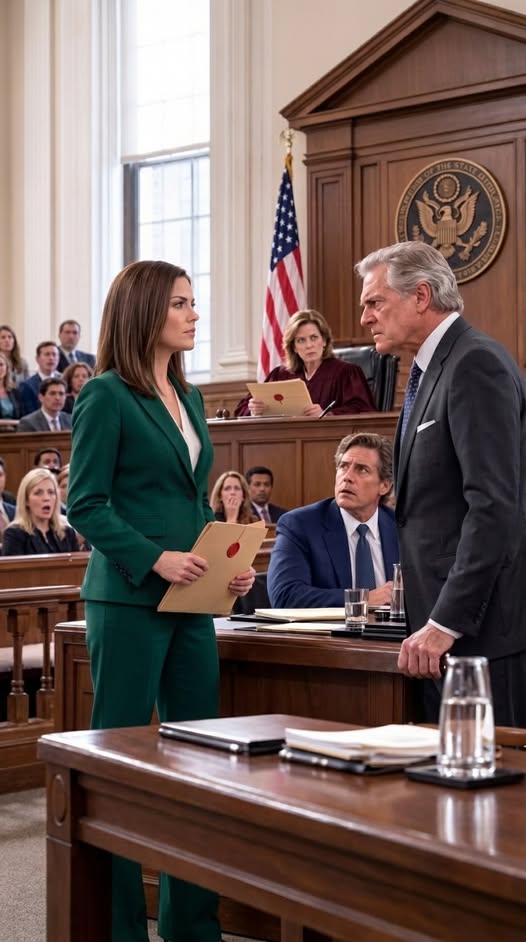
Part 2 : “You’ll Never Be My Pride,” Dad Said in Court
Lauren followed my gaze to the branch above the roof.
“That one?” she asked.
“It’ll come down in a storm.”
“Gran would tell you the tree knows what it’s doing.”
“She’d say that right up until it fell through her bedroom.”
Lauren smiled. It faded when she looked back at the house.
We had spent the afternoon opening windows, folding blankets, and carrying boxes from one room to another. None of the work changed how the place felt. Gran’s reading glasses still rested beside her chair. Her calendar still hung in the kitchen, turned to the month she died.
For months, Dad had called the house an asset. In court, Foss had called it the disputed property. I had begun using those words myself because they were easier to say than Gran’s house.
Now I could see the scuff beside the front door where she used to set down her shopping bags. I could smell the cedar polish she put on the stairs every spring.
Lauren lowered herself into the other porch chair.
“I found something while you were upstairs,” she said.
She held out a grocery invoice on White Development letterhead. It was dated the Christmas Dad had given me a bill instead of a present. At the bottom, beside his handwritten total, someone had added a smaller number in blue ink.
“What’s that?” I asked.
“The price of my necklace.”
I looked at her.
“I wrote it down that night. I don’t know why I kept the invoice.” She turned the page over, then back again. “Maybe I thought I could pay you the difference someday.”
The necklace had been gold. I remembered the clasp catching in Lauren’s hair while she tried it on at the dinner table. I remembered sliding Dad’s envelope beneath my chair so Gran wouldn’t see it.
“You don’t owe me for a necklace,” I said.
“I know.”
Lauren folded the paper carefully. “I saw what he did. I want you to know that.”
I had spent years believing no one in that room had noticed. Knowing Lauren had seen it brought relief, then anger. She had been young, but she had been old enough to ask why I was charged for Christmas dinner.
“I needed you to say something then,” I told her.
“I know that, too.”
She left the invoice on the small table between us. I didn’t pick it up.
Inside the house, a floorboard settled with a soft crack. Lauren glanced toward the door as though Gran might be coming to ask why we were sitting outside with nothing to drink.
“Did you find her teapot?” she asked.
“Back of the cupboard.”
“I’ll put some water on.”
When she stood, I said, “Lauren.”
She stopped.
“Thank you for correcting your affidavit.”
“I should never have signed it.”
“No. You shouldn’t have.”
She nodded and went inside.
It was the first time we had spoken about her testimony without one of us trying to make it hurt less.
I stayed on the porch until she called me in. We drank tea at the kitchen table, where Gran used to spread the newspaper across two chairs because she refused to fold it. Lauren remembered a cake Gran had burned there. I remembered Gran scraping off the black edges and insisting it tasted better.
Our conversation faltered whenever we reached the months before Gran died. Lauren said she had come by more often than I knew. I told her about the midnight call when Gran asked whether I remembered Dad’s invoices. We pieced together a few ordinary afternoons neither of us had shared with the other.
Before leaving, Lauren asked if I wanted her to come back the next day.
“I have a call with Gran’s lawyer in the morning,” I said. “After that, maybe.”
She accepted the answer. At her car, she turned back.
“I don’t expect us to be all right because Dad lost.”
“I know.”
“I’ll give you time.”
I watched her drive away. Then I locked the front door and went upstairs to Gran’s room.
Her lawyer had advised me to make an inventory before removing anything. I had followed that instruction so carefully that the room still looked occupied. A cardigan hung over the chair. Three paperbacks sat on the nightstand. On the dresser was a photograph of Gran and me at my commissioning ceremony in Georgia.
In the picture, I stood stiffly in a uniform that felt too new. Gran had both arms around my waist. She was laughing at something outside the frame.
Dad had told the officers nearby that I would never survive in the “real world.” I had nearly forgotten Gran’s answer. Looking at the photograph brought it back.
“She already has,” Gran had said.
He walked away before she finished laughing.
I sat on the edge of her bed with the photograph in my hands. In court, Judge Okafor had seen my service record and the proof that I reported the false documents. She had spoken to Dad with a firmness I had waited years to hear from someone.
I was grateful. I was also angry that part of me still wanted Dad to have looked at those records and felt proud.
He had looked at them. He had called my commission ordinary because acknowledging it would have meant changing his mind about me. No judge could make him do that.
I set the photograph back on the dresser and let that hope go.
The following morning, Gran’s lawyer called at nine. The estate accounting was nearly finished, but Dad’s company still disputed several charges. She explained which records had been produced and what would happen if they could not reach a settlement. I wrote down dates and amounts in the notebook I had carried through the lawsuit.
“There’s one other matter,” she said. “Your grandmother left written instructions about the house.”
I sat straighter. “I thought I’d seen everything.”
“These weren’t part of the will. She gave them to me after she hired the accountant. She asked that I wait until you had legal possession.”
The document arrived that afternoon by secure email. It was only a page, in Gran’s handwriting.
Keep the house if it brings you peace. Sell it if caring for it takes more than it gives you. I loved raising my children here. That does not mean you owe the walls the rest of your life.
I read the note three times.
Gran had known I might feel trapped by her gift. She had wanted me to have a choice, even when she could not be there to tell me so.
That evening, I called the tree service. A woman asked which branch concerned me and whether it touched the power line. We arranged for someone to inspect it on Thursday. The call lasted less than four minutes.
Afterward, I stood in the kitchen holding my phone. I had fought to keep the house for so long that arranging one small repair felt almost absurd. Then I thought about water getting through the roof and called a roofer, too.
On Thursday, the tree worker walked the yard with me. He examined the oak from several sides, measured the branch, and showed me a hollow near its base.
“You caught it before it fell,” he said.
He recommended removing only the damaged limb. The rest of the tree was sound. I asked him to schedule the work.
When I told Lauren, she laughed.
“Gran would have demanded a second opinion,” she said.
“I got one. The roofer agreed it had to go.”
“She’d have liked that you asked.”
Lauren had begun calling every few days. Sometimes we spoke about the estate. Once she told me her daughter had asked why I wasn’t at her birthday party this year. Lauren had said I’d been busy and that the grown-ups had things to sort out. I thanked her for leaving the child out of it.
“I’d like you to see her,” Lauren said. “When you’re ready.”
“I’d like that, too.”
I wasn’t ready to step into a crowded family party and pretend the court hearing had never happened. Lauren didn’t ask me to. A week later, we met her daughter at a park. We pushed her on the swings while Lauren stood close enough to catch her if she slipped. The little girl asked whether I still lived on a base and whether soldiers were allowed to have dogs. I answered both questions as best I could.
On the drive home, I cried at a stoplight. I had missed a year of her life while Dad made contact with my family feel dangerous. She had grown taller without my noticing. I could visit again. I could not get that year back.
The accounting was settled late that summer. White Development agreed to repay the estate for charges its records could not support. Dad made no admission of wrongdoing. Other matters remained with investigators, and I stopped asking for updates I had no right to receive.
My commander had restored my access, but returning to work took longer than having the restriction removed from a system. People who had avoided me began offering careful greetings. One colleague apologized plainly. Another said he had known the complaints were nonsense all along. I remembered him changing direction when he saw me in the hallway. I thanked him for speaking to me and went back to my desk.
The work itself helped. There were reports to finish, people relying on me, and problems that could be solved by the end of a day. I found my way back into its rhythm.
Dad sent one letter to Gran’s house.
I recognized his handwriting before I opened it. He wrote that I had embarrassed him in court and that Gran would have hated seeing our family turned against itself. Near the end, he said he was willing to meet if I would acknowledge my part in what happened.
I put the letter down and walked outside. The oak had been trimmed by then. A pale patch of wood showed where the damaged branch had been removed.
Years earlier, I might have written back line by line. I could have reminded him who filed the suit, who sent the complaints, and who billed Gran for Lauren’s car. I had already put those facts before a judge. I didn’t want to spend another evening trying to make him admit them.
I kept the letter with the legal papers. I didn’t answer it.
In September, Lauren came to help me empty the upstairs closets. We worked in separate rooms until she called me to the landing. She held a pair of little red boots.
“Yours,” she said.
I took one. The rubber had gone stiff, and a crack ran across the heel. Gran had bought them after a week of rain when I was nine. I used to wear them through the yard even on dry days because they made me feel prepared for anything.
“I thought Dad threw those away,” I said.
“Gran took them before he could.”
We sat on the stairs with the boots between us. Lauren told me she had found an apartment in her own name. She had left her job at White Development after giving her statement. She was doing accounts for a small building supplier now. The pay was lower, and she sounded relieved.
“Are you all right?” I asked.
“Most days. I’m learning what things cost when nobody else pays for them.”
I glanced at the boots. “I know a little about that.”
She winced, then laughed softly.
“I deserved that.”
“I wasn’t trying to hurt you.”
“I know.” She rubbed a finger over the worn rubber. “I’m glad you said it.”
I had decided to keep Gran’s house for another year. My assignment could change, and I might discover that the travel and upkeep were too much. For now, I could come on weekends. Lauren had offered to check the pipes when the weather turned cold. I accepted.
There was still distance between us. Some days I remembered her correcting her affidavit; other days I remembered that she had signed it. She listened when I told her either truth. Slowly, I learned to listen to hers.
We carried the boots downstairs and put them near the back door. I made tea. Lauren opened the windows while the kettle heated.
Late sunlight fell across the kitchen table, bright enough to show every scratch in the wood. Gran had left those marks through decades of meals, letters, and arguments. Lauren sat in her old chair. I sat opposite her.
“Do you want to take the boots?” I asked.
Lauren shook her head. “Keep them here.”
I looked toward the yard. The oak still shaded most of it, though the roof above Gran’s room was clear.
When the kettle clicked off, neither of us hurried to stand. We stayed at the table a little longer, with the windows open and Gran’s red boots by the door.
They Called Him Just the Driver Until the Ferrari Showroom Handed Him the Keys.
“Don’t touch that car.”
Rebecca Carter slapped Henry’s hand away from the Ferrari before his fingertips had fully settled against the polished door.
Henry stared at his daughter-in-law.
Rebecca immediately pulled a microfiber cloth from a nearby display and wiped the exact place he had touched.
“You’ll leave marks,” she said.
The nearby salesman stopped speaking.
A couple examining another Ferrari turned toward them.
Jason Carter stood three feet away.
He saw everything.
He said nothing.
Henry slowly lowered his hand.
Rebecca folded the cloth and handed it to the salesman.
“Sorry about that.”
The salesman looked uncomfortable.
“There’s really no problem, ma’am.”
“There will be if somebody scratches a six-hundred-thousand-dollar car.”
Henry glanced toward his son again.
Jason studied the floor instead.
Rebecca noticed Henry’s expression and sighed.
“Please don’t make this awkward.”
Henry almost smiled.
“I touched a door.”
“You don’t understand cars like this.”
“I understand doors.”
Rebecca’s mouth tightened.
The salesman covered a cough.
Jason finally lifted his head.
“Dad, maybe give us a minute.”
Henry looked around the bright Ferrari showroom in Miami.
Sunlight poured through enormous windows facing Biscayne Boulevard.
Engines gleamed beneath white ceiling lights.
A receptionist spoke quietly into a headset near the entrance.
Somewhere behind a glass wall, a mechanic started an engine.
The deep sound rolled through the showroom.
Henry turned back toward Jason.
“You invited me.”
Jason rubbed the back of his neck.
“I know.”
Rebecca interrupted.
“He invited you to come along.”
Henry waited.
Rebecca emphasized the last word.
“Along.”
Jason remained silent.
The salesman stepped closer.
“Would anyone like coffee or water?”
Rebecca smiled immediately.
“Sparkling water for me.”
Jason nodded.
“Coffee.”
The salesman looked toward Henry.
Rebecca answered for him.
“He’s fine.”
Henry kept his eyes on her.
“I can still speak.”
Rebecca’s smile disappeared.
“I’m trying to make this easier.”
“For whom?”
Jason shifted between them.
“Dad.”
Henry said nothing more.
The salesman quietly left.
Rebecca turned toward a metallic red Ferrari displayed beneath a suspended spotlight.
“That’s the one Jason likes.”
Henry studied the car.
“It’s beautiful.”
Jason’s expression brightened for the first time.
“You think so?”
“I do.”
Jason walked closer.
“The dealership received only two in this configuration.”
Henry nodded.
“That makes it special.”
Jason smiled.
For one moment, Henry saw the boy who once collected miniature cars from gas stations.
That boy had slept with a red toy Ferrari beside his pillow.
Henry remembered every detail.
The bedroom had been above their garage in Fort Lauderdale.
The air conditioner barely worked during summer.
Jason had once drawn a Ferrari logo on cardboard.
He taped it above his bed.
Henry had kept that cardboard for thirty years.
Rebecca stepped between them.
“We haven’t decided on the exact configuration.”
Jason’s smile faded.
Henry noticed.
Rebecca ran her fingers over the sales brochure.
“The carbon package adds another forty thousand.”
Henry raised an eyebrow.
“Forty thousand for carbon fiber?”
Rebecca gave him a thin smile.
“That’s why I said you wouldn’t understand.”
Henry looked at Jason.
Jason pretended to inspect a wheel.
The salesman returned carrying drinks.
He handed sparkling water to Rebecca and coffee to Jason.
Then he offered Henry a bottle of water.
“I brought one anyway, sir.”
Henry accepted it.
“Thank you.”
Rebecca looked annoyed.
The salesman nodded respectfully.
“My pleasure.”
Henry twisted the cap.
Rebecca turned back toward the vehicle.
“We’re discussing financing options.”
Henry looked at her.
“I thought Jason was buying it.”
“He is.”
“Then why financing?”
Rebecca gave a short laugh.
“Not everyone keeps millions sitting in checking accounts.”
Henry drank some water.
“No sensible person does.”
Her smile tightened again.
The salesman lowered his eyes.
Jason cleared his throat.
“We’re just looking at the numbers.”
Henry nodded.
“I thought today was about celebrating.”
Jason looked confused.
“What?”
“You called yesterday.”
Henry repeated Jason’s words calmly.
“You said you wanted me here for something important.”
Jason glanced at Rebecca.
Rebecca answered.
“It is important.”
Henry waited for more.
Nothing came.
The salesman gestured toward a nearby consultation area.
“We can sit down whenever you’re ready.”
Rebecca immediately moved toward the table.
Jason followed.
Henry remained beside the Ferrari.
He looked through the windshield.
For a moment, his reflection appeared across the glass.
White hair.
Weathered face.
Simple navy jacket.
Old watch.
No designer labels.
No polished loafers.
No reason for strangers to assume wealth.
Henry had always preferred it that way.
Rebecca called from behind him.
“Henry.”
He turned.
She tapped the chair beside Jason.
“We need you for this part.”
Henry walked toward them.
Something in her tone had changed.
The contempt remained.
Now urgency sat beneath it.
Henry took the chair.
Rebecca opened a leather portfolio.
The salesman noticed.
“I can give your family some privacy.”
Rebecca smiled.
“That would be great.”
He nodded and walked away.
Henry watched him leave.
Then he looked down.
A legal agreement sat inside Rebecca’s portfolio.
It had nothing to do with Ferrari.
Henry’s eyes stopped on the first page.
Carter Industrial Holdings.
His old company.
His old shares.
Twelve million dollars.
Henry placed his water bottle on the table.
“So this is why I’m here.”
Jason inhaled slowly.
“Dad.”
Rebecca pushed the document closer.
“Just read it first.”
Henry did not touch it.
“You brought me to a Ferrari dealership for this?”
Rebecca leaned back.
“We were already coming here.”
Jason stared at the table.
Henry looked at him.
“You told me you wanted to share something with me.”
Jason swallowed.
“I did.”
Rebecca cut in.
“And we are sharing something.”
Henry turned toward her.
“What exactly are we sharing?”
She pointed toward the contract.
“A solution.”
Henry looked at the number again.
Twelve million dollars.
The room suddenly felt quieter.
Outside the windows, Miami traffic moved beneath a brilliant afternoon sky.
Inside, Henry heard only the faint ticking of his old watch.
Rebecca folded her hands.
“You haven’t been involved with the company for years.”
Henry said nothing.
“You retired.”
Still nothing.
“You don’t manage operations.”
Henry finally looked up.
“And?”
Rebecca leaned forward.
“So holding that much equity makes no sense.”
Jason’s jaw tightened.
Henry looked toward him.
“Does she speak for you now?”
Rebecca’s eyes hardened.
“Don’t do that.”
“Do what?”
“Turn this into something personal.”
Henry glanced at the contract.
“You’re asking for twelve million dollars.”
“We’re asking you to sell shares.”
“To whom?”
Rebecca hesitated.
Henry noticed.
“To whom, Rebecca?”
Jason answered quietly.
“A private group.”
Henry turned toward him.
“What group?”
Jason rubbed his palms together.
“It’s complicated.”
“Then simplify it.”
Rebecca exhaled sharply.
“They’re investors.”
Henry leaned back.
“In what?”
Jason did not answer.
Henry looked from one face to the other.
Then he understood something.
This was not about Jason buying a Ferrari.
The car had been bait.
The invitation had been staging.
The celebration never existed.
Henry looked at the red Ferrari across the showroom.
Its paint reflected three blurred figures at the table.
One of those figures suddenly looked very old.
He returned his gaze to the contract.
“How long have you planned this?”
Rebecca’s voice softened.
“Henry, nobody is planning anything against you.”
“That wasn’t my question.”
Jason finally spoke.
“A few weeks.”
Henry nodded slowly.
“A few weeks.”
Jason leaned forward.
“We didn’t know how to bring it up.”
“So you brought me here.”
Rebecca shrugged.
“We thought a relaxed environment might help.”
Henry looked around.
“You call this relaxed?”
Rebecca stared at him.
“You were enjoying yourself until you started creating tension.”
Henry let that sentence settle.
Jason winced.
“Rebecca.”
“What?”
“You don’t have to say it like that.”
She turned toward him.
“Then you explain it.”
Jason looked trapped.
Henry had seen that expression before.
Jason wore it whenever he feared confrontation.
He had worn it at fourteen after breaking a neighbor’s window.
He had worn it at twenty-two after quitting his first job.
Now he wore it at forty-eight.
Henry quietly asked, “Why do you need the money?”
Rebecca answered immediately.
“We need liquidity.”
“For what?”
“Opportunities.”
“What opportunities?”
She hesitated.
Jason jumped in.
“Dad, we’ve had some investments go sideways.”
Henry watched him carefully.
“How far sideways?”
Jason looked toward the showroom floor.
“Far enough.”
Henry nodded.
Rebecca pushed the papers closer.
“This solves everything.”
“For you.”
“For the family.”
Henry’s expression changed.
“Don’t use that word carelessly.”
Rebecca’s eyebrows lifted.
“Family?”
“Yes.”
“Why?”
“Because family doesn’t lure an eighty-two-year-old man into a showroom to transfer twelve million dollars.”
Jason flinched.
Rebecca’s voice lowered.
“No one lured you anywhere.”
Henry pointed toward the Ferrari.
“You told me Jason wanted me here for this.”
“He did.”
“You told the salesman I was only accompanying you.”
“You were.”
“You stopped me from touching a car.”
Rebecca folded her arms.
“That has nothing to do with this.”
“It has everything to do with this.”
Jason looked at his father.
“Dad, please.”
Henry’s voice remained calm.
“You let her humiliate me.”
Jason’s face tightened.
“I didn’t know what to say.”
Henry nodded once.
“That has always been your safest sentence.”
Jason looked wounded.
Rebecca leaned forward.
“This is exactly why conversations with you become impossible.”
Henry turned toward her.
“Because I remember them?”
“Because you make everything emotional.”
“You brought my son to ask for my assets.”
“We are not asking for your assets.”
She tapped the document.
“We are asking you to sell an inactive position.”
Henry studied her hand.
The diamond ring on her finger caught the showroom lights.
He remembered paying for Jason’s college tuition.
He remembered helping with their first house.
He remembered funding Jason’s first failed startup.
None of those memories felt relevant now.
What mattered was the table.
What mattered was Jason’s silence.
Henry asked, “What happens if I say no?”
Rebecca paused.
That pause told him more than her words.
Jason shifted.
“Dad, nobody wants this to become ugly.”
Henry looked at him.
“Has it not?”
Jason lowered his eyes.
Rebecca slid a pen across the table.
“Just sign the authorization.”
The pen rolled toward Henry’s hand.
He stopped it with one finger.
“What exactly do you think happens after I sign?”
Rebecca responded quickly.
“The shares transfer.”
“And?”
“The investors pay.”
“And?”
“We stabilize everything.”
Henry looked at Jason.
“What does that mean?”
Jason breathed out.
“Our property loan.”
Henry waited.
“And?”
“Two private loans.”
Henry’s expression remained still.
“And?”
Jason rubbed his forehead.
“A margin call.”
Rebecca shot him a look.
Henry caught it.
“How large?”
Jason’s lips parted.
Rebecca answered first.
“That isn’t relevant.”
Henry almost laughed.
“You want twelve million dollars and your debt isn’t relevant?”
“We’re giving you fair value.”
Henry looked at the contract again.
“No.”
Rebecca blinked.
“No what?”
“No.”
“You haven’t even reviewed everything.”
“I’ve reviewed enough.”
Jason leaned forward.
“Dad, please listen.”
Henry turned toward him.
“I have been listening.”
“We can fix this.”
Henry nodded.
“You can.”
Jason looked hopeful.
Then Henry added, “Without taking what belongs to me.”
Rebecca’s chair moved sharply.
“You barely use that money.”
Henry stared at her.
She continued.
“You live in the same house you bought decades ago.”
“That bothers you?”
“You drive an old Lincoln.”
“It starts.”
“You don’t travel.”
“I travel when I want.”
“You don’t spend anything.”
Henry’s gaze sharpened.
“So you should spend it for me?”
Rebecca spread her hands.
“What is the point of having wealth if your own son is struggling?”
Henry looked toward Jason.
“Is that how you see it?”
Jason’s voice came quietly.
“I thought you’d want to help.”
Henry’s chest tightened.
Not because Jason needed help.
Because Jason expected surrender.
Henry asked, “Did you ever consider asking?”
Jason frowned.
“We are asking.”
“No.”
Henry touched the contract.
“This is prepared.”
He touched the signature tab.
“This is marked.”
He touched the pen.
“This was waiting.”
Henry looked at his son.
“You did not come to ask.”
Jason said nothing.
“You came to collect.”
Rebecca’s face hardened.
“That is unfair.”
Henry turned to her.
“No.”
He pushed the contract back.
“That is precise.”
Rebecca stood.
Several people glanced toward them.
Jason whispered, “Rebecca.”
She ignored him.
“You are sitting on twelve million dollars while we could lose everything.”
Henry remained seated.
“What exactly might you lose?”
“Our house.”
“That is unfortunate.”
“Our investments.”
“That is business.”
“Our reputation.”
Henry looked at her.
“There it is.”
Rebecca froze.
Jason closed his eyes.
Henry continued.
“The house frightened you less than the reputation.”
“That’s not true.”
“You brought me into a Ferrari showroom.”
Rebecca’s breathing changed.
Henry nodded toward the cars.
“You wanted me surrounded by everything you think matters.”
She laughed bitterly.
“You think this is about appearances?”
“I think appearances are your religion.”
Jason stood.
“Dad, stop.”
Henry turned slowly.
“You finally found your voice.”
Jason looked stunned.
Henry’s words were not loud.
They did not need to be.
For decades, Jason had relied on his father’s restraint.
Today, that restraint felt different.
Jason sat again.
Henry looked at him.
“I would have helped you.”
Jason’s eyes flickered.
Rebecca crossed her arms.
“Then help.”
Henry ignored her.
“I would have listened.”
Jason swallowed.
“I would have reviewed the debts.”
Henry continued.
“I would have asked what failed.”
Jason’s face reddened.
“I would have helped you rebuild.”
Rebecca scoffed.
“But?”
Henry looked at her.
“But that isn’t what you wanted.”
She stared back.
“You wanted control.”
Rebecca’s composure cracked.
“We want survival.”
“Then why insult me first?”
Nobody answered.
Henry nodded slowly.
“That part was free.”
Jason whispered, “Dad.”
Henry stood.
His knees hurt slightly.
He refused to show it.
Rebecca watched him button his jacket.
“Where are you going?”
“Home.”
“We’re not finished.”
“I am.”
She stepped around the table.
“You can’t just walk away.”
Henry glanced toward the entrance.
“Yes, I can.”
Rebecca moved in front of him.
“You came here with us.”
Henry’s expression remained calm.
“I have legs.”
“That isn’t what I meant.”
“I know.”
Jason stood.
“Dad, please wait.”
Henry stopped.
For one second, hope entered his face.
Jason could still change this.
He could apologize.
He could say the papers were a mistake.
He could choose his father over fear.
Instead, Jason asked, “Can you at least think about signing?”
The hope vanished.
Henry nodded once.
“I already did.”
Then he walked away.
Rebecca followed.
“Henry.”
He kept moving.
“You are being unreasonable.”
Henry passed the red Ferrari.
The same salesman stood nearby.
He looked between them uneasily.
Rebecca raised her voice.
“We are talking about your son’s future.”
Henry stopped beside another vehicle.
“His future was never mine to purchase.”
Jason caught up.
“Dad, nobody said that.”
Henry turned.
“You did not need to.”
Rebecca grabbed the contract from the table.
She hurried toward him.
“Look at the offer.”
Henry did not reach for it.
“It is twelve million dollars.”
“I can read.”
“You don’t need twelve million dollars.”
Henry’s eyes stayed on hers.
“That sentence tells me everything.”
Rebecca stared back defiantly.
“What are you going to do with it?”
Henry’s jaw tightened.
She continued.
“You’re eighty-two.”
Jason whispered, “Rebecca.”
But she was already committed.
“You have one house.”
“Rebecca.”
“One old car.”
“Enough.”
“You don’t even enjoy your money.”
Henry remained perfectly still.
The salesman nearby took a slow step backward.
Several customers stopped pretending not to listen.
Rebecca lowered her voice.
“We can actually use it.”
Henry looked at Jason.
“Do you agree?”
Jason’s face went pale.
Rebecca answered for him.
“Yes.”
Henry did not move.
He looked only at his son.
“I asked Jason.”
Silence filled the space.
Henry waited.
Jason’s throat moved.
Rebecca glared at him.
Finally Jason whispered, “We need it.”
Henry nodded.
“That was not my question.”
Jason closed his eyes.
Henry repeated it.
“Do you agree with her?”
Jason opened his eyes.
He looked at his father.
Then he looked away.
He said nothing.
Henry understood.
Silence had been Jason’s answer all day.
Now it became permanent.
Henry stepped past them.
Rebecca’s anger surged.
She kicked a leather showroom chair beside her.
The chair shot across the polished tile.
Its metal base scraped loudly.
Everyone turned.
The chair struck a brochure stand.
Several glossy catalogs scattered across the floor.
Rebecca pointed toward Henry.
“You think you still get to decide everything?”
Jason stared at her.
“Rebecca, stop.”
She ignored him.
“You control the shares.”
Her voice echoed through the showroom.
“You control the trust.”
“You control the old accounts.”
“Everyone has to wait for Henry Carter.”
Henry did not raise his voice.
“The shares are mine.”
“For now.”
Henry looked at her carefully.
“What does that mean?”
Rebecca hesitated.
Jason’s head snapped toward her.
“Rebecca.”
She forced a laugh.
“Nothing.”
Henry studied them both.
Then he smiled faintly.
It was not a happy smile.
It was recognition.
“You assumed I would eventually surrender.”
Rebecca pressed her lips together.
Henry nodded.
“That was your mistake.”
He turned toward the entrance.
Then rapid footsteps crossed the showroom.
A senior employee hurried from an office behind the reception desk.
He wore a dark suit and carried a small presentation box.
His expression showed immediate recognition.
“Mr. Carter?”
Henry stopped.
Rebecca frowned.
Jason looked confused.
The employee approached Henry directly.
“Mr. Carter, I’m sorry.”
Henry raised an eyebrow.
“For what?”
“We expected you through the private entrance.”
Henry glanced toward Jason.
“I arrived with family.”
The employee nodded.
“Of course, sir.”
Rebecca stepped closer.
“Do you know him?”
The employee looked at her.
Then back to Henry.
“Yes, ma’am.”
Rebecca’s confidence faltered.
“How?”
Before he could answer, another employee appeared.
Then the sales manager approached from the opposite side.
The salesman who had served them earlier straightened immediately.
“Mr. Carter,” the manager said.
Henry gave a small nod.
“Daniel.”
Daniel smiled.
“It’s good to see you.”
Rebecca looked between them.
“You know each other?”
Daniel glanced toward Henry.
“Very well.”
Jason stared at his father.
“Dad?”
Henry said nothing.
Daniel opened the presentation box.
Inside rested a Ferrari key.
A small metal plaque beneath it carried engraved lettering.
HENRY CARTER.
Rebecca stared.
Jason stepped closer.
“What is that?”
Daniel lifted the key.
“Mr. Carter’s vehicle.”
Rebecca gave a nervous laugh.
“No.”
Daniel looked puzzled.
“Excuse me?”
“He didn’t buy anything.”
Henry watched her.
Rebecca pointed toward Jason.
“We’re the customers.”
Daniel remained polite.
“I understand you may also be shopping.”
Rebecca’s face tightened.
“No, you don’t understand.”
She pointed at Henry.
“He came with us.”
Daniel’s expression changed subtly.
Henry almost felt sorry for him.
The manager looked toward Henry for guidance.
Henry gave none.
Daniel continued carefully.
“Mr. Carter’s vehicle arrived yesterday.”
Jason stared at the key.
“What vehicle?”
Daniel gestured toward a covered section beyond the glass partition.
“The newest allocation.”
Rebecca stopped breathing for a second.
“The allocation?”
“Yes.”
Jason looked at his father.
“Dad, did you buy a Ferrari?”
Henry reached for the key.
“No.”
Rebecca immediately laughed.
“Exactly.”
Henry closed his fingers around it.
“I didn’t come to buy one.”
Daniel smiled.
Henry looked at Jason.
“I came to receive one.”
Nobody spoke.
The showroom suddenly felt enormous.
Daniel walked toward the glass partition.
“Would you like us to bring it out?”
Henry nodded.
“Please.”
Daniel signaled toward another employee.
A partition door opened.
The sound of an engine followed.
It was low at first.
Then it grew deeper.
Every conversation in the showroom stopped.
A new Ferrari rolled slowly into view.
Its body caught the Miami sunlight.
The driver guided it into the center display area.
Then he switched off the engine.
The silence afterward felt heavier.
Rebecca stared at the car.
Jason stared at Henry.
Henry looked almost indifferent.
Rebecca finally whispered, “How?”
Henry slipped the key into his pocket.
“That seems to be today’s question.”
Jason shook his head.
“I don’t understand.”
Another man entered through the showroom’s main doors.
He carried a slim briefcase.
Henry recognized him immediately.
“Thomas.”
The attorney approached.
“Henry.”
Jason’s face changed.
He knew Thomas Reed.
Thomas had handled Carter family matters for more than twenty years.
Rebecca knew him too.
“What are you doing here?” she asked.
Thomas looked surprised.
“I was asked to meet Henry.”
Rebecca looked at Henry.
“You called your lawyer?”
Henry shook his head.
“Yesterday.”
Jason’s breathing became shallow.
“Why?”
Henry watched him carefully.
“Because I knew today might matter.”
Rebecca scoffed.
“You knew?”
Henry glanced at the contract in her hand.
“You were less discreet than you imagined.”
Jason looked at Rebecca.
She said nothing.
Thomas placed his briefcase on a nearby table.
Daniel remained several feet away.
Employees pretended to resume their work.
Nobody truly did.
Rebecca straightened.
“This has nothing to do with the dealership.”
Henry looked toward Daniel.
“Actually, it does.”
Rebecca frowned.
Henry continued.
“You told the salesman not to waste time on me.”
She shifted.
“You told him I was only accompanying you.”
Her face tightened.
“You said I was not the customer.”
Rebecca looked around.
“What are you trying to prove?”
Henry’s voice stayed even.
“Nothing.”
He nodded toward Daniel.
“Tell them.”
Daniel hesitated.
Henry gave a small nod.
Daniel turned toward Jason and Rebecca.
“Mr. Carter was among the original investors behind this dealership group.”
Rebecca stared blankly.
Daniel continued.
“His early capital helped establish the company’s first luxury retail operation.”
Jason looked at his father.
“You invested here?”
Henry nodded.
“A long time ago.”
Daniel added, “His investment became foundational.”
Rebecca shook her head.
“No.”
Henry almost smiled.
“You have used that word often today.”
She ignored him.
“You own this showroom?”
Henry answered carefully.
“I am an investor.”
Daniel looked toward Rebecca.
“A very significant one.”
The salesman from earlier stared at Henry.
His face showed instant embarrassment.
Henry noticed.
“You did nothing wrong.”
The salesman relaxed slightly.
Rebecca looked toward the Ferrari.
“Then the car?”
Daniel answered.
“It was arranged for Mr. Carter.”
“Free?”
Henry spoke before Daniel could.
“That detail is none of your concern.”
Rebecca flushed.
Jason remained motionless.
His eyes moved across the showroom differently now.
The glass.
The offices.
The Ferrari.
The employees.
The same building that had made Henry appear insignificant now exposed their mistake.
Rebecca looked toward the contract.
Then toward Henry.
Her face changed again.
Calculation replaced shock.
“Fine.”
Jason glanced at her.
“Rebecca.”
“No.”
She stepped toward Henry.
“This changes nothing.”
Thomas watched silently.
Rebecca held up the agreement.
“You still have the shares.”
Henry looked at Thomas.
Thomas opened his briefcase.
Rebecca stopped.
Jason whispered, “What is that?”
Thomas removed a folder.
“Documents concerning the Carter family holdings.”
Rebecca’s expression tightened.
“Why?”
Henry looked at his son.
“You wanted my old company shares.”
Jason nodded slowly.
Henry continued.
“You wanted control of twelve million dollars.”
Jason’s face reddened.
Rebecca interrupted.
“We wanted to stabilize our finances.”
Henry raised one hand.
She stopped.
He looked at Thomas.
“Tell them.”
Thomas opened the folder.
“The shares cannot be transferred to Jason.”
Rebecca blinked.
“What?”
Jason leaned forward.
“Why not?”
Thomas looked toward Henry.
Henry remained silent.
Thomas continued.
“Henry transferred those holdings into a protected family trust.”
Rebecca’s face drained of color.
“When?”
“Before today.”
She gripped the contract.
“Why?”
Thomas answered calmly.
“The beneficial interests are designated for Henry’s grandchildren.”
Jason stared at his father.
“My kids?”
Henry nodded.
“Yes.”
Jason looked stunned.
Rebecca spoke quickly.
“But Jason can manage the trust.”
Thomas shook his head.
“No.”
“Then Henry can appoint him.”
“No.”
Rebecca stared.
Thomas closed the folder halfway.
“Control is governed by independent trustees.”
Jason’s voice barely carried.
“Dad.”
Henry looked at him.
“You protected it from me?”
“No.”
Jason flinched.
Henry continued.
“I protected it for your children.”
“That means you don’t trust me.”
Henry’s expression softened for the first time.
“I trusted you for years.”
Jason looked down.
Henry added, “Today did not create this decision.”
Rebecca stared at him.
“What does that mean?”
Henry looked at her.
“It means I noticed the pressure months ago.”
Her eyes narrowed.
“What pressure?”
“The calls.”
Henry counted quietly.
“The sudden questions about valuations.”
“The requests for account records.”
“The questions about my estate.”
Jason looked horrified.
“Dad, I never meant—”
Henry continued.
“The conversation about selling my house.”
Rebecca interrupted.
“That was practical.”
Henry looked at her.
“It was not your house.”
She closed her mouth.
Henry turned back to Jason.
“Then you asked whether my company shares were transferable.”
Jason’s shoulders sank.
Henry nodded toward Thomas.
“That is when I acted.”
Thomas explained further.
“The trust preserves the shares.”
“The grandchildren benefit from them.”
“Jason receives no unilateral control.”
Rebecca’s eyes moved rapidly.
“What about distributions?”
Thomas answered.
“They follow the trust terms.”
“Can Jason borrow against them?”
“No.”
“Can they be pledged?”
“No.”
“Can they be sold?”
“Only under trustee authority and defined conditions.”
Rebecca went silent.
Henry watched her process each closed door.
Jason looked far less concerned with the money now.
He looked shattered.
“Dad, you really thought I would take it?”
Henry considered the question.
“No.”
Jason looked up.
Henry continued.
“I hoped you wouldn’t.”
That hurt more.
Jason’s eyes became wet.
Rebecca turned toward him.
“Don’t.”
Jason looked at her.
She lowered her voice.
“Do not fall apart now.”
Something changed in Jason’s face.
Henry saw it immediately.
For the first time that day, Jason looked directly at his wife.
“Now?”
Rebecca stared back.
“What?”
“You’re worried about how I look now?”
She frowned.
“Jason.”
He glanced toward the scattered brochures from the chair she had kicked.
Then he looked at the contract.
“You told me this would be simple.”
Rebecca’s expression hardened.
“It should have been.”
Henry said nothing.
Jason turned fully toward her.
“You said Dad would sign.”
Rebecca lowered her voice.
“He should have.”
Jason shook his head.
“You said he wouldn’t care.”
“He shouldn’t.”
Jason stared.
Rebecca realized too late what she had said.
Henry remained still.
Jason’s face changed.
The fear had not disappeared.
But something else finally appeared beside it.
Shame.
He looked at Henry.
“I knew about the contract.”
Henry nodded.
“I know.”
“I knew we needed the money.”
Henry waited.
“But I didn’t know she would treat you like that.”
Rebecca snapped toward him.
“Seriously?”
Jason ignored her.
“I should have stopped it.”
“Yes.”
Henry’s answer came instantly.
Jason flinched.
Henry did not soften it.
“You should have stopped the first sentence.”
Jason nodded slowly.
“When she told the salesman I was only along.”
Jason’s eyes dropped.
“You should have stopped the second.”
Jason closed his eyes.
“When she told him not to waste time.”
Jason whispered, “I know.”
“You should have stopped her hand.”
Jason’s face crumpled slightly.
“When she knocked mine away.”
The showroom stayed quiet around them.
Henry did not need witnesses.
But witnesses made the silence impossible to escape.
Jason whispered, “I was scared.”
Henry looked at him.
“Of her?”
Jason hesitated.
“Of everything.”
Rebecca laughed bitterly.
“Unbelievable.”
Jason turned toward her.
“Our house is leveraged.”
“We both signed.”
“Our investments failed.”
“We both approved them.”
“You wanted the Ferrari.”
Jason stared at her.
Rebecca stopped.
Henry watched carefully.
Jason shook his head.
“I wanted to look at it.”
“You wanted it.”
“I wanted a lot of things.”
Rebecca crossed her arms.
“And now you’re blaming me?”
“No.”
Jason glanced toward Henry.
“That’s the problem.”
Rebecca frowned.
Jason continued.
“I kept blaming everyone except myself.”
Henry’s expression remained guarded.
Jason looked back at his wife.
“I signed the loans.”
Rebecca’s mouth tightened.
“I approved the trades.”
He took a breath.
“I let you believe Dad would fix it.”
Rebecca’s eyes flashed.
“He could fix it.”
Jason shook his head.
“That doesn’t mean he should.”
Henry looked away for a moment.
Through the windows, sunlight flashed across passing traffic.
The city continued without them.
For Jason, everything had stopped.
Thomas quietly closed his briefcase.
Daniel stepped farther away.
The family needed space.
Rebecca was not ready to surrender.
“So this is it?”
Henry turned toward her.
“What?”
“You punish us.”
Henry’s eyebrows lifted.
“You protect millions for the grandchildren.”
“You get your Ferrari.”
“You walk away.”
Henry studied her.
“And we lose everything.”
Henry replied, “Those events are not connected.”
“They are now.”
“No.”
His voice sharpened slightly.
“You are facing consequences from decisions you made before I entered this building.”
Rebecca shook her head.
“You could save us.”
“Yes.”
The answer surprised everyone.
Jason looked up.
Rebecca stepped closer.
“Then do it.”
Henry held her gaze.
“No.”
Her face hardened.
Henry continued.
“Saving you from every consequence would not save you.”
Rebecca gave a cold laugh.
“That sounds convenient.”
“It is painful.”
“For whom?”
Henry glanced at Jason.
“For all of us.”
Jason looked down.
Rebecca clutched the contract.
“What are we supposed to do?”
Henry responded calmly.
“Sell things.”
Her eyes widened.
“Excuse me?”
“The second house.”
Rebecca stared.
“The boat.”
Jason rubbed his face.
“The investment property.”
Rebecca’s jaw tightened.
“The jewelry you financed.”
“Henry.”
“The cars you cannot afford.”
Her voice rose.
“You have no right.”
Henry shook his head.
“You asked what you should do.”
Rebecca fell silent.
Henry continued.
“Then meet your lenders.”
“Restructure what can be restructured.”
“Accept what cannot.”
Jason nodded faintly.
Henry looked directly at him.
“Start living at the level your income supports.”
Jason swallowed.
“I can do that.”
Rebecca turned toward him.
“What?”
Jason met her eyes.
“We can sell the house.”
She stared as though he had betrayed her.
“No.”
“We may have to.”
“No.”
“We cannot keep pretending.”
Rebecca’s face reddened.
“I am not living in some tiny rental because your father wants to teach us a lesson.”
Jason stared.
Henry said nothing.
The sentence settled heavily.
Jason finally asked, “Then what do you want?”
Rebecca looked at the Ferrari.
Then at Henry.
Then at the contract.
Her silence answered.
Jason stepped backward.
For the first time, Henry saw distance between them.
Not physical distance.
Something deeper.
Rebecca noticed it too.
“Jason.”
He looked tired.
“Not here.”
“You started this.”
“No.”
He shook his head.
“We started this months ago.”
Rebecca said nothing.
Jason looked at Henry.
“I’m sorry.”
Henry’s expression did not change.
Jason stepped closer.
“I know that isn’t enough.”
“No.”
Jason nodded.
“I know.”
Henry watched him.
His son looked older than he had that morning.
Not defeated.
Exposed.
Those were different things.
Jason glanced toward the Ferrari.
“I really did want you here.”
Henry said nothing.
Jason continued.
“Not just for the papers.”
Rebecca looked away.
Jason swallowed.
“When I saw the car online, I remembered those toy Ferraris.”
Henry’s eyes shifted slightly.
“You remember those?”
Jason gave a weak smile.
“The red one from the gas station.”
Henry almost smiled.
“You broke the wheel.”
“You fixed it.”
“With a paper clip.”
Jason nodded.
“It lasted another year.”
Henry looked toward the new Ferrari.
For a moment, past and present overlapped.
A plastic toy.
A cardboard logo.
A tired father working late.
A boy waiting beside the garage door.
Then Henry looked back.
“You could have called me just for that.”
Jason’s eyes filled.
“I should have.”
“Yes.”
No dramatic forgiveness came.
No embrace erased the afternoon.
Henry would not cheapen trust by pretending it repaired instantly.
Rebecca stood a few feet away.
Her anger had cooled into something harder.
Humiliation.
She looked around the showroom.
Employees no longer watched openly.
That almost made it worse.
Daniel approached cautiously.
“Mr. Carter?”
Henry turned.
“Sir, the car is ready whenever you are.”
Henry nodded.
“Thank you.”
Daniel handed him a slim envelope.
“The registration documents are inside.”
Henry accepted it.
The same salesman who had brought water stepped closer.
“Would you like me to bring the vehicle outside?”
Henry smiled.
“No.”
The salesman looked uncertain.
Henry added, “I think I’ll drive it from here.”
The young man grinned.
“Yes, sir.”
Rebecca watched the exchange.
Only minutes earlier, she had treated Henry like an inconvenience.
Now every employee addressed him with quiet respect.
Not because of his clothes.
Not because of the Ferrari.
Because they knew who he was.
Yet Henry seemed least interested in proving it.
That unsettled Rebecca more than any display of wealth could.
Thomas approached Henry.
“I’ll call tomorrow about the trust documents.”
Henry nodded.
“Make sure the grandchildren’s education provisions remain unchanged.”
“Already handled.”
Jason heard him.
“You included education?”
Henry looked toward him.
“And housing protections.”
Jason’s face tightened.
“For both kids?”
“Both.”
Jason looked away.
Henry continued.
“They should have options you and I did not have.”
Jason nodded.
“Thank you.”
Henry replied quietly.
“Thank them by becoming someone they can trust.”
Jason looked back at him.
The words landed harder than anger.
Rebecca shifted beside him.
Henry glanced toward her.
She looked defensive again.
“What?”
Henry considered saying many things.
He chose very few.
“You embarrassed me today.”
Rebecca’s face tightened.
Henry continued.
“That matters less than what you taught my son to accept.”
She opened her mouth.
Henry raised his hand slightly.
“I am not finished.”
She stopped.
“You treated respect like something wealth purchases.”
Rebecca stared at him.
“You thought I had less.”
Henry nodded toward the Ferrari.
“So you thought I deserved less.”
Rebecca looked away.
Henry’s voice softened.
“That is the part money cannot repair.”
Nobody answered.
Henry turned toward Jason.
“You need money.”
Jason nodded slowly.
“Yes.”
Henry paused.
“But you forgot something more valuable.”
Jason looked at him.
“What?”
Henry held his son’s gaze.
“Trust.”
Jason’s face crumpled.
Henry did not look away.
The word was not punishment.
It was diagnosis.
Jason nodded once.
“I know.”
Henry opened the Ferrari door.
Rebecca stared at the place where his hand rested.
It was nearly the exact spot she had wiped earlier.
Nobody reached for a cloth now.
Henry lowered himself carefully into the driver’s seat.
The interior smelled of leather and new materials.
His hands settled on the steering wheel.
For one second, he smiled.
Not because the car was expensive.
Because somewhere inside him, an eight-year-old Jason still existed.
That boy had once believed Ferraris represented freedom.
Henry wished adulthood had taught him better lessons.
Jason approached the open door.
“Dad.”
Henry looked up.
“I’m going to fix this.”
Henry studied him.
“The debt?”
Jason shook his head.
“Me.”
Henry’s expression softened.
“Start with the debt.”
Jason laughed weakly through wet eyes.
“Okay.”
Henry nodded.
“And Jason?”
“Yes?”
“Call me when you are ready to tell the truth.”
Jason swallowed.
“About everything?”
“Especially everything.”
Jason nodded.
“I will.”
Henry reached toward the door.
Then he stopped.
He looked at Rebecca.
She remained near the scattered brochures.
The showroom chair still sat crooked beside the display.
She looked smaller now.
Not powerless.
Simply stripped of the authority she had manufactured.
Henry said nothing to her.
Silence felt more appropriate.
Rebecca finally spoke.
“Henry.”
He waited.
Her voice was quieter.
“I didn’t know.”
Henry looked at her.
“What?”
“That you owned part of this place.”
Henry’s face revealed something close to sadness.
“That should not have mattered.”
Rebecca had no answer.
Henry pulled the door shut.
The sound was soft and precise.
Daniel signaled toward the showroom entrance.
The glass doors opened.
Bright Miami sunlight flooded the floor.
Henry pressed the ignition.
The Ferrari came alive.
The engine’s growl rolled through the building.
Customers turned.
Employees smiled.
Jason stepped back.
Henry eased the car forward.
He passed the chair Rebecca had kicked.
He passed the table holding the unsigned contract.
He passed the exact spot where she had wiped his fingerprints away.
Then he drove through the open doors.
Outside, afternoon traffic moved beneath rows of palm trees.
Henry joined Biscayne Boulevard without rushing.
He had never liked showing off.
The Ferrari attracted attention anyway.
At the next light, he stopped.
His phone buzzed in the center console.
A message from Jason appeared.
I’m sorry.
A second message followed.
I’ll call tomorrow.
Henry looked at the words.
He did not answer immediately.
Trust was not restored by one apology.
It was restored by repeated choices.
Tomorrow would reveal the first one.
The light turned green.
Henry drove forward.
Back inside the showroom, Jason remained near the windows.
Rebecca stood several feet behind him.
Neither spoke.
Thomas gathered the unsigned transfer agreement.
He slid it into Rebecca’s abandoned portfolio.
Jason watched his father’s Ferrari disappear into traffic.
For once, he did not envy the car.
He envied the man driving it.
Henry had lost nothing by walking away.
Jason understood he had nearly lost the one person who always answered when he called.
That realization hurt more than the debt.
It hurt more than the house.
It even hurt more than Rebecca’s anger.
Jason looked down at his phone.
He opened his banking app.
Then he opened the contact information for their financial adviser.
Rebecca noticed.
“What are you doing?”
Jason looked at her.
“Starting.”
Her expression tightened.
“With what?”
“The truth.”
He walked toward the consultation table.
The red Ferrari they had come to admire sat behind him.
He no longer looked at it.
Rebecca remained still.
The car had become irrelevant.
Outside, Henry turned toward the causeway.
Water glittered beneath the late afternoon sun.
He lowered the window slightly.
Warm Florida air moved through the cabin.
The engine hummed beneath him.
He thought about Jason.
He thought about his grandchildren.
He thought about trust.
Some things could be protected by attorneys.
Some things could be secured in trusts.
Some things could be insured.
Trust was different.
Once damaged, it had no legal mechanism for recovery.
It required time.
It required humility.
It required evidence.
Henry knew Jason might fail.
He also knew Jason might change.
That possibility was enough for today.
He reached the next intersection.
A young boy in the neighboring car stared at the Ferrari.
The boy’s eyes widened.
Henry smiled.
The boy gave him a thumbs-up.
Henry returned it.
The boy laughed.
For a moment, Henry remembered a red plastic Ferrari with a broken wheel.
He remembered Jason holding it out.
“Can you fix it, Dad?”
Henry had answered without hesitation.
“I can try.”
The light changed.
Henry drove on.
Behind him stood a showroom built partly from an investment nobody remembered seeing him make.
Ahead of him waited a family that could not be repaired with another investment.
That would require something harder.
Henry was willing to try.
But this time, Jason would have to meet him halfway.
The Ferrari moved beneath the bright Miami sky.
Henry’s hand rested calmly on the wheel.
No one pushed it away.
No one wiped away the place he had touched.
And for the first time that afternoon, Henry felt no need to prove he belonged anywhere.
He simply drove home.