Chapter 1: The Midnight Withdrawal
For over a decade, I have earned my living deconstructing the fabrications of desperate people. My name is Serena Vance. I am thirty-four years old, and as an investigative journalist for the Oakhaven Chronicle, I have spent twelve years sitting across from embezzling city treasurers, phantom contractors, and a supposedly devout clergyman who managed to siphon his congregation’s building fund into a private offshore account. I am not a woman who startles easily. I analyze. I document. I dismantle.
So, when my sister-in-law crept down the stairs of my home at three o’clock in the morning, bypassing the security sensors to slide my credit card from the leather folds of my purse while I slept a mere twenty feet above her, she grossly miscalculated her target.
By the time the sun crested the Ohio horizon, nine thousand dollars had vanished into the digital ether. It was squandered on high-end electronics, designer children’s clothing, and premium airline tickets to a theme park in Florida. Yet, when I finally laid the undeniable, timestamped evidence out on my granite kitchen island, my father-in-law, Arthur, looked me dead in the eye and delivered a sentence that would become the anthem of my torment.
“She would never do something like that,” he stated, his voice as smooth and impenetrable as polished marble.
I merely smiled. A cold, sharp stretching of the lips. Because what the patriarchal head of this family—and the thief herself—did not yet understand was a matter of devastating corporate logistics. In the suffocating darkness of my hallway, she hadn’t stolen my personal checking card. She had pulled the one piece of plastic in the entire state that I lacked the legal authority to forgive.
But to understand the detonation, you have to understand the architecture of the powder keg.
Eight months prior to that catastrophic night, I married Elias. He was thirty-six, a master technician for commercial HVAC systems, and possessed an uncanny ability to assess the emotional temperature of a room the moment he crossed the threshold. For a long time, I mistook this hyper-vigilance for charisma. I would later realize it was a survival mechanism. You become an expert meteorologist when your entire childhood is spent navigating the volatile center of a hurricane.
That spring, we purchased a beautiful, two-story colonial on the quiet outskirts of Oakhaven. It was the first home either of us had ever owned. I cherished it with the fierce, protective love you harbor for a sanctuary you built with your own two hands. My purse hung on a wrought-iron hook right beside the mudroom door. It was stationed there every single night because I am a creature of rigid habit, and the hook had been Elias’s proud suggestion.
Sunday dinner at his father’s estate was never framed as an invitation. It was a mandatory summons. Arthur, a retired mechanical engineer and a cornerstone of his local parish, carved the Sunday roast every week with the theatrical precision of a surgeon operating in front of a gallery. Eight months into my marriage, my assigned seat remained at the drafty corner of the long mahogany table, squashed beside the stack of spare serving platters. Initially, I chalked the seating arrangement up to a slow integration process. I was wrong. It was a rigid hierarchy. Elias’s mother had passed away four years prior, yet her ornate chair remained empty, pushed tightly against the table as if the family were still reporting to her ghost.
I desperately wanted a genuine place at that table. I can admit my vulnerability now. I craved that familial warmth more than my cynical, journalistic exterior allowed me to process. And that very yearning was the precise leverage they would later attempt to use to break my spine.
Diana arrived on our doorstep in late September. She was Elias’s older sister—thirty-eight, bitterly divorced, and the mother of two children: thirteen-year-old Leo and nine-year-old Maya. Diana had been unceremoniously terminated from her receptionist position at a local dental clinic in May. By the time autumn leaves began to fall, an eviction notice was taped to her apartment door.
Elias approached me on a Tuesday evening, wringing a dish towel in his calloused hands. His voice was pitched low, trembling with an inherited shame. “Six weeks, Serena. Just until she gets her footing.”
I agreed, entirely for the sake of her children. I want that permanently etched into the record. Maya still slept clutching a threadbare stuffed bear missing its left eye. You do not relegate a child with a one-eyed bear to the backseat of a sedan. So, Diana took over our downstairs guest suite, the kids claimed the den, and my meticulously ordered sanctuary morphed into a chaotic transit terminal.
By the second week, eighty dollars in emergency cash evaporated from the entryway console. By week three, the volume of my imported French perfume began depleting at a rate that defied the laws of physics. I noticed these discrepancies because noticing is the very foundation of my profession. I reacted as any rational woman would. I installed a heavy-duty deadbolt on my home office door. I relocated my late grandmother’s heirloom jewelry into a fireproof safe.
I approached Elias with the facts, keeping my tone perfectly neutral as we sat at the kitchen island. He scrubbed a hand aggressively over his face, avoiding my gaze. “Maybe you just misplaced the money, Serena. You’ve been working late.”
I hadn’t misplaced it. He knew I hadn’t. But in that moment, I witnessed a heavy, iron shutter slam down behind his eyes—an ancient, rehearsed denial mechanism kicking in. I made the tactical decision to retreat. I left my purse on its designated hook by the door because my morning commute began at six a.m., and because some naive, desperate fraction of my soul still believed that the boundary of a sleeping woman’s purse was a frontier even this family would not breach.
I logged the missing cash in my investigative ledger anyway. It was a reflex. I document everything. I simply never imagined I would need to build a dossier on my own family.
On the first Friday of October, I retired to bed at eleven. Elias was three hours away in Cleveland, managing an overnight commercial installation. Around three in the morning, a floorboard groaned in the hallway directly beneath my bedroom. I drifted halfway up through the murky layers of sleep, conditioned to the ambient noises of a full house. A sliver of artificial light bled beneath my bedroom door, hovered for a second, and then retreated.
Leo is just getting a glass of water, I reasoned through the fog of exhaustion. Kids roam at terrible hours. I rolled over and pulled the duvet tight.
I have dissected that specific memory a thousand times. I have finally made my peace with my inaction. Because a woman who cannot allow herself to sleep securely within the walls of her own home has already been robbed of something far more valuable than currency.
At exactly six-forty a.m., my alarm failed to wake me because my smartphone was already vibrating off the nightstand, shrieking with an entirely different kind of urgency. It wasn’t my wake-up chime. It was a barrage of automated fraud alerts. They had been queuing up since two-forty-seven in the morning, lining up with the chilling patience of assassins.
I sat rigidly on the edge of my mattress, the chill of the hardwood floor seeping into my bare feet, and began to scroll.
02:47 AM: Three premium airline tickets. Ohio to Orlando, FL. Plus an inclusive resort package. $4,860.00.
03:31 AM: High-end electronics retailer. Top-tier smartphone and a pro-grade tablet. Designated for in-store pickup. $2,300.00.
04:15 AM: Designer children’s apparel boutique. Three consecutive online orders. $1,840.00.
I mentally tabulated the figures twice because my trembling hands desperately needed a task to anchor them to reality. Nine thousand dollars, precise to the decimal. Nine thousand dollars drained while I slumbered peacefully in my own bed, my purse hanging defenseless downstairs while a phantom stood over it in the suffocating dark, casually curating a luxury shopping list.
The house beneath me was sickeningly domestic. Somewhere on the ground floor, a cartoon blared cheerfully, the scent of melting butter drifted up the stairs, and a woman was humming a buoyant melody.
I remained frozen in the pale morning light, clutching the device in my lap. I initiated the protocol I reserve for untangling municipal corruption. I forced my breathing to slow. I became utterly still. I began compiling the evidence.
Before I even considered brushing my teeth, I dialed the financial institution’s elite fraud division. I locked the account, disputed the fraudulent string of charges, and methodically extracted the metadata the same way I squeeze a reluctant informant. I made the representative read it back. Slowly. Twice.
The airline itinerary possessed passenger manifests. Diana Vance. Leo Vance. Maya Vance. Departure date: nine days from today.
The electronics haul was registered under Diana’s legal name for immediate local pickup, tethered explicitly to her personal cellular number.
The apparel orders were brazenly slated for shipping to my own residential address—a detail that betrayed a breathtaking, almost pathological level of confidence.
And every single transaction had been routed through the identical IP address. My home network.
I stood in front of my bathroom mirror, the phone pressed against my chest. I want to be profoundly clear about the emotion that washed over me, because society expects a woman in this scenario to succumb to hysterical rage. The rage would undoubtedly arrive later. But in that crystalline moment, what I experienced was sheer, unadulterated recognition. It was the identical, icy click of satisfaction I feel when a convoluted spreadsheet finally surrenders its secrets.
I descended the staircase. My purse hung on its hook, looking like an innocent bystander. I unclasped it. My driver’s license was there. My cash was there. My personal debit cards were there.
But my primary card—the heavy one I reached for daily—was sitting in the wrong leather slot. It was shoved in backward. The hasty, careless insertion of someone operating in the dark, their pulse hammering with the thrill of the theft.
A cold sweat broke across the back of my neck as the realization set in. It wasn’t my personal card.
I walked into the kitchen. Diana stood at my stainless-steel stove, effortlessly flipping eggs, humming that buoyant tune, wrapped in a plush, expensive robe I had never seen before. The tags were still visibly tucked inside the left sleeve. Leo and Maya were cross-legged on the rug in the den, bathed in the blue light of animated television.
“Morning!” Diana chirped, her voice ringing as clear and bright as a crystal bell. “Do you want some eggs?”
I stared at this woman—the sister of the man I loved, the mother of two children I cared for deeply—standing in the comforting aroma of breakfast as if the universe hadn’t just fractured beneath our feet.
The card she had taken backward in the dark wasn’t tied to my checking account. It was the platinum corporate card issued by the Oakhaven Chronicle.
And corporate fraud wasn’t a family matter. It was a federal one.
Chapter 2: The Patriarch’s Decree
“I have already eaten, thank you,” I replied, my voice devoid of any human inflection.
What I desperately wanted in that moment was the immediate restoration of the nine thousand dollars. But beneath that, lurking in the darkest corners of my heart, I wanted to be wrong. I prayed for a glitch, a bank error, a cosmic misunderstanding. But in twelve years of dissecting human deception, I have never once been that kind of wrong.
I waited with agonizing patience until the children carried their cereal bowls into the den. Once the kitchen was clear, I placed my phone flat on the marble counter, the glowing screen displaying the litany of fraud alerts.
“Diana,” I said, the words slicing through the warm air, “we need to have a serious discussion about your activities last night.”
She casually glanced down at the illuminated screen. The micro-expressions on her face were something I will study for the rest of my life. Her features did not crumble in guilt. They did not flush with panic. Instead, they rapidly, almost mechanically, rearranged themselves into a mask of theatrical disbelief.
“Oh my god, that is insane,” she gasped, her eyes widening. “Did your account get hacked? It’s happening everywhere right now. People are constantly getting hacked.”
I maintained eye contact. “The airline tickets are booked under your name, Diana. Yours, Leo’s, and Maya’s.”
“Hackers are getting so sophisticated,” she countered without missing a beat, smoothly sliding an egg onto a plate. “They pull data from your social media to use real names. It makes the transactions look legitimate to the algorithms.”
There were pristine shopping bags from an upscale boutique sitting in the guest suite with the tags still attached. There was a printed confirmation sheet from the airline, haphazardly folded and buried deep in the kitchen trash bin beneath a pile of damp coffee grounds. I knew this because I had already conducted a preliminary sweep. Because searching for the truth is not just my job; it is my nature.
Elias returned from his Cleveland job site precisely at noon. When I laid out the timeline, the IP addresses, and the physical evidence, all the color drained from his face, leaving him a sickly, ash-gray. Then, he executed the exact maneuver I should have anticipated, but naively hadn’t.
He didn’t confront his sister. He called his father.
Arthur arrived at our home within forty-five minutes. He filled my front doorway in his immaculate, charcoal-gray Sunday church jacket, radiating an oppressive authority. He marched into my kitchen and took a seat at the head of my table—acting as a judge ascending his rightful bench.
He allowed me to present my findings for exactly thirty seconds. I mentally clocked it. Half a minute. Then, he raised a single, calloused hand, executing a gesture as gentle and absolute as a traffic cop halting an intersection. He delivered the decree that was intended to govern my existence for the next month.
“She would never do something like that.”
He didn’t ask a single clarifying question about the airline manifest. He didn’t cast a single inquiring glance toward his daughter, who was suddenly intensely fascinated by the grain of the hardwood floor. He delivered the sentence not as an opinion, but as an absolute reality he was manifesting into existence simply by speaking it aloud.
I observed Diana. Her jaw was rigidly set, but her posture was entirely devoid of fear. I realized then with a sickening clarity that she wasn’t terrified of the consequences of being caught. She had been caught countless times before. She was merely in a holding pattern. She was waiting with the serene patience of a woman who fully trusts the machinery of her family to complete its protective cycle.
And the chief engineer of that machinery was sitting at my table, condescendingly patting my clenched fist.
Arthur’s tone shifted, melting into a warm, paternal molasses that terrified me far more than if he had started screaming. “Whatever misunderstanding occurred here, Serena,” he murmured, “family handles its own affairs. We do not invite banks into our home. We absolutely do not invite the police. You are going to cancel those… what did you call them? Fraud disputes. You will cancel them immediately, and I will personally get to the bottom of this situation in my own time, in my own way.”
He spoke with the kindly, patronizing cadence of a man offering to carry a heavy bag of groceries for a fragile woman.
And within the walls of my kitchen, the barometric pressure violently shifted.
Elias finally sat down. But he did not sit beside me. I documented that spatial choice with both a reporter’s clinical detachment and a wife’s plummeting stomach. He chose a chair in the exact center of the table, perfectly equidistant between his father and me. He was a man desperately trying to establish a neutral zone between two warring nations. He was thirty-six years old, a master in his trade, yet he sat with his shoulders rigidly squared and his hands flat on his thighs, looking exactly like a delinquent schoolboy called into the principal’s office. I had never seen my husband look so small.
I drew a breath and stated, as evenly as humanly possible, that the financial institution was already heavily involved. I explained that the card had been frozen at seven that morning. I told him that reporting a nine-thousand-dollar theft was not a negotiation; it was an automatic reflex, akin to dialing emergency services when you smell smoke in the curtains.
Arthur’s jaw flexed. A shadow—ancient and ugly—rippled across his weathered features. It wasn’t the look of a man processing his daughter’s guilt. I would have recognized guilt. The expression contorting his face was the raw, unadulterated sting of betrayal. He looked at me as if I were the one who had snuck downstairs and looted the family vault.
“You called the authorities,” Arthur whispered, the softness of his voice laced with venom. “Before you even had the decency to call me.”
And there it was. The foundational math of the syndicate. In Arthur’s warped arithmetic, Diana’s felony theft was merely bad weather—an unavoidable act of God. But my phone call to secure my livelihood? That was a deliberate, malicious choice.
From the corner of the room, Diana exhaled a long, shuddering breath she had been holding since she cracked the eggs that morning. The protective machinery had finished its cycle, and it had unilaterally found in her favor. Just as it always had.
But what Arthur, Diana, and even Elias failed to comprehend in that suffocating kitchen—what I was only just beginning to fully grasp myself—was that the phone call to the fraud department had never been mine to withhold.
On Monday morning, at exactly eight-fifteen, the heavy black phone on my desk at the Chronicle rang. The caller ID flashed the extension for Brenda in the corporate finance department. Brenda did not make social calls.
“Serena,” her voice crackled through the receiver, crisp and devoid of pleasantries. “We have a massive, Level-4 fraud flag triggered on your corporate platinum card. Nine thousand dollars over the weekend in out-of-state travel and luxury goods. I need you down in my office. Now.”
I sat frozen in my ergonomic chair, my morning coffee turning into sludge in my stomach. Because this was the radioactive detail I had withheld from the family. The detail I had been turning over and over in my mind all weekend, like a smooth, heavy stone in my pocket.
I carry two identical-looking cards from the exact same bank. One is my personal checking. The other is the Chronicle’s corporate expense account—a high-limit piece of plastic I utilize for massive public records requests, legal fees, and cross-country travel. Because I use it so frequently, it resides in the outermost, most accessible slot of my wallet.
In the chaotic, adrenaline-fueled darkness of three a.m., working blindly out of a purse she had no business touching, Diana hadn’t just stolen a card. She had stolen institutional capital.
Do you comprehend the gravity of that? Because Arthur certainly did not. It meant the funds she had so casually drained belonged to a massive media conglomerate. The fraud she committed was against a federally insured banking institution. There was no conceivable universe where Serena Vance could just “be sweet,” play the dutiful daughter-in-law, and let the matter slide.
Corporate card fraud triggers an automated, merciless protocol. It requires a mandatory internal audit. It demands a legally binding, notarized affidavit signed by the employee within ten business days, swearing under penalty of perjury that the charges were unauthorized. Once that document is signed, the bank and the corporation’s legal team dictate the next steps. Not the account holder. And certainly not a desperate wife trying to keep the peace at a Sunday roast.
I explained this grim reality to Brenda while clutching my press badge so tightly my knuckles turned white. Afterward, I retreated to my car in the subterranean parking garage, rested my forehead against the cold steering wheel, and let out a single, sharp laugh that bordered on hysteria.
My father-in-law demanded this be handled “inside the family.” But in the darkness she chose, Diana had bypassed every personal boundary I possessed and stolen the one item that answered to a power far greater than Arthur’s dining room table.
If you have ever been commanded to “keep the peace” while a relative actively picks your pocket, I want you to understand the precipice I was standing on. Because from that Monday forward, keeping the peace was no longer an option. It was a casualty of war.
Chapter 3: The Architecture of a Lie
That evening, I laid the entire corporate reality bare for Elias. We sat at our kitchen island, the muffled sounds of Leo and Maya’s television shows bleeding through the drywall. I explained that the card belonged to the Chronicle. I explained that the fraud report was already in motion, filed with the same unavoidable necessity as a surgeon charting a hemorrhage.
I watched my husband absorb the information. I watched the cognitive gears grind, but the comprehension arrived a devastating beat and a half slower than it should have. Because half of Elias’s consciousness was already miles away, preemptively bracing for the impact at his father’s house.
“Don’t… don’t tell Dad yet,” he stammered, rubbing his temples. “Just let me think. Give me time.”
I asked him, my voice dangerously soft, what exactly there was to think about. I asked gently, because I truly loved this man, and I could vividly see him standing in the threshold of a psychological prison I could not fully see.
“You don’t understand what this kind of thing does to him, Serena,” Elias pleaded, his eyes wide with a frantic, uncharacteristic panic. “Police. Banks. Accusations. You don’t know what it does to his heart.”
I filed that bizarre, specific sentence away in my mental ledger.
Meanwhile, just down the hall, Diana had descended into a novel, hyper-vigilant silence. Around nine o’clock, the front door clicked shut. Peering through the living room blinds, I watched her hastily load the pristine shopping bags full of electronics into the trunk of her sedan. I knew exactly where she was headed. She was making the forty-minute round trip to the retail store to return the stolen goods, hoping to run the timeline backward and erase the crime.
She returned an hour and a half later, lugging the same bags, still heavy with merchandise. She was too late. The retailer’s automated systems had already flagged the transaction as stolen property the moment the bank issued the freeze. Some doors lock permanently the second you step through them. She stood motionless in my driveway under the amber glow of the porch light, clutching a high-end tablet box to her chest, realizing for the first time in her sheltered existence that her actions had immovable consequences.
On Wednesday evening, Arthur arrived unannounced. He rapped his knuckles twice against the wood and then let himself in, because in his absolute worldview, any door belonging to a blood relative was essentially his own. He bypassed the living room, marched into the kitchen, and claimed the head of my table without waiting for an invitation.
From the inner pocket of his jacket, he withdrew a thick, cream-colored envelope and laid it flat on the granite, executing the motion with the somber gravity of a diplomat presenting a peace treaty.
Inside was a certified cashier’s check made out to me for exactly nine thousand dollars.
Resting beneath the check was a single, flawlessly typed sheet of legal paper.
I read the document twice. The words blurred and refocused. It was a formal declaration, addressed “To Whom It May Concern.” It explicitly stated that Diana was an authorized, permitted user of the corporate card in question. It swore that all purchases made over the weekend were executed with my full prior knowledge and consent. It concluded with the assertion that absolutely no criminal activity had taken place.
At the bottom of the page was a thick, black line waiting for my signature.
Arthur had preemptively retained legal counsel to draft this fiction. He had meticulously calculated this maneuver, and that cold premeditation was somehow the most violating aspect of the entire ordeal.
“Nine thousand,” Arthur declared, tapping a thick finger against the cashier’s check. “Every single dime, Serena. It ends tonight. She will repay me out of her own hide. That is a blood debt between her and me. You sign this paper, your bank closes their little investigation, and this family goes back to being a family.”
I looked at this man and spoke the absolute truth, stripping away any pretense of politeness. I explained that the money was not legally mine to accept. The card was the property of a media conglomerate. The victims, on paper and in the eyes of the law, were the Oakhaven Chronicle and a federal bank. I could not retroactively authorize a corporate expenditure that was inherently unauthorized and illegal.
Arthur blinked. I watched my words shatter against his impenetrable ego like hail bouncing off a steel roof.
“Then you just tell your bosses that you gave her permission,” he countered, spreading his hands as if the solution were elementary.
He honestly, structurally, could not process my reality. In sixty-six years of life, no objective truth had ever been permitted to exist outside the boundaries of his jurisdiction. There had never been a fact, a law, or a moral absolute that his family syndicate couldn’t simply outvote.
I extended my index finger, pressed it against the cashier’s check, and slowly slid it back across the table. I watched his large hand swallow it up, his expression darkening into a terrifying scowl. In that freezing second, I understood the magnitude of my action. I hadn’t merely refused a monetary reimbursement. I had officially rejected my citizenship in his kingdom.
The following week, the corporate machinery awoke with a vengeance.
An elite fraud investigator from the banking institution, a woman named Agent Alvarez, called my direct line at the newsroom. She was polite, emotionally flat, and ruthlessly thorough. She interrogated me in the exact sequential order I would have utilized on a corrupt politician.
Where was the physical card stored? Who had unmonitored access to the residence? Had the physical card ever left your possession prior to the incident?
I answered every question with the sterile precision of a key witness, because that is exactly what I was.
Then arrived the email, followed closely by a certified courier delivering a heavy manila envelope. It contained the Affidavit of Unauthorized Use. I had exactly ten business days to sign it, have it notarized, and return it.
The Chronicle’s senior legal counsel, a silver-haired man named Harrison, pulled me into a sterile conference room that smelled of stale coffee and impending doom. He did not attempt to soften the blow.
“If you sign this affidavit, Serena, you are swearing under oath that the use of the card was criminal theft,” Harrison explained, adjusting his spectacles. “Which is the truth. The bank will then escalate the file to the authorities. Given the sum of nine thousand dollars, in the state of Ohio, that lands squarely on a felony desk.”
He paused, letting the weight of the word ‘felony’ settle into the carpet.
“However,” Harrison continued, leaning forward, “if you sign whatever statement your father-in-law has cooked up—swearing you gave her permission—three catastrophic things happen. First, the nine thousand dollars instantly becomes your personal financial liability, as lending out a corporate card violates every single policy clause you signed upon hiring. Second, your name is permanently flagged by HR for gross financial misuse.”
Harrison lowered his glasses, fixing me with a stare that chilled me to the marrow. “And third, providing a false statement to a federally insured financial institution to cover up a theft is its own distinct, federal crime. It is called bank fraud. People serve hard time for it.”
So there the reality lay, illuminated by flickering fluorescent lights and bound in legal laminate. For my entire adult life, uncovering and broadcasting the truth had been my calling. Now, my devotion to the truth had a countdown timer attached to it: ten business days.
I took the long route home that night, driving aimlessly along the river. I realized then that Arthur genuinely believed he was acting as a shield, protecting his daughter from a predatory justice system. He wasn’t. He was actively demanding that I throw myself into the gears of that machine so his daughter wouldn’t get bruised. And the most terrifying part was that he would never, ever see it as a sacrifice on my part. He saw it as my duty.
Then, the family retaliation began. It arrived in waves, like a coordinated psychological siege.
Elias’s Great-Aunt Beatrice called first. Eighty-one years old, her voice trembling with manufactured fragility. “Oh, Serena, honey. Blood doesn’t do this to blood. Families don’t destroy each other over money.”
I asked her, keeping my voice remarkably steady, whether she was referring to Diana stealing the money, or me refusing to go to jail for it. Beatrice fell silent—a stunned, breathy silence that confirmed she had never once considered placing those two actions on the same moral scale.
A prominent deacon’s wife from Arthur’s congregation tracked down my private social media. “Sending fierce prayers for your family during this season of spiritual confusion,” she messaged. In church parlance, that translates directly to: We know everything, and we have chosen Arthur’s side.
Distant cousins I had met exactly twice flooded Elias’s phone with paragraphs of guilt-tripping vitriol.
But here is the detail I want you to internalize: Nobody called Diana.
In the ensuing five weeks, as far as my extensive investigative skills could uncover, not a single member of that sprawling family picked up a phone to ask the woman who actually committed the felony why she did it.
The venom was entirely directed at me. Because in their twisted physics, Diana’s thievery was an act of nature—a storm you simply endure. But my refusal to lie to a federal bank? That was a conscious decision. And decisions have enemies.
The most agonizing tactic was the silent treatment orchestrated by Arthur at Sunday dinner. Because, yes, we still attended. Elias white-knuckled the steering wheel the entire drive there. When Arthur stood to carve the meat, he closed his eyes and delivered the grace.
“Lord, we know our beloved Margaret is looking down on this family today,” he intoned, his voice trembling with practiced emotion. “She always possessed the grace and the wisdom to keep us united against the evils of the outside world.”
Margaret. Elias’s deceased mother. Arthur never mentioned my name. He never mentioned Diana’s. He simply weaponized a dead woman’s memory, laying it across the table like a fourth legal document for me to sign.
I sat in my drafty corner by the platters and recognized the political theater for exactly what it was. When the empirical facts are destroying your case, you never argue the facts. You change the battlefield. You make the argument about loyalty.
Everyone at that table passed the roasted potatoes and stared at me as if I were the one holding a knife to Diana’s throat.
I did what I always do when the ground begins to shift beneath me. I turned to the archives. I didn’t need to build a criminal case against Diana—the bank’s forensic team was doing that effortlessly. I dove into the public records because I needed to comprehend the pathology of the family I had married into. Public records, unlike Great-Aunt Beatrice, do not alter their narrative based on who is carving the roast.
It took me two lunch hours navigating the county’s digital databases.
Diana Vance. Two prior residential evictions in 2019 and 2022. Both mysteriously dismissed from the docket after sudden, full payments were recorded. The payer of record on the second dismissal? Arthur Vance.
Three separate small claims judgments against her by local vendors. All settled out of court. All sealed in silence.
And then, the anomaly I had to dig deep into the physical police archives to unearth. A police report filed by her former dental employer six years ago. A cash register drawer found short by eight hundred dollars. The report noted that full restitution was miraculously made within forty-eight hours, and the employer formally requested that all criminal charges be dropped.
I sat alone in the Chronicle’s basement archives, surrounded by a century of other people’s catastrophes, and the puzzle pieces snapped into a horrifying, seamless picture.
There was no sudden, desperate lapse in judgment in my kitchen at three a.m. This was a well-oiled, generational machine. It had been operating flawlessly since long before I ever met Elias. Diana stumbles, Arthur pays the extortion fee, the paper trail is incinerated, and the entire syndicate gathers around the table and calls it “love.”
My nine thousand dollars wasn’t a sudden crisis. It was just her latest subscription renewal fee to the Bank of Arthur.
That same evening, Elias climbed into our dusty attic to retrieve a piece of luggage for another business trip. He was gone for an unusually long time. I ascended the pull-down stairs and found my husband kneeling under the harsh glare of a bare bulb. He was staring at a battered cardboard moving box. The name Nathan was crossed out in thick black marker, and beneath it, written in the clumsy, blocky handwriting of a young boy, were the words: Elias. KEEP OUT.
He wasn’t opening it. He was just staring at the cardboard flaps with an expression of such profound, suffocating grief that I couldn’t bear to speak. After a long moment, he forcefully shoved the flaps down, muttered, “Just old junk,” and carried his suitcase past me without making eye contact.
I didn’t press him. I simply wrote the existence of the box into my mental notebook.
The official bank affidavit arrived on a Thursday. It was delivered via certified mail in an envelope so heavily branded it practically commanded obedience. I had ten days from the postmark.
I stood at my kitchen counter and read the single page. The language was brutally plain. I did not authorize. I did not consent. I understand this statement initiates criminal proceedings.
There was a stark black line for my signature. A line for the notary’s stamp.
Then, I executed an action I still reflect upon. I folded the heavy parchment into neat thirds, walked to the mudroom, and slipped it into my purse. The exact same purse, hanging on the exact same hook, beside the exact same door.
That is where the document lived from that moment forward. My own personal explosive device, hanging quietly among the winter coats. I would trace its rectangular outline through the soft leather every morning, pressing it like a deep bruise to ensure the pain was still real.
Later that night, the darkness finally broke Elias’s silence. We were in bed, the room pitch black, his voice floating out of the ether like a deathbed confession.
He finally told me about the forty dollars.
“In 1971,” Elias began, his voice raspy, “my grandfather—Dad’s father—was struggling. He wrote a bad check for forty dollars at a local hardware store down in Xenia. It was a Tuesday. The store owner decided to make an example of him. It was an election year, the county was cracking down. Two sheriff’s deputies showed up at their house right in the middle of breakfast. They dragged my grandfather out the front door in handcuffs. His coffee was still steaming on the table.”
Elias took a ragged breath. “Dad was eleven years old. He stood on the front porch in his stocking feet and watched the entire neighborhood come out to watch his father get humiliated. The legal fees bankrupted them. They lost the house within eight months. His mother had to scrub floors in commercial buildings on the night shift for a decade just to keep them fed. The marriage shattered. And the man who eventually walked out of the county jail wasn’t the father who went in.”
The silence in the bedroom was deafening.
“Dad has only spoken about it exactly one time in my entire life,” Elias whispered. “At my mother’s funeral, of all places. He stood by her casket, looked at me, and said, ‘Nobody I love will ever owe the law anything again.’“
I lay frozen in the dark, my mind racing through the sociological math. Fifty-five years. One bounced check for forty dollars. And every single corrupt, twisted, suffocating manipulation this family had swallowed ever since was simply the compound interest on that forty dollars.
Two nights later, insomnia drove me downstairs. At two in the morning, I found Diana sitting at my kitchen island. She was cradling a mug of herbal tea she had brewed using groceries she had not purchased. We stared at each other in the dim, ambient light of the oven clock. Two women occupying the same space at the exact witching hour she had previously chosen to dismantle my life.
Perhaps the lateness of the hour made her feel a false sense of intimacy, because she finally spoke.
“I was going to pay it back, Serena,” she said, her tone dripping with a bizarre, casual arrogance. “You realize that, don’t you? Before you or the company even noticed it was gone. That was the master plan.”
I asked her, genuinely curious, how she planned to replace nine thousand dollars without a source of income. She waved her hand through the air, dismissing the logic like a pesky gnat.
Then, she leaned across the marble counter and delivered the most chillingly honest statement I would ever hear from her.
“You have absolutely everything, Serena. You get that, right? You have this gorgeous house. You have Elias. You have a prestigious career where people actually care what your name is. My kids have never even been on an airplane. Never. Maya asks me what the ocean looks like as if it’s some magical, made-up place from a cartoon. The trip wasn’t for me. It was for them.”
Her eyes glistened with unshed tears, her chin jutted out in fierce defiance. I realized with creeping horror that I was watching a woman recite her own moral defense attorney’s closing argument, fully believing it to be bulletproof. She genuinely did not believe she had committed a crime.
In Diana’s psychological accounting, there existed a massive, communal family vault of goodwill and resources. She was simply, temporarily, overdrawn against it—just as she had been her entire adult life. And someone would eventually replenish the funds, because someone always had. My leather purse hanging in the mudroom had simply been the most convenient local branch.
“The kids keep asking me if we’re still going to meet the princesses,” she whispered, her voice cracking.
And there it was. The emotional blackmail. The return policy on her nonexistent apology. In her mind, the vacation was still a viable reality.
I looked at her, stripping all empathy from my voice, and told her the truth. I explained that those airline tickets were purchased with flagged, stolen corporate funds. Nobody was boarding a plane. The money was radioactive.
She stared at me with the blank, uncomprehending frustration of a customer glaring at a vending machine that had swallowed her quarter. She didn’t apologize. She simply rinsed her mug in the sink, muttered goodnight, and retreated to the guest suite.
Not once, in the entire exchange, had the word sorry crossed her lips.
Chapter 4: The Character Assassination
The poison of the deadline finally seeped into the foundation of my marriage on a Tuesday.
Elias returned home exhausted from a contracting bid that had fallen through. He poured himself a measure of bourbon he didn’t drink, stared at the amber liquid, and said, without lifting his eyes to meet mine, “Can’t you just sign Dad’s paper, Serena? It’s just ink on a page. It’s just paper.”
I must be fair to my husband, because I love him, and because he, too, was bleeding out on the front lines of this war. He didn’t say it with malice. He said it with the bone-deep exhaustion of a man who had been carrying a crushing weight for decades. But hearing those words triggered something deep within me, something ancient and terrified that regressed me to a very young, very vulnerable place.
Here is the secret I had never shared with the Vance family.
When I was sixteen years old, my mother sat on the edge of my twin bed, weeping silently while clutching a final notice from the electric company. Without a word, I walked to my closet, reached up to the top shelf, and retrieved a stuffed envelope. It contained every dollar of my college savings. Three years of grueling babysitting gigs and double shifts at a local diner.
I handed the envelope over. My mother kissed my forehead, her tears wetting my skin, and said, “You are such a good girl, Serena. You never make things worse for me.”
I want you to hear that sentence the way I finally processed it in my thirties. She didn’t say, Your future matters. She didn’t say, I will fix this so you don’t have to. She said, You never make it worse.
That was my assigned value. That was the rent I paid to be loved. And two months later, the power company shut the grid off anyway. The envelope remained empty. I eventually left for university buried under a mountain of predatory student loans that I didn’t finish paying off until I turned thirty-one.
So, when my husband looked at me and said it’s only paper, I didn’t hear a request for compromise. I heard the creak of my mother’s mattress.
I looked at Elias, my voice trembling but resolute. “I have signed that kind of paper before, Elias. It doesn’t purchase love. It only rents a temporary silence. And the landlord always, always comes back to collect.”
He stared at me for a long, agonizing moment. I could physically see the two opposing doctrines warring behind his eyes. The trauma of his father, and the truth of his wife.
The battle escalated on Thursday, and Arthur’s next maneuver was a stroke of strategic genius that I truly, naively, did not anticipate.
Arthur was an avid, albeit mediocre, golfer. One of his regular partners in his weekend foursome happened to be a senior executive on the Chronicle’s business side. I will never be able to empirically prove that a specific phone call took place, which is precisely how these shadow campaigns are designed to operate. But I can prove the devastating sequence of events.
On Thursday morning, Arthur’s golf associate had a private lunch with my publisher.
By Thursday afternoon, a venomous rumor was slithering through the cubicles of my newsroom. The whisper campaign suggested that Serena Vance had willingly lent her corporate platinum card to a desperate family member, and now, regretting the massive bill, was crying ‘fraud’ to cover her own negligence.
By Friday morning, the Human Resources department had officially opened what they euphemistically termed a “routine ethical review” into my expense history. Two junior reporters I had personally mentored suddenly found the ceiling tiles fascinating when I approached the breakroom coffee machine.
I was disoriented. I kept waiting for the empirical facts to rise up and defend my honor, the way they did when I published a heavily researched exposé. But a newsroom operates on reputation currency, much like a family operates on loyalty currency. And someone had astutely calculated that my reputation was the load-bearing pillar of my career. Arthur didn’t need to convict me of a crime. He just needed to make my file look too messy to defend.
My editor-in-chief, Margaret, pulled me into her glass-walled office. Margaret was sixty-one, a thirty-five-year veteran of the ink-and-paper trenches, and a woman who had once stared down a corrupt state senator’s attack dog of a lawyer until the man broke a sweat.
She closed the blinds and locked the door. “Someone is actively writing your narrative before you even have a chance to file the copy, Serena,” she said, her voice a low gravel. “You taught me to look for the invisible hand in a story. So look for it.”
I broke down. I told her everything. The midnight theft, the bank’s affidavit, Arthur’s cashier’s check, the lawyer-drafted perjury document waiting like a guillotine for my signature.
Margaret listened with the stoic, unreadable expression she used when editing a front-page feature. When I finished, she delivered a single, devastating piece of analysis.
“They aren’t trying to defeat your facts, Serena. Facts are stubborn. They are trying to aggressively spend your credibility until the truth simply can’t afford to keep you on the payroll.”
I grabbed a pen and wrote that sentence down on my palm. It was the first moment of clarity I had experienced in weeks. The entire chessboard was finally illuminated.
Then came the weekend that nearly broke my spirit entirely.
It turned out that the airline tickets Diana had purchased were the one transaction the bank’s fraud department couldn’t cleanly reverse. They were non-refundable, locked-in fares. When Arthur discovered this, he grandly announced to the family that allowing the tickets to expire would be “throwing good money after bad.”
So, Arthur paid the exorbitant name-change and date-change fees out of his own deep pockets, classifying it as a salvage operation. On Saturday morning, Diana proudly marched her children through the security gates and flew to Orlando on the very seats she had secured with my stolen nine thousand dollars.
By Sunday afternoon, the massive family group chat—which no one had possessed the tactical foresight to remove me from—was flooded with high-resolution photographs.
There was Diana, sporting oversized designer sunglasses, posing triumphantly at the entrance to the Magic Kingdom, a protective arm slung around each of her children. There was Maya, caught mid-laugh, her face illuminated with pure joy beneath a towering, synthetic castle.
The caption read: So incredibly #Blessed. Family is everything.
I sat on the bottom step of my staircase and stared at that word—Blessed—until the letters lost all meaning.
I must be delicate here, because Maya’s radiant face in that photograph was the happiest I had ever seen it. None of this—absolutely none of this—was the fault of those children.
And that is the most insidious, brilliant mechanic of a toxic family system. The syndicate launders its sins through the innocence of the children. Every act of theft, every lie, every manipulation is transmuted into a “magical childhood memory” that you would be an absolute monster to criticize or begrudge.
Sunday dinner that evening was an exercise in psychological warfare. Arthur stood at the head of the table, raised a crystal glass of red wine, and delivered a toast that is permanently burned into my auditory cortex.
“To family,” he boomed, his voice echoing off the china cabinets. “The world outside these walls will attempt to cheat you. It will sue you. It will sell your soul for a dollar. But in this house, we do not do that to each other. We protect our own.”
He held my gaze the entire time, his eyes radiating a heat as oppressive as a desert sun. He slowly lowered his glass and added, softly, with the cadence of a priest delivering a benediction, “She would never do something like that.”
And around the long table, the syndicate nodded. A synchronized bobbing of heads. All of them affirming the lie, their pockets metaphorically glowing with the spoils of Orlando.
That was the exact moment I achieved total enlightenment. This was never a legal dispute about stolen funds. Everyone at that table knew with absolute certainty that Diana had robbed me blind. This was a referendum to determine if I was willing to bleed for the syndicate. And the ballots had already been cast.
On Monday, the Chronicle’s legal counsel, Harrison, summoned me back. This time, Margaret flanked me, her presence a silent fortress.
Harrison laid both potential futures on the table like a dealer revealing the river cards.
“Path one,” Harrison began, pointing to his left. “You sign the bank’s affidavit. You swear the use was unauthorized. The bank immediately refers the file to the Montgomery County District Attorney. At nine grand, Diana is looking at a felony indictment. Given it’s a first major offense and she’s a single mother, a competent defense attorney will likely secure a pretrial diversion program. But her name will be permanently etched onto a criminal docket. And from what you’ve told me, that is the one outcome your father-in-law will burn the world to prevent.”
He moved his finger to the right. “Path two. You sign Arthur’s notarized fairy tale. The federal fraud case vanishes. And your personal nightmare begins. You assume personal liability for nine thousand dollars. Your HR file is permanently branded with financial misconduct. Your career at the Chronicle is terminated, and effectively, your career in journalism is over. No editor trusts a reporter who compromises their access.”
Harrison sighed, removing his glasses. “And I must remind you, Serena, that swearing a false authorization to cover a theft from a federally insured bank is a federal offense. The brutal summary is this: One of these pieces of paper puts your sister-in-law in front of a judge. The other piece of paper could put you there.”
Margaret hadn’t spoken a single word during the briefing. She escorted me out of the legal suite, walking me past the bustling bullpen of reporters. When we reached the elevator bank, she finally broke her silence.
“The deadline is a week from Monday,” she said, pressing the down button. “Whoever you are going to be in this life, Serena, be it on purpose.”
The stainless-steel doors slid shut, sealing her behind them. I stood in the lobby clutching my security badge, the final illusion shattering around me.
There was no miraculous third option arriving to save us. There was no magical narrative where everyone walked away whole. Someone sitting at Arthur’s mahogany table was going to lose the trajectory of their life as they knew it.
The only question remaining was whether the casualty would be the woman who committed the crime, or me.
Chapter 5: The Sunday Syndicate
That evening, Elias climbed into the attic unprompted. He brought the battered cardboard box down and set it heavily on our kitchen island. With hands that routinely rebuilt massive commercial engines, he delicately folded back the flaps and began laying out his childhood like exhibits in a tragic trial.
He pulled out a faded, spiral-bound ledger from his days as a paperboy. He was thirteen. The pages were filled with meticulous, blocky graphite columns. At the bottom of the final page, the tally read: Saved: $211.00. Underlined twice.
But slashed diagonally across the entire page, written in the sweeping, arrogant cursive of an adult, was a single line: Borrowed for Diana’s emergency orthodontics. Will repay.
“He never repaid it,” Elias whispered, tracing the cursive with a calloused finger. “I checked this ledger every single month for a year, hoping the money would magically appear. Then, I just… stopped checking.”
Next, he produced a Polaroid of a gangly, fifteen-year-old Elias holding a beautiful, vintage Fender guitar as if it were a newborn child.
“I had to sell it the following summer,” he explained, his voice hollow. “To cover the deductible after Diana drunkenly sideswiped a parked truck when she was eighteen. Dad drove me to the pawnshop himself. He called that a ‘loan,’ too.”
Item after item emerged from the cardboard tomb. A cashed-out savings bond from his grandmother, the signature forged. A college deposit receipt, canceled. Twenty years of quiet, systematic confiscations, every single one of them wearing the polite mask of the word borrowed.
My husband stood over the island for a long time. Then, he finally articulated the revelation I had been praying he would reach for eight months.
“I genuinely thought this was what it meant to be a good man, Serena. To be the big brother. To be the one who was strong enough to absorb the hit,” he said, his eyes lifting to meet mine, clear and filled with a terrible, beautiful sorrow. “But looking at it all laid out… I wasn’t being generous. I was being trained.”
He swallowed hard. “And Dad wasn’t protecting Diana. He was using her to practice on me.”
He didn’t ask me to sign Arthur’s paper that night. He placed his large hand flat over his childhood ledger, as if swearing a sacred oath upon it, and left it there until the kitchen grew cold.
Arthur’s final offensive was a masterpiece of psychological warfare. I state this with the reluctant respect one professional affords another.
On Wednesday morning, Arthur casually strolled into the grand lobby of the Chronicle building, wearing his finest church suit. He approached the front desk and handed the receptionist a wax-sealed envelope addressed directly to the Publisher’s Office.
Inside was a brand-new cashier’s check for nine thousand dollars, accompanied by a handwritten note on heavy stationery.
Our family takes pride in resolving its own matters privately. I trust this generous restitution formally closes the account in question.
He didn’t ask to see me. He explicitly ensured he didn’t ask to see me. That was the genius of the play. By the time I caught wind of the stunt, half the building was whispering the new narrative. A sweet, deeply religious, retired grandfather had hobbled downtown to honorably pay his troubled family’s debt, and the vindictive Serena Vance was still stubbornly demanding someone go to jail.
He had reframed the entire paradigm in one effortless gesture. I was no longer the victim of a felony. I was a hysterical, difficult woman cruelly rejecting a patriarch’s noble apology.
The check sat in the publisher’s safe like a ticking time bomb. The Chronicle couldn’t legally process private restitution to bury a federal fraud referral—that is the exact kind of corporate malfeasance that ends up splashed across rival newspapers. But the check’s mere existence had achieved its goal.
Stapled to the back of the note was an invitation, printed on thick, cream cardstock. Calligraphy.
Sunday Dinner. The entire family will be present. Pastor Miller will be joining us. Let us resolve this with grace, as a family should.
Margaret read the invitation over my shoulder in the breakroom and let out a sound that was half-laugh, half-growl.
“He has meticulously selected the venue, stacked the jury, and imported a divine referee,” she observed, her eyes narrowing. “That isn’t a dinner invitation, Serena. That is a tribunal.” She turned to me, gripping my arm. “Do not play the compliant role he wrote for you. He is expecting the fierce reporter to show up and argue facts. Bring the wife. Bring the woman he has entirely underestimated.”
On Thursday evening, my cell phone rang. It was Arthur. Not Elias. Me. His voice was the warmest, most affectionate I had ever heard it. That is how I knew I needed to brace myself against the counter.
“Serena,” he began. “Daughter.”
It was the first time in my life he had ever used that title, and he deployed it like a high-value poker chip.
“I want Sunday to be a healing evening for all of us,” he murmured. “I truly do. But as a woman of the world, you need to understand the realities of what happens if this little document of yours ends up in a courthouse.”
Here comes the threat, I thought.
But Arthur was a master. He didn’t threaten. He gently forecast the weather.
“Human memory is a fascinating, fragile thing,” he mused gently. “Aunt Beatrice vividly remembers you handing Diana your credit card at the Easter picnic. Elias’s cousins specifically recall you telling Diana she could use your accounts for the children’s needs anytime she wished. Put a family on a witness stand, Serena, and they will remember exactly what the family needs them to remember. And that isn’t perjury, sweetheart. That is love.”
The floor beneath me violently pitched. Because buried within that mountain of lies was a single, microscopic grain of truth, and he had found it.
Back in April, before the theft, before Diana moved in, we had been at a gas station. Diana’s tank was empty, and she claimed she forgot her wallet. I had swiped my personal debit card to cover thirty-eight dollars of fuel.
But wrap that isolated fact in the testimony of six weeping, “loving” witnesses before a jury, and watch how quickly the legal definition of unauthorized begins to bleed.
“You are a highly intelligent girl,” Arthur crooned, his voice soft as a hymn. “You know that a united family’s sworn word will always outweigh a stranger’s paperwork. It always has.”
He wasn’t entirely wrong, and the realization made me physically nauseous. He had weaponized the one force my empirical records couldn’t combat: a loyal congregation.
“I’m not threatening you, honey,” he concluded. “I’m just giving you the weather report.”
He terminated the call. I stood in my kitchen listening to the dial tone, realizing I had just listened to the syndicate articulate its own corrupt manifesto out loud.
That night was the absolute nadir of my existence. The house was entombed in darkness. Elias was asleep. At one in the morning, I sat at the island, retrieved the bank’s affidavit from my purse, and unfolded it next to my late father’s heavy, silver fountain pen—the only possession of his I still owned.
I am going to tell you the unvarnished truth. I was going to sign Arthur’s lie.
I had made the decision. I sat there in the gloom, constructing the internal justification for it, and it was a masterpiece of rationalization. Sign the lie, and my marriage stops hemorrhaging. Sign the lie, and the Sunday dinners become bearable. Sign the lie, and Maya doesn’t lose her mother to a jail cell.
All it cost was a single signature and my professional soul. And hadn’t I been rigorously conditioned for this exact transaction since I was sixteen years old, staring at a shutoff notice? I could hear my mother’s voice echoing in the quiet kitchen. You never make it worse.
My entire life’s philosophy collapsed into that one toxic sentence. I ached with a physical desperation to earn that validation again. My hand actually reached out. My fingers brushed the cold silver of the pen.
And then, a floorboard creaked behind me.
I spun around. It was Maya. Nine years old, clutching her one-eyed bear, squinting against the harsh light of the oven clock. She looked at the ominous stack of papers on the counter, then up at my face, utilizing that terrifying, raw emotional radar that only children possess.
“Aunt Serena?” she whispered. “Is my Mom going to be in big trouble because of us?”
I didn’t think. I didn’t strategize. I heard my own voice respond with instantaneous, ferocious certainty. The way a mother answers a child.
“No, sweetheart,” I said, my voice thick with emotion. “Grown-ups are only ever in trouble because of the choices grown-ups make.”
I poured her a glass of water. I tucked her back into her bed in the den. And then, I stood alone in the dark hallway, the echo of my own words hanging in the stagnant air. In a single sentence spoken to comfort a child, I had finally articulated the exact, unyielding truth I had spent thirty years refusing to apply to myself.
On Friday morning, I marched into Margaret’s office and confessed that I didn’t know if I possessed the cruelty to put a mother of two in front of a criminal judge.
Margaret slowly removed her glasses. In thirty-five years of newsroom lore, that gesture signaled either an impending Pulitzer nomination or an immediate termination.
“Let me remind you of something you taught me when you were twenty-five and aggressively insufferable,” she said, her voice cracking like a whip. “You marched into this office and told me that the story doesn’t need us to save it. The story just needs us to refuse to lie about it.”
She leaned across her desk. “You have never once killed a verified expose because the corrupt mayor’s family came crying into our lobby. Real people have wept in this building, Serena. And you printed the truth anyway, because that is the sacred covenant of this profession. So, you look me in the eye and explain why your own personal story is the only one you are willing to put up for sale.”
I opened my mouth to defend myself, but she bulldozed over me.
“And let’s look at the tactical reality,” she continued, her tone shifting to ice. “Agent Alvarez called our legal counsel yesterday as a professional courtesy. The bank possesses the device metadata. The Florida booking was executed from Diana’s personal Apple ID. It used her saved traveler profile. It used her pre-selected seating preferences, for God’s sake. They have high-definition security footage of her picking up the electronics at the retail store. This train left the station the second she decided to go shopping in the dark.”
Margaret put her glasses back on, her eyes blazing behind the lenses. “You are not the engine of this train, Serena. And you were never the brakes. The absolute only thing you have the power to decide right now is whether the historical record will show that you stood in the light and told the truth, or that you knelt in the dark and swore to a lie. The truth doesn’t need your protection. It needs you to stop negotiating with terrorists who are terrified of it.”
I walked back to my desk, traversing the newsroom I had bled for over twelve years, and for the first time since that Saturday at 2:47 a.m., I knew exactly who Serena Vance was.
Sunday arrived, cloaked in a heavy, gray overcast. I dressed with the tactical precision of a lawyer preparing for a deposition. The structured, navy blazer. The sensible, flat shoes designed for standing your ground.
Elias stood in the doorway of our bedroom, watching me adjust my collar. He looked hollowed out. “What are you going to do today?” he asked softly.
I gave him the only honest answer remaining in my arsenal. “I am going to speak the objective truth, out loud, one single time, inside the very room where all the lying is manufactured. What happens after the truth is spoken is entirely up to everyone else.”
He nodded slowly. He didn’t ask me which piece of paper was currently resting inside my purse, and my love for him swelled in that moment. Because the answer was: both.
The bank’s affidavit, unsigned, neatly folded in thirds. My father’s silver pen. And Arthur’s drafted perjury statement, too. Because you never walk into a hostile negotiation without carrying the exact document the enemy is demanding you sign.
I paused in the mudroom before we left. I stared at the wrought-iron hook by the door. I envisioned my purse hanging there in the dead of night, and a woman silently navigating my sanctuary with a list of demands.
Five weeks. It had only been five weeks.
In that compressed timeline, I had lost my sister-in-law, alienated an entire extended family, severely damaged my newsroom reputation, and shattered every naive illusion I held about the foundation of my marriage. The only possession they hadn’t successfully stripped from me was currently folded inside my leather bag, waiting for ink. And it weighed absolutely nothing.
The drive to Arthur’s estate was silent. Elias reached across the console and gripped my hand at every red light, only releasing it to shift gears, immediately finding my fingers again. There was no dialogue necessary. The time for negotiation was over.
Arthur’s formal dining room was aggressively staged to resemble a wholesome holiday catalog. Fourteen people crowded the room—the extended syndicate. Aunt Beatrice, the murmuring cousins, the Facebook-praying deacon’s wife, and Pastor Miller, strategically positioned at Arthur’s right hand like a moral bodyguard.
The roasted chicken steamed on the platter. The heirloom china was out—Margaret’s legendary china, the delicate set that only ever saw the light of day for Easter Sunday and funerals. I documented that detail internally. Everything in this room was a coded threat if you understood the language.
And then, I saw my seat.
I was no longer banished to the drafty corner by the serving trays. My embossed place card sat at the position of supreme honor: directly to Arthur’s left. A battlefield promotion. For eight months I had desperately craved to move up that table, and the moment he required my complicity, I was elevated to the throne.
Resting precisely beside my crystal water goblet, arranged as neatly as a napkin, was the cream envelope containing the nine-thousand-dollar check. Next to it lay the typed statement of perjury, adorned with three bright yellow sticky tabs along the margin, each reading: Sign Here.
Pastor Miller delivered a long, meandering grace. He prayed pointedly about the divine nature of forgiveness, the destructive folly of allowing secular institutions to invade the sacred temple of the family, and the room hummed with a synchronized, obedient “Amen.”
I opened my eyes and locked onto Diana across the table. She was studying the pattern on her plate as if it held the secrets to the universe.
Arthur stood up to carve. He was undeniably magnificent in his element. Silver-haired, broad-shouldered, his hands remarkably steady, backlit by the glow of the antique sideboard lamp. He looked like an oil portrait of a titan.
“Before we break bread,” Arthur resonated, his voice filling the room, “I have something to say.”
He launched into his rehearsed sermon. He spoke of the predatory nature of the outside world. He reiterated that in this house, loyalty was the only currency. He declared that the family was the highest court in the land, and its ultimate verdict was always mercy.
Then, he dramatically laid the carving knife down beside the platter. He surveyed his captive congregation, letting the silence stretch until it threatened to snap, and delivered his catchphrase one final time, as soft and devastating as a velvet-wrapped hammer.
“She would never do something like that.”
Every single head at the table swiveled to face me. Thirteen pairs of eyes waiting for my surrender. Pastor Miller had already preemptively unscrewed the cap of his own pen, holding it out toward me.
I stared at the bright yellow Sign Here tabs on Arthur’s document. Slowly, deliberately, I unclasped my purse.
“Serena,” Arthur said. His weathered face cracked into a smile so wide and welcoming it resembled an open porch door. “Daughter.”
It was the second time he had deployed the word, but this time, he spent it in front of an audience.
“I know these past few weeks have been a terrible strain on you. On all of us,” Arthur chuckled, a rich, warm sound that prompted obedient titters from the cousins. “You are a woman who appreciates proper documentation, so we did it your way. We had the lawyers draw it up perfectly watertight.”
More soft, manufactured laughter rippled around the china.
“You sign that paper, Serena, and here is exactly what happens,” Arthur continued, his voice dropping into a register of intimate conspiracy. “That check is yours to cash today. Every dime. Whatever your newspaper bosses need to smooth things over, we will handle it. Diana is going to repay me if it takes her a decade of hard labor, and that is a burden solely between her, me, and the Lord.”
He paused, letting the bait dangle. Then, he presented the true bribe.
“And you will no longer just be Elias’s wife who works at that newspaper. You will be my daughter. Full stop. This table, these people, every single Sunday that God graces us with… they are yours. Forever. That is the true meaning of family. It means we close the book, and we never speak of it again.”
The silence that followed was absolute. It felt as if the roasted chicken itself had stopped steaming to listen.
Across the table, Diana finally raised her eyes from her plate. For one bizarre, suspended second, we looked directly into each other’s souls. And I swear to you, what I saw reflected in her eyes was not the triumphant smirk of a thief getting away with it. It was something infinitely sadder. It was pity. The dead-eyed pity of a seasoned inmate watching a new arrival accept the exact same poisoned plea deal she had taken decades ago.
Beneath the heavy tablecloth, Elias’s hand found my knee. He didn’t squeeze. He didn’t pull me in any direction. He was simply anchoring me to the earth.
Everything I had desperately wanted for eight months was being served to me across Margaret’s priceless china, wrapped in a bow, and the only cost of admission was my signature at the bottom of a lie.
I reached deep into my purse. The entire room seemed to exhale in anticipation.
But what I extracted was not Pastor Miller’s offered pen. And it was not Arthur’s legally drafted fairy tale.
It was my own paperwork.
I unfolded the bank’s federal affidavit and smoothed the heavy creases flat against Margaret’s pristine tablecloth. I retrieved my father’s silver fountain pen.
When I spoke, my voice was a flat, unyielding baritone. The exact frequency I utilize when I am on camera confronting a liar. Because some professional training is carved into your bones.
“Before anyone takes a bite of this food, I am going to state a few objective truths out loud. One time,” I announced, my gaze sweeping the room. “Nobody is required to respond. Arthur, you specifically. I would strongly prefer that you just listen.”
Arthur was still standing, his hand hovering near the carving knife. Something in the absolute zero of my tone forced him to slowly sit back down in his captain’s chair.
“In 1971,” I began, the words cutting through the air like a scythe, “two sheriff’s deputies dragged your father off his own front porch in handcuffs over a bounced check for forty dollars. And nobody in this county cared enough to ask if he had a valid reason. Your family was destroyed, and they never fully recovered.”
I watched Arthur’s face calcify into a mask of pure, granite shock. He was eleven years old again, standing in his socks.
“I am not going to pretend I possess the capacity to understand what the trauma of that morning cost you, Arthur. Because I don’t.”
I let the silence hold the weight of the history.
“But I know what you did with it. You have spent the last fifty years orchestrating a reality where nobody you love will ever face a consequence or pay for a mistake ever again. And Arthur? I want you to look around this table and see what that protection has actually purchased.”
I pointed a finger toward my husband, who sat remarkably still.
“Your son ran a grueling paper route when he was thirteen years old and managed to save two hundred and eleven dollars. You confiscated it to pay for Diana’s braces and had the audacity to write the word ‘borrowed’ in his ledger. He is thirty-six years old, a master of his trade, and he still cannot sit at this dinner table without asking your subconscious permission with the posture of his shoulders.”
I shifted my gaze to Diana. She shrank back into her chair.
“Your daughter is thirty-eight years old. And she has never, not once in her entire existence, been permitted to discover if she is strong enough to survive a natural consequence. You absorbed every single impact before it could teach her a lesson. An empty cash register drawer. Two residential evictions. Trashed vehicles. And five weeks ago, she felt so profoundly entitled to my labor that she walked through my dark house at three in the morning and stole nine thousand dollars of corporate funds from my purse.”
I leaned forward, locking eyes with the patriarch.
“And Arthur, here is the detail that should haunt you until your dying day. She wasn’t even afraid when she did it. They took your father for forty dollars. And you have been desperately paying off that debt ever since. You paid it with Elias’s childhood ledger. You paid it by silencing Diana’s victims in civil court. And now, you are trying to pay it with my career.”
I stood up, the chair scraping loudly against the hardwood floor.
“That is not love, Arthur. That is not protection. That is a generational debt with everyone’s name on it except hers.”
I looked around the room, making eye contact with Aunt Beatrice, the cousins, and finally, Pastor Miller, who was still awkwardly clutching his pen.
“I cannot, and will not, sign your piece of paper. I wanted to belong to this family. God knows I wanted it more desperately than any of you ever noticed. But the plastic Diana stole was not mine to forgive. It belongs to a newspaper. The truth about that night was never my property to trade—not for a cashier’s check, and certainly not for a designated seat at this table.”
I unscrewed the cap of my father’s pen. “The truth does not require my permission to exist.”
In front of thirteen stunned witnesses, hovering over Margaret Vance’s sacred tablecloth, I pressed the silver nib to the federal affidavit. I signed my full legal name, dated it with precise strokes, capped the pen, and firmly slid the nine-thousand-dollar cashier’s check back across the mahogany to Arthur.
The sound the room made was not a dramatic gasp. It was far quieter, and infinitely worse. It was the heavy, suffocating sound of fourteen people simultaneously making a final decision.
Arthur slowly rose to his feet. His massive hands, which had held the carving knife so steadily all evening, were now trembling violently.
“Then you are not family,” he spat, his voice fracturing right down the middle—the very first crack I had ever witnessed in his armor. “You were never family.”
Diana stood up abruptly, wordlessly gathering Leo and Maya, steering them quickly toward the hallway. Chairs scraped harshly against the floor. Someone’s silver fork clattered loudly against a china plate, ringing like a tiny bell.
I folded my signed affidavit, placed it securely in my purse, and began the long walk down the length of the dining room. I walked past the antique sideboard. I walked past Margaret’s permanently empty chair. It was perhaps ten steps to the foyer, but it felt as though I were traversing the thirty years of my life.
Behind me, slicing through the oppressive silence, I heard one final chair slide back.
My husband’s voice echoed through the room, directed at no one in particular, and yet answering everyone.
“I’ll get her coat.”
It was raining outside—a fine, misting Ohio rain that didn’t demand anything of the earth it touched. Elias drove. Neither of us reached for the radio dial. We were most of the way back to our side of town, idling at a red light on Wayne Avenue, the wipers keeping a slow, rhythmic time, when he finally shattered the silence. He didn’t take his eyes off the wet asphalt.
“Thirty-six years,” Elias whispered, his voice thick with unshed tears. “Every single person in that house has been actively telling me who I am supposed to be since the day I learned to walk. Dad. Diana. Even Mom, God rest her soul, in her own way.”
The light turned green. He didn’t take his foot off the brake.
“You were the very first person in my entire life who didn’t ask me to pretend.”
A sedan behind us gave a polite, short tap of its horn. Elias raised a hand in the rearview mirror in acknowledgment and finally accelerated.
And that is when I broke.
It wasn’t the cinematic, sobbing breakdown I had braced myself for. It was just a silent, torrential release of water spilling down my face, matching the rain against the glass. It was quiet, and it was decades past due. Five weeks of acute terror, or perhaps thirty years of chronic performance anxiety, finally leaving my body.
Because as we drove through the dark streets, I understood a profound reality. I hadn’t lost a family back there in Arthur’s dining room. You cannot lose a home that was never actually offered to you; you can only lose a lease that demands a piece of your soul every Sunday.
What I had actually accomplished was setting down a crushing debt I had been carrying since I was sixteen years old. A debt I had cosigned in a cramped bedroom while holding a shutoff notice. My arms felt so incredibly light they practically floated.
Elias reached across the console at the next intersection and took my hand. He held on tight, and this time, he didn’t let go to shift gears until the light turned green.
Here is the final accounting, because if you have stayed with me this long, you deserve the resolution of the ledger.
Diana packed her belongings and took the children to Arthur’s house that very night. A distant cousin arrived in a pickup truck the following week to collect the rest of her boxes.
The bank aggressively referred the signed affidavit. The Montgomery County District Attorney’s office offered Diana a standard pretrial diversion program. She was forced to admit legal responsibility in a sworn, written statement. She was placed on a strict repayment plan for the full nine thousand dollars, mandated to complete one hundred hours of community service, and ordered to attend financial counseling. If she successfully completes the gauntlet, the felony conviction will not attach to her permanent record.
First offense. Two dependents. A judge with pragmatic sense. I harbor absolutely no complaints regarding the outcome. I never desired to see her rot in a cell. I simply wanted her to exist in a reality that possessed hard edges. And for the first time in thirty-eight years, Diana is learning how to navigate a world that pushes back.
She secured employment at a regional distribution warehouse that autumn. And this is the detail I would frame in gold if I could: She has retained the job. Five months and counting. According to Elias, it is the longest she has continuously held onto anything in over a decade.
In early March, she arrived at our house unannounced. She stood alone on the front porch she used to live behind and handed me a plain white envelope. Her first court-mandated restitution installment to the bank had cleared. But separate from that, folded neatly inside a piece of lined notebook paper, was a personal check made out directly to me. It was drawn on her own checking account, funded by her own hourly wages.
It wasn’t a staggering sum. It didn’t need to be.
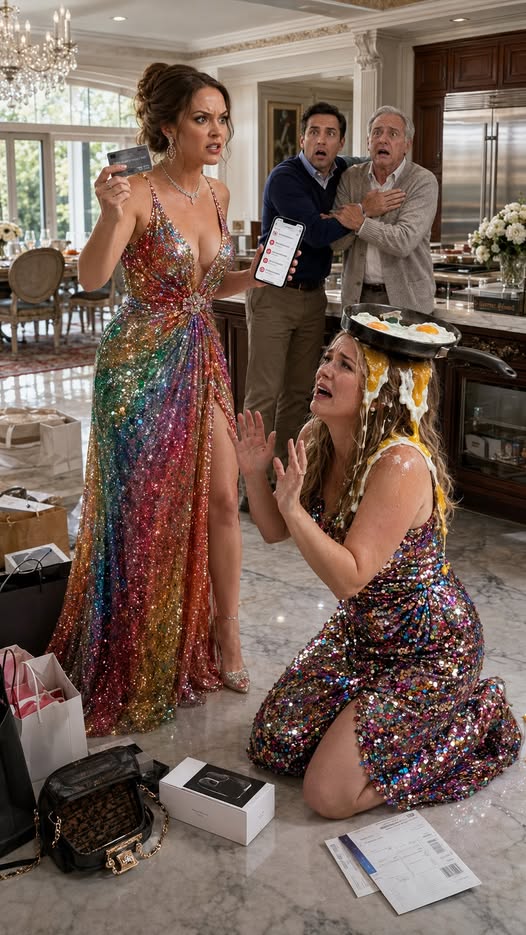
“Don’t tell Dad about this,” she muttered, refusing to meet my eyes, and quickly walked back to her car.
I stood on my porch in the brisk spring air, profoundly aware that I had just witnessed a forty-year-old chain of trauma finally snap its first link.
The Oakhaven Chronicle was fully reimbursed by the bank’s insurance. Human Resources officially closed their ethical review. They found zero violations and placed a formal letter of exoneration in my permanent file. Margaret, being exactly who she is, had a copy of that letter professionally framed and hung it in the employee breakroom.
Arthur has not changed. I suspect he will never change. The extravagant Sunday dinners continue without us. The prevailing narrative that circulates back to me through the cousin network is that the cold, vindictive reporter tore a loving family apart over a few dollars. He returned our Christmas card in December, marked Return to Sender.
That is the brutal truth about dismantling a toxic system. The system will never thank you for the demolition. And most of the time, the core of the system doesn’t even break. It simply loses its jurisdictional reach into your specific house.
Elias began attending intensive therapy that winter. Tuesday evenings at six. He now keeps his childhood paper route ledger displayed openly on his home office desk, right next to his car keys. When I finally asked him why he kept it so visible, he smiled a sad, weary smile and said, “So I never forget the sticker price of keeping the peace.”
Leo and Maya still come over for weekend visits. Diana allows it, which communicates a volume of growth she will likely never verbalize.
And my leather purse still hangs exactly where it has always hung. On the wrought-iron hook by the mudroom door. Unlocked. Unguarded. Inside a home where I now sleep soundly through the entire night.
Occasionally, when I am turning off the downstairs lights on my way up to bed, I will pause and look at it. It looks so entirely ordinary. Just a bag on a hook in a quiet, peaceful kitchen. You would never suspect that it once contained the most expensive, explosive piece of paper in the state of Ohio.
I used to genuinely believe that love required you to pay the extortion fee quietly, so that nobody was ever forced to leave the dinner table. But I am a woman of documents now, and I know better. Protection that demands the sacrifice of your truth is not protection. It is simply a generational invoice that a toxic family will continually forward to whoever possesses the capacity to love them the most.
And the absolute kindest, most loving action I ever took for the Vance family was finally, gently, marking that invoice Return to Sender.
If this chronicle resonated with you—if it reminded you of a family table where your personal truth is never offered a chair—perhaps it is time to pull one up for yourself. Like and share this post if you find it interesting, and drop a comment below telling me: Which piece of paper would you have signed?