My husband waited until the children had finished opening their presents before asking his fourteen-year-old daughter to take our toddler and his brother’s two children upstairs. “Why don’t you keep the little ones busy for a while? The adults could use some peace.”
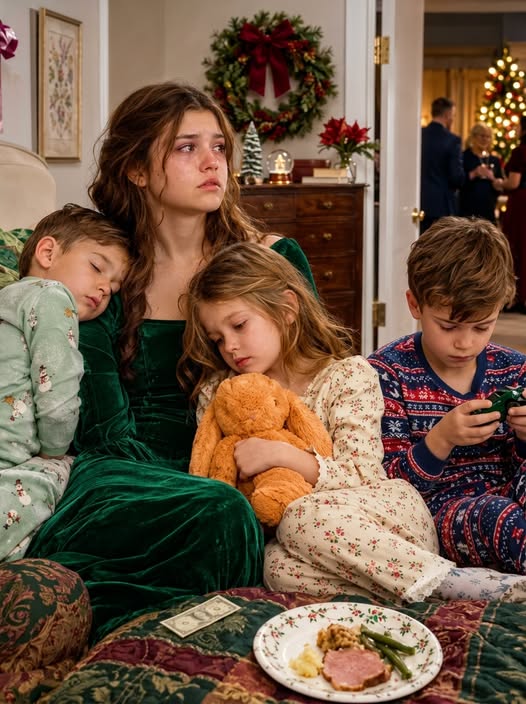
I thought he meant twenty minutes, perhaps half an hour while we got dinner on the table. Three hours later, I found his daughter sitting on the floor of the guest room in her Christmas dress, beside three sleeping children and a paper plate of cold food. On the pillow behind her lay a twenty-dollar bill.
When I told her she could come downstairs, she looked at me with such uncertainty that I thought I had misunderstood her.
“Did Dad say I was allowed to?”
I didn’t understand what that question meant until later.
By then, I had started to see how much I had failed to notice.
My name is Megan. I was thirty-nine, married to Peter, and the mother of a two-year-old boy named Owen. Peter had a fourteen-year-old daughter, Lydia, from his first marriage. She lived mostly with her mother, Renee, and spent alternate weekends with us. I had been her stepmother for five years, and I thought we had a warm, comfortable relationship. She was quiet around people she didn’t know well, funny once she felt at ease, and endlessly gentle with Owen.
I also thought I knew what went on in my own home.
Christmas proved I didn’t.
Lydia arrived just before noon that year, wearing a dark green velvet dress and carrying a small brown-paper package.
She had drawn tiny Christmas trees across the wrapping, each one a little different from the last.
“Is Dad here?” she asked as she stepped inside.
“He’s in the garage, bringing in the extra chairs.”
She smiled and held up the package. “I made him something. Can I give it to him tonight?”
“Of course.”
She tucked it beneath the tree, then went to help Owen with a wooden train he had already abandoned in favor of the box it came in.
By four o’clock, the house was full. Peter’s older brother, Grant, had arrived with his wife, Elise, and their children, seven-year-old Noah and five-year-old Sadie. Peter’s parents were there, along with aunts, uncles, and cousins.
Coats crowded the guest bed, casserole dishes covered the kitchen counters, and scraps of wrapping paper had migrated from the living room to nearly every corner of the house.
The children opened their gifts first. Owen seemed most interested in the cardboard boxes. Noah immediately assembled a plastic race track, while Sadie carried her new dollhouse from person to person, asking everyone to admire it. Lydia received a cream-colored sweater from her grandparents and a watercolor set from us. She looked genuinely pleased, and when Owen crawled over to help her unwrap the last present, she laughed and let him tear the paper into little pieces.
I took a picture. Lydia was smiling, Owen was holding a strip of ribbon, and Peter was sitting behind them on the couch. Looking at it later, you would never have guessed that anything was wrong.
The trouble began as we prepared dinner.
Owen was getting tired, Noah and Sadie had spread their toys across the living room, and the adults were moving furniture to make room for the dining table. Peter glanced toward Lydia.
“Hey, Lyd. Why don’t you take the little ones upstairs for a while?”
She looked up from her new paints. “All three of them?”
“Yeah. Put on a Christmas movie. They can play in the guest room while we get dinner sorted.”
Lydia hesitated. “Could I eat with everyone first?”
“We’re not sitting down yet.” Peter nodded toward the stairs. “Come on. Let the grown-ups get things organized.”
I was carrying a hot baking dish when I heard him. I could have set it down and said something. Instead, I kept moving. That was my first mistake.
Lydia gathered Owen’s stuffed dinosaur, helped Sadie carry her doll upstairs, and asked Noah to bring his race cars.
I assumed they would all be back before dinner.
At five-thirty, everyone sat down. I was carving the turkey, refilling glasses, and looking for an extra chair for Peter’s aunt when someone asked where Lydia was. Peter answered before I could.
“She’s upstairs with the kids. She said she didn’t mind watching them.”
Elise smiled with relief. “That’s sweet of her.”
I looked toward the staircase. “Could you go get her?”
“She’ll eat in a little while,” Peter said. “Owen’s finally settled down.”
Then cranberry sauce spilled across the tablecloth, and I turned back to the kitchen. Dinner lasted close to an hour. Afterward, the adults moved into the living room for coffee, pie, and the Christmas trivia game Peter insisted we play every year. He was enjoying himself. So was Grant, and so were nearly all the other adults.
Around seven, I noticed that Sadie’s new dollhouse still sat untouched beneath the tree.
I asked Peter whether the children should come downstairs.
“They’re fine,” he said. “Lydia has them watching a movie.”
“Shouldn’t they come down soon?”
“In a minute.”
His mother called us into the kitchen to see the pie she had brought, and another half hour slipped by.
It was nearly eight when I realized I had not seen Lydia since she went upstairs. I carried a slice of pie with me, thinking she might want some. The guest room door stood partly open. Noah was asleep on a blanket on the floor, Sadie curled beside him. Owen was sleeping in his portable crib. Lydia sat cross-legged near the bed, still wearing her velvet dress.
A paper plate rested on the nightstand. Turkey, mashed potatoes, and green beans had gone cold.
She looked up when I entered. “Hi, Megan.”
“Sweetheart, why are you still up here?”
She shrugged.
“Dad said to stay with them.”
“For three hours?”
Her eyes flicked toward the door. I noticed her shoes under a chair, the neatly folded wrapping paper from her watercolor set beside her overnight bag, and the twenty-dollar bill on the pillow next to the gift she had made for Peter.
I picked up the money. “What’s this?”
Lydia looked embarrassed. “Dad left it.”
“For what?”
“For watching everybody.”
“Did you ask him to pay you?”
She shook her head. “No.”
Then she said, very quietly, “I didn’t want the money. I just wanted to have Christmas dinner.”
I sat on the edge of the bed. “Why didn’t you come downstairs?”
Lydia glanced at the sleeping children. “I tried.”
She opened her phone and showed me the messages she had sent Peter. At 5:26, she had written, Can we come down now? Noah’s hungry.
Peter had replied, Not yet. We’re eating. There’s a plate for you in the hall.
At 6:14, Lydia had sent another message: Owen’s almost asleep. Could I come down after? Twelve minutes later, Peter had answered, Just stay up there till we’re done. Don’t wake him.
I read the messages twice.
“Did he tell you it would take this long?”
“No. He said just for dinner.”
“And when dinner was over?”
She picked at a loose thread on her dress. “He came up and said everyone was having a good time, and asked if I could keep them a little longer.”
“Did he ask if you wanted to?”
She gave me a puzzled look. “He told me I’d be helping.”
I looked at the three children. Noah and Sadie could have played downstairs with their parents nearby. Owen was our child, and we were responsible for him.
No one needed Lydia to spend Christmas evening upstairs with all three.
“I’ll get their parents,” I said. “You can come downstairs.”
She didn’t move.
“Lydia?”
“Did Dad say I was allowed to?”
For a moment, I thought I had heard her wrong.
“What do you mean?”
She lowered her eyes. “Did he tell you I could stop?”
“You don’t need permission to come eat Christmas dinner.”
She didn’t look relieved. She looked worried.
“I don’t want him to think I’m being difficult.”
I set the money on the nightstand. “Stay here for a moment. I’m going to talk to everyone.”
Downstairs, the trivia game was still going. Peter was laughing at something his cousin had said, while Grant poured himself more coffee. I went straight to Elise.
“Noah and Sadie are asleep upstairs. Could you and Grant bring them down?”
She looked surprised.
“Already?”
“They’ve been up there since before dinner.”
Her expression changed. “Oh. I thought Lydia wanted to watch the kids.”
“Who told you that?”
She glanced toward Peter. “Peter said she’d take care of them tonight.”
I turned to my husband. “Peter, I need you in the kitchen.”
He barely looked up. “Can it wait?”
“No.”
Something in my voice made him put down his mug and follow me.
“What’s going on?”
“Why is Lydia still upstairs?”
He frowned. “She’s watching the kids.”
“For more than three hours?”
He gave a short laugh. “They’ve been watching movies, Megan. It’s not as if I had her doing anything difficult.”
“She missed dinner.”
“I brought her food.”
“On a paper plate. It’s cold.”
“She could have warmed it up.”
I stared at him.
He seemed to think the problem was the temperature of the food, not the fact that his daughter had spent the holiday upstairs while everyone else celebrated.
“She asked you twice if she could come down.”
“I told her to wait. What’s the big deal?”
“She’s fourteen.”
“Exactly. She’s old enough to babysit.”
“That isn’t what I mean.”
Peter folded his arms. “She opened presents. She had a good time. Then she helped out. That’s what family does.”
“Did she agree to watch them all evening?”
“She didn’t complain.”
“That’s not an answer.”
He rubbed his forehead. “Can we not do this on Christmas?”
I held up the twenty-dollar bill. “What’s this?”
“Her babysitting money.”
“Did she ask for it?”
“No. I thought she deserved something for helping.”
“So you decided she was babysitting, told your brother she’d do it, and paid her afterward?”
He looked irritated. “You’re making it sound awful.”
“She was afraid to come downstairs without your permission.”
Peter rolled his eyes. “Lydia’s being dramatic.”
“Don’t call her dramatic.”
I almost never raised my voice at him, and he looked startled.
“She’s afraid you’ll be angry if she stops watching the children,” I said. “Why?”
He shook his head. “She knows I wouldn’t be angry.”
“Then why is she afraid?”
For once, he had no quick answer.
Upstairs, Grant and Elise were gathering their sleepy children. Elise apologized to Lydia.
“I honestly thought you volunteered, honey. I would have taken them back after dinner.”
Lydia nodded. “It’s okay.”
I hated how quickly the words came to her.
Peter appeared in the doorway. “See? Everyone’s fine.”
Lydia stood so suddenly she nearly knocked over her plate. “Sorry, Dad.”
She had done nothing wrong, but she apologized before he could say anything else.
Peter shifted uncomfortably. “You’re fine, Lyd. Go get some pie.”
She gave him a cautious smile and followed me downstairs.
The dishes had been cleared, the trivia game was over, and half the guests were getting ready to leave. Lydia stood beside the tree holding a slice of pie she hadn’t touched. Her grandmother hugged her.
“Where have you been hiding all evening, sweetheart?”
Lydia glanced toward her father. “Just helping.”
Peter smiled as if those two words settled everything. I wondered how often she had said them before.
Later, when I asked whether this had happened on other visits, she answered without hesitation.
“Only when Dad needs me.”
Then she added, “Sometimes that’s pretty much the whole weekend.”
The Weekends I Hadn’t Seen
By nine, most of the guests had left.
I was loading plates into the dishwasher when Grant came into the kitchen carrying Sadie’s abandoned doll.
“Thanks again for letting Lydia handle the kids,” he said.
I stopped. “What do you mean?”
He looked confused. “Peter told me she’d watch them after presents. It made things easier. Elise and I haven’t had a quiet dinner together in months.”
“When did Peter tell you that?”
“Tuesday, I think. He said Lydia wanted to make some extra money, so I figured you’d worked it out with her.”
I put the plate down. “Nobody worked anything out with her.”
Grant’s smile vanished. “What?”
“Peter didn’t ask her until this afternoon, and she didn’t know she’d be upstairs all evening.”
He looked toward the living room. “She missed dinner?”
“And dessert. Nearly everything after the presents.”
“I’m sorry, Megan. I had no idea.”
I believed him.
It didn’t change what had happened, but I believed him.
After Grant left, I found Peter in the garage folding the extra chairs.
“You told Grant on Tuesday that Lydia would babysit?”
He kept folding. “I mentioned it.”
“You hadn’t asked her.”
“I knew she’d help.”
“How?”
He straightened. “Because she always does.”
That answer bothered me more than if he had simply admitted he wanted a babysitter. He had been so certain Lydia would do what he asked that he had not thought to ask her first.
“She came here to spend Christmas with you.”
“And she did.”
“She sat upstairs for three hours.”
“She spent the afternoon with us.”
“Opening presents means she got enough Christmas?”
He sighed. “I don’t understand why you’re turning a simple favor into a family crisis.”
“It wasn’t a favor. You volunteered her without asking.”
“I gave her money.”
“She didn’t want money. She wanted to sit at the table with us.”
Peter looked away. “There were fourteen people downstairs. Somebody had to keep an eye on the little ones.”
“Why was Lydia the only one who had to miss dinner? Grant and Elise could have taken their own children. I could have kept Owen with me. You could have helped. You didn’t give any of us a chance.”
He rubbed his jaw. “Fine. I should have asked. Is that what you want me to say?”
“No. I want you to understand why she was afraid to come downstairs without your permission.”
His expression hardened. “She isn’t afraid of me.”
“Then why did she ask?”
He picked up another chair. “Can we finish cleaning up?”
I wanted to keep arguing, but I also wanted to understand what Lydia meant when she said she spent most weekends helping. I left him in the garage and went upstairs.
She had changed into pajamas and was putting her watercolor paints back into their case. The present for Peter was still beside her overnight bag.
“You never gave him his gift,” I said.
She glanced at it. “I was going to after dinner.”
“You still could.”
“Maybe tomorrow.”
I sat beside her. “Can I ask about the weekends you mentioned?”
She snapped the paint case shut.
“We do stuff sometimes.”
“What kind of things?”
She thought about it. “We went to the hardware store last time.”
“That sounds like an errand.”
She smiled faintly. “It was.”
“What about the breakfast Peter mentioned?”
“We got drive-through.”
“And then?”
“He dropped me back here. He had to go somewhere.”
I remembered one Saturday when I had worked a long shift at the library. I had come home to find Lydia building towers with Owen on the living room floor. I had asked whether she and her dad had a good day, and she had said yes.
Now I wondered how much that answer had left out.
“How long are you usually alone with Owen?”
She shrugged. “Sometimes an hour. Sometimes longer.”
“Does your dad tell you before you come over?”
“Not always.”
“What does he tell you?”
She looked at me as if the answer were obvious.
“That he wants me to come over.”
That was when I understood that Peter and Lydia might hear different meanings in the same invitation. He might mean he needed another pair of hands. She heard that her father wanted to spend time with her.
The next morning, I woke early and sat at the kitchen table with a cup of coffee I barely touched. Little memories kept returning: Lydia arriving with her backpack and asking whether Peter was home, Lydia sitting with Owen when I returned from work, Lydia thanking us before she left. I had thought she was simply polite. Now I wondered whether she believed she needed to be grateful just for being invited.
When Owen woke, I got him dressed and made oatmeal.
Lydia was already at the kitchen island with her sketchbook, drawing the little house across the street with its red front door and crooked porch railing.
“Morning,” I said.
“Morning.”
I put Owen in his high chair and sat across from her.
“Can we talk about yesterday?”
She closed the sketchbook. “Am I in trouble?”
“No, sweetheart.”
She paused. “Is Dad?”
I chose my words carefully. “Your dad and I need to talk about some things, but that’s between us.”
She nodded, then asked, “Are you mad that I told you?”
“Why would I be mad?”
“Dad said I shouldn’t make a big deal out of helping.”
My stomach tightened. “When did he say that?”
“A while ago.”
She told me about a Saturday in the summer when Peter had promised to take her to an art store. She had been saving birthday money for a particular watercolor brush.
They stopped for breakfast, then one of Peter’s friends called because he needed help moving some furniture. Peter brought Lydia home to watch Owen, saying taking a toddler along would make everything take too long. He was gone most of the afternoon, and the art store was closed by the time he returned.
Another weekend, Peter rented a movie they planned to watch together. His brother called about a problem with a truck, so Peter left. Lydia watched half the movie alone while Owen napped, and by the time Peter returned, it was too late to finish.
On another visit, Peter had said they would make pancakes. He forgot to buy milk, went to the store, and stopped somewhere else on the way back. Lydia made toast instead.
Each incident seemed small on its own: a missed store, an unfinished movie, a breakfast that never happened.
Lydia described them without anger, as though she had learned not to expect plans to go as promised.
“Sometimes we do things,” she added quickly. “He took me to get new sneakers before school.”
“Did you have fun?”
“Yeah. Owen came, though. We had to leave when he got tired.”
Owen dropped his spoon. Lydia leaned over to pick it up, but I reached for it first.
“I’ve got it.”
She looked surprised. I cleaned the spoon, handed Owen another one, and sat back down.
“Lydia, I’m sorry.”
“For what?”
“For not paying attention. I should have asked more about how your weekends were going.”
She looked at the table. “You work a lot.”
“That doesn’t mean I shouldn’t ask.”
She was quiet for a moment. “I thought you knew.”
The words landed hard.
“I didn’t.”
She traced the edge of her sketchbook.
“You’re always happy when I help.”
I remembered telling her what a wonderful big sister she was, how lucky Owen was to have her, how much easier she made things. I had meant every word. I had never asked whether she was getting enough time to be fourteen.
“You are a wonderful sister,” I said. “But that doesn’t make you responsible for Owen.”
“I know.”
She said it too quickly.
“Do you?”
She pressed her lips together. “I don’t mind helping.”
“I believe you.”
“I really don’t mind.”
“Okay.”
She stared at her sketchbook. “I just don’t always want to.”
“You should be able to say that.”
For a moment she didn’t answer. Then she whispered, “I tried once.”
She told me it had been October, when her friend Hannah invited her to a birthday party.
Lydia had asked whether she could go for a few hours and come to our house afterward. Peter told her that if she was too busy with her friends to help, maybe she should stay at her mother’s house that weekend.
“He didn’t come get me the next two times, either,” she said.
The Messages on Her Phone
I had not known Peter had missed two visits. I knew plans sometimes changed, but I believed I would have known if he had canceled entire weekends.
“What did he say when he canceled?”
Lydia opened her phone and showed me the messages. In October, she had written, Hey, Dad, Hannah’s party is Saturday from one to four. Could I come over after? I can bring my overnight stuff.
Peter had answered, I was counting on you Saturday afternoon.
I have things to do and Owen needs someone home with him.
Lydia replied, I can still come after the party. Is that okay?
His response read, If you’re too busy with your friends to help out, maybe just stay at your mom’s this weekend.
She had sent three more messages, trying to explain that she wasn’t too busy, that she could come Sunday if he preferred, that she had only wanted to go to the party. Peter didn’t reply until the next morning: We’ll figure out another weekend.
Two weeks later, she had asked if he was picking her up Friday. He wrote that he couldn’t make it because too much was going on. The visit after that was canceled too.
There were no angry arguments, no dramatic accusations, just a fourteen-year-old checking whether her father still planned to show up and a father who kept telling her he wouldn’t.
“What happened after that?” I asked.
She showed me another conversation from a few weeks later. Peter had written, Do you want to come over Saturday? Megan’s working, and I could use some help with Owen.
Lydia had answered, Yes! with an exclamation point.
I stared at it. She had been so happy—not because she wanted to babysit, but because her father had finally invited her back.
“Did you go anywhere that weekend?”
She shook her head. “He said we might get lunch, but Owen was cranky. We stayed home. Dad went to pick up some things.”
“Did you tell your mom about the canceled weekends?”
“She knew Dad canceled.”
“Did she know why?”
Lydia looked uncomfortable. “I don’t think so. Mom gets upset when Dad cancels, and I didn’t want them fighting again.”
Peter and Renee had been divorced for nearly nine years.
They were civil, but not close, and Lydia had spent much of her childhood listening to adults talk about schedules and pickups. She did not want to become another reason for them to argue.
“Do you think your dad canceled because you didn’t want to miss Hannah’s party?”
Her eyes filled. “I don’t know.”
She brushed a tear away quickly.
“But the next time he called, I said yes right away. And he came.”
She looked down at her phone. “Sometimes I think Dad likes it better when I’m useful.”
I didn’t want to tell her she was wrong when the messages were right there in front of us. I didn’t want to make a promise on Peter’s behalf, either.
“You don’t have to earn time with your father,” I said.
She started to cry. “I know.”
“No, sweetheart. I mean it.
You don’t have to babysit, miss your friends’ birthdays, or make yourself useful so he’ll pick you up.”
She leaned against me. For a while, neither of us spoke.
Then she lifted her head. “If I stop helping with Owen, do you think Dad will still want me here?”
I wished I could answer without hesitation. But I didn’t want to offer her another promise an adult might fail to keep.
“I can’t tell you what your dad will do,” I said gently. “But I can tell you that you’ve done nothing wrong. Whether he picks you up or not, you deserve to be here because you’re his daughter. I’ll make sure he understands that.”
She nodded and asked me not to tell Peter she had cried. I told her I would respect her feelings, but I also said we could not leave things as they were.
Her father needed to know how his choices were affecting her. After thinking about it, Lydia gave me permission to show him the messages.
“Just don’t make him think I hate Owen,” she said.
I put my arms around her. “No one who sees you with Owen could think that.”
That was when I understood how long she had been protecting her father’s feelings. It was time for the adults to protect hers.
Peter was making coffee when I found him an hour later. Lydia had taken Owen into the living room to show him one of his new picture books.
“We need to talk,” I said.
He sighed. “Are we still doing this?”
“Yes.”
He set his mug down. “What now?”
I told him about the canceled visits and showed him the messages. He read them without speaking, then handed my phone back.
“I didn’t cancel those weekends to punish her.”
“Then why did you cancel?”
“I had work. Things came up.”
“And the weekend Hannah had a party?”
He looked frustrated. “I needed someone to watch Owen, and she had already agreed to come over.”
“She agreed to visit you. She didn’t agree to babysit.”
“She’s part of the family. Families help each other.”
“Does Owen have to do something for you before he belongs here?”
“He’s two.”
“And Lydia is fourteen. She’s still your child.”
Peter shook his head. “I don’t treat them differently.”
“Then why does Lydia think she has to babysit before you’ll pick her up?”
His expression changed. “What?”
“She asked me whether you’d still want her here if she stopped helping with Owen.”
He stared at me.
“She thinks you canceled those weekends because she wouldn’t skip her friend’s birthday to babysit.”
“That’s ridiculous.
I love my daughter.”
“I believe you. But loving her isn’t the same as making her feel loved.”
He looked away. For a moment, I thought he might understand. Then he said, “I can’t plan my entire life around a teenager.”
“Nobody is asking you to. We’re asking you to make room for your daughter in the life you already have.”
“She has her mother.”
The words came out quickly. I don’t think Peter understood how they sounded until the room went quiet.
He rubbed his face. “That’s not what I meant.”
“Then what did you mean?”
He didn’t answer right away.
“Renee handles most of the everyday things—school, appointments, all of that,” he said eventually. “I see Lydia every other weekend.”
“Which means you have less time with her.
Why are you spending it finding things for her to do instead of being with her?”
He looked down.
I pushed the phone toward him and tapped the message where he had written, Megan’s working, and I could use some help with Owen.
“Read that one again.”
He did.
“You didn’t ask if she wanted to see a movie or what was happening at school. You asked her to come help with Owen. And she answered with an exclamation point because she was excited you wanted her back.”
Peter put the phone down.
I took a breath. “I need to say something else. I’ve been part of this too. I thanked Lydia for helping. I came home relieved that things were taken care of. I didn’t ask whether she’d spent the day doing something she wanted.”
“Megan—”
“I’m not pretending I got everything right.
But I’m not going to keep making the same mistake now that I know.”
Peter sat down. For the first time since Christmas dinner, he looked more tired than angry.
“I never wanted her to feel that way.”
“Then we have to change what we’re doing.”
He nodded, though I wasn’t sure how much had reached him.
Later that morning, I called Renee. I hadn’t planned to bring her into a disagreement between Peter and me, but Lydia was her daughter too, and she deserved to know what was happening during the visits.
Renee answered on the third ring. “Merry Christmas, Megan.”
“Merry Christmas. Do you have a few minutes?”
“Of course. Is Lydia okay?”
“She’s okay, but I think there’s something you should know.”
I explained what had happened the night before, then told her about the canceled weekends. Renee went quiet.
“She told you about October?”
“Yes.”
“I knew Peter canceled twice. He told her he had things going on.”
“Did Lydia seem upset?”
Renee let out a long breath. “The first Friday, she sat by the front door with her overnight bag already packed. I had to tell her Peter wasn’t coming.”
I closed my eyes. Lydia had never told me.
Renee continued, “She kept saying he was busy. I thought maybe she was getting older and wanted more time with her friends. She kept talking about them, so I thought he was giving her space.”
“She isn’t asking for space.”
“I know that now. She’s always been afraid of disappointing him.”
I looked toward the living room. Lydia was sitting beside Owen, helping him turn the pages of his book.
Renee said, “Last month she asked me whether some fathers stop doing weekends when their kids get older.”
My chest tightened.
“What did you tell her?”
“That getting older doesn’t mean your dad stops being your dad.”
I glanced toward the kitchen. Peter stood near the counter, listening. His face had gone pale.
Renee and I talked a little longer. We agreed Lydia needed to know both homes were safe places for her to speak honestly, and that the schedule should be predictable. When I hung up, I found Lydia in the living room. Owen had fallen asleep beside her, his head resting against a cushion.
“Your mom and I talked,” I said.
Lydia looked nervous. “Is she mad?”
“No. She’s concerned. We both are.”
“At Dad?”
“About what’s been happening.”
Lydia looked down at her brother. “I don’t want Dad to think I don’t love Owen.”
“I know you love him.”
“I like helping him.”
“I know.”
She smoothed the corner of Owen’s blanket.
“Sometimes he calls me Lydie. He can’t say Lydia yet.”
She smiled a little, then the smile faded.
“I just wish Dad wanted to spend time with me, too.”
I looked up. Peter was standing in the doorway, and this time he had heard every word.
A Promise Is Only a Beginning
Peter didn’t speak at first. Lydia noticed him and straightened immediately.
“Dad, I wasn’t—”
“You don’t have to explain.”
His voice was quieter than I had heard it all weekend. He pulled out a chair and sat across from her.
“Can we talk for a minute, Lyd?”
She nodded.
“I heard what you said.”
Her face reddened. “I wasn’t trying to complain.”
“I know.”
“I don’t mind watching Owen.”
“I know that too.”
She glanced toward her brother. “He’s not hard most of the time.”
Peter looked at her for a long moment.
“That isn’t the point, sweetheart.”
She seemed unsure what he meant.
He leaned forward. “I think I’ve been getting something wrong for a while. I kept thinking you were old enough to help more, and you are, but I started counting on you to do things I should have been handling myself.”
Lydia looked down at her hands.
Peter continued, “I shouldn’t have made you miss Christmas dinner. I shouldn’t have told Grant you’d watch his kids without asking you, and I shouldn’t have treated your visits like something we could cancel whenever you weren’t available to help.”
Lydia’s eyes filled. “I wanted to go to Hannah’s birthday.”
“I know.”
“She only turns fourteen once.”
Peter nodded. “I know.”
“And I could have come over afterward.”
He looked ashamed. “Yes. You could have.”
For the first time, Lydia sounded angry.
“You didn’t even answer my messages.”
Peter didn’t defend himself. “You’re right.”
“I thought you were mad at me.”
“I was frustrated when my plans changed, but I shouldn’t have taken that out on you.”
She wiped her eyes. “Then you didn’t come the next time.”
“I had things going on.”
Lydia looked directly at him. “That’s what you always say.”
The words hung between them. Peter looked down, and I watched him resist the urge to explain himself. Then he stopped trying.
“You’re right about that too.”
He took a breath. “I’m sorry, Lyd. You shouldn’t have to wonder whether I’m coming to get you because I need someone to watch Owen. You’re my daughter. I want you here because you’re my daughter.”
Lydia studied his face. “Even if I don’t babysit?”
“Even then.”
“Even if I want to go somewhere with my friends?”
“Yes.”
“What if I don’t want to watch Owen?”
“Then you can say no.”
She looked genuinely uncertain. “You won’t be mad?”
Peter hesitated before answering. “I might feel disappointed if I need help and you can’t do it, but that’s my problem to solve, not yours. It won’t change when I see you.”
Lydia watched him closely. I could tell she wanted to believe him, but I also knew she had heard promises before.
Peter glanced toward the tree, where a few unopened gifts remained. “I was thinking we could have another Christmas dinner next weekend. Just us.”
Lydia shook her head. “You don’t have to do that.”
“We could open presents again.”
“I already opened mine.”
He nodded slowly. “Okay.”
A long silence followed. Then Lydia spoke.
“Could we go to that art store instead?”
Peter looked up.
“The one on Cedar Street?”
“Yeah.”
“Of course.”
“And maybe get breakfast?”
“Absolutely.”
She picked at her sleeve. “Just us?”
Peter glanced toward Owen, but I answered before he could offer to bring him.
“I can take care of Owen. If I’m working, we’ll arrange childcare. That’s what parents do.”
Peter nodded. “Just us, Lyd.”
She thought for a moment. “Saturday?”
“Saturday.”
“What time?”
“How about nine?”
She nodded, then asked the question I had been dreading.
“Are you really coming this time?”
Peter’s face changed. I think that question hurt him more than anything I had said, because it came from his daughter and because she wasn’t trying to hurt him. She was simply asking whether she should let herself hope.
He reached across the table. Lydia looked at his hand before taking it.
“I’ll be there at nine,” he said.
She nodded again, but she didn’t smile.
That evening, Renee came to pick Lydia up. Peter walked her to the car and spoke with Renee for several minutes. They didn’t argue. Lydia stood between them, looking from one parent to the other, and then Peter hugged her. She hugged him back.
When he came inside, he took out his phone.
“What are you doing?” I asked.
“Putting Saturday on my calendar.”
He typed for a moment, then looked at me.
“I think I need to stop saying I’ll make time for her.”
“What do you mean?”
“I need to actually make it.”
It was a beginning, but a beginning was not the same as repairing what had gone wrong. I knew Lydia would be watching what happened Saturday morning.
So would I.
Just Being His Daughter
At eight fifty-two the following Saturday, Peter pulled into Renee’s driveway.
He had left early enough to account for traffic; I knew because I’d watched him check the route twice before he left. Owen sat on the kitchen floor beside me, trying to fit a plastic giraffe into a toy garage. There was no emergency, no last-minute request for Lydia to help with her brother, and no message asking whether they could go another day.
Peter went to pick up his daughter because he had said he would.
That afternoon, Lydia came home with a small paper bag from the art store. Inside was the watercolor brush she had wanted since summer. But the brush wasn’t what made her happy. They had gone. They had stopped at a diner for pancakes, and Peter had let her choose the place.
At the art store, he had asked an employee which paper worked best with the paints Lydia had received for Christmas.
“Did you have fun?” I asked.
She smiled. “Yeah.”
“Good.”
She hesitated. “Can I show you something?”
She opened her sketchbook. She had drawn the diner: the windows a little crooked, the chairs taller than they should have been, and Peter sitting across from her with a coffee cup in front of him. In the drawing, he was looking at her—not at his phone or the door, but at her.
“That’s beautiful,” I said.
Lydia grinned. “He said I could draw him, but he kept moving.”
I laughed. “That sounds like your dad.”
She went upstairs to put away her supplies. Peter came into the kitchen a moment later.
“How did it go?” I asked.
He smiled. “Really well.”
“Did you talk?”
“A lot.
School, her friends, the art class she’s thinking of taking.”
I raised an eyebrow. “She’s been talking about that class for months.”
He looked embarrassed. “I know. I didn’t realize how much I’d missed.”
One breakfast did not erase months of disappointment, and Peter did not suddenly become perfect. Two weeks later, he nearly made the same mistake. He had planned to take Lydia to a bookstore when a friend called and asked for help with a home repair. I heard Peter say, “I can probably come by around—”
Then he stopped. He glanced at Lydia, who was at the kitchen table finishing her cereal.
“Actually, I can’t today,” he told his friend. “I already have plans with my daughter.”
Lydia didn’t look up right away, but I saw her smile into her bowl.
The following month, I had to work on a Saturday when Lydia was visiting.
Peter arranged for an adult sitter to stay with Owen so he could take Lydia to a school art exhibit downtown. He didn’t ask her to stay home, and he didn’t tell her they could go another time. He made arrangements.
Renee noticed the difference too. She told me Lydia had stopped asking several times whether Peter was really coming to pick her up. She still checked now and then, but she no longer packed her overnight bag and waited by the door before he had confirmed his plans.
When Lydia had something happening with her friends, she began telling Peter. He listened. Sometimes they adjusted their plans, and sometimes he went to watch her activities. They were learning how to spend time together without turning every visit into a discussion about childcare.
One Sunday afternoon in February, Lydia came downstairs carrying a small package wrapped in brown paper.
I recognized the hand-drawn Christmas trees.
“Dad?”
Peter looked up from the couch. “Yeah, Lyd?”
“I never gave you this.”
She handed him the package. He turned it over, then looked at her.
“Is this from Christmas?”
She nodded. “I made it before I came over.”
Peter carefully removed the paper. Inside was a small wooden picture frame with a photograph of the two of them at a Christmas tree farm. Lydia was about eight in the picture, wearing a pink winter hat and laughing as Peter lifted her onto his shoulders. One of her front teeth was missing.
He stared at the photograph.
“I remember this day.”
Lydia smiled. “We went to that little place with the hot chocolate.”
“You spilled yours all over my coat.”
“You told Mom it was your fault.”
“It was.
I was the one trying to carry you and two cups of hot chocolate.”
She laughed. Peter turned the frame over. On the back, Lydia had written, I miss doing things like this with you.
He read the words, then looked at her.
“I miss it too, sweetheart.”
She sat beside him. For a while, they looked at the photograph together. Then Peter said, “Maybe we could go back there next Christmas.”
Lydia gave him a sideways look. “If you don’t cancel.”
He nodded. “Fair enough.”
She smiled. It wasn’t the sort of answer that would make everything right in an instant, but it was honest. And it was more than she would have said a month earlier.
That evening, we watched a movie together. Lydia chose an animated film Owen had already seen at least twenty times, insisting she liked it too.
Halfway through, Owen climbed off the couch and ran over to her with his toy dinosaurs.
“Lydie! Play!”
She looked down at him. “After the movie, buddy.”
Owen held up the green dinosaur. “Play!”
Peter stood. “Come on, Owen. I’ll play dinosaurs with you.”
Owen hesitated, looking from Lydia to his father.
“Big dinosaur?”
“Big dinosaur,” Peter promised.
Owen grabbed his hand and pulled him toward the rug. Lydia watched them for a moment, then tucked the blanket over her knees and settled back into the couch. No one called her selfish. No one reminded her she was the big sister. No one asked her to give up what she wanted because the adults had other plans.
About twenty minutes later, she paused the movie herself.
“I’m going to see what Owen’s building.”
She walked over and sat beside her brother. Peter handed her a plastic dinosaur, and Owen squealed with delight.
I watched the three of them from the couch. For the first time in months, Lydia wasn’t helping because she was afraid of what would happen if she said no. She was simply enjoying her family.
When she got tired of playing, she returned to the couch and finished the movie. Nobody questioned her.
That may sound like a small thing, but I remembered Christmas night: the cold dinner, the twenty-dollar bill, the fourteen-year-old sitting on the bedroom floor and wondering whether she could come downstairs without her father’s permission. I remembered her asking whether Peter would still want her around if she stopped babysitting, and I thought about the courage it had taken to ask.
Lydia never needed to stop loving Owen.
She never needed to choose between being a good sister and having a relationship with her father. The adults in her life simply needed to remember something we had nearly forgotten: she was Peter’s daughter before she was anyone’s big sister, and she should never have had to earn her place at her own family’s Christmas table.
THE END..!