Chapter 1: The Invisible Boy
For nine consecutive summers, my parents shipped me across state lines to my aunt’s house, ensuring my older brother could enjoy a flawless, unburdened family vacation. By the time the principal handed me my high school diploma, my life was already packed away in a duffel bag, waiting in a locker in a different time zone. My parents clapped from the bleachers, completely oblivious to the fact that they wouldn’t know my zip code for the next four years.
The pattern began when I was merely eight years old. My parents, Brenda and Mark, deposited me on the worn wooden porch of Aunt Sarah’s house in Roanoke, Virginia. They framed it as a grand adventure, a spectacular prize I had somehow won. Aunt Sarah owned a labyrinthine used bookstore, boasted a backyard that stretched into a small patch of woods, and possessed an overweight, aggressively affectionate tabby cat named Colonel Mustard.
As I stood there gripping my bag, my father kept the engine running. My mother waved brightly from the passenger seat, a picture of manicured maternal affection. In the back, my older brother, Ian, didn’t even bother to lift his eyes from his glowing Gameboy screen. As their sedan disappeared around the corner, I felt a strange hollow flutter in my chest, though I lacked the vocabulary to articulate it. That was the summer they drove down to the sun-drenched shores of Myrtle Beach. I was eight; I assumed adults operated on a plane of complex, undeniable logic. Perhaps Dad had a conference. Perhaps Ian was attending a specialized camp.
Aunt Sarah, for her part, was a revelation. She never once made me feel like an abandoned parcel. She allowed me to eat sugary cereal for dinner on Fridays, taught me the intricate dance of chess pieces, and let me arrange the dusty, leather-bound volumes in her shop. I had a genuinely wonderful summer, swaddled in the scent of old paper and vanilla. I didn’t ask questions.
But the following June, the routine repeated. My mother called early in the month, her voice dripping with artificial enthusiasm. “Guess what, buddy? You get to spend the summer at Aunt Sarah’s again!” She delivered the news as if granting a royal pardon. That year, they went to the Outer Banks. I only discovered this months later when a distant cousin casually mentioned it over dry turkey at Thanksgiving, assuming I had been there. Nobody had bothered to tell me. The omission stung sharper than the exclusion.
To understand the mechanics of my childhood, you have to understand my family’s ecosystem. My father is a regional sales manager for a building materials conglomerate—a man who exists primarily in the periphery, communicating through nods and grunts. My mother is the architect of our public image, a woman who curates her life for the neighbors and maintains a dedicated Pinterest board for every minor holiday. Then there is Ian, two years my senior, the radiant sun around which our entire household forcefully orbited.
Ian was diagnosed with ADHD in the second grade. I want to be abundantly clear: I do not dismiss the reality of his diagnosis. It is challenging, and it demands specialized support. However, at a certain juncture, my parents made a silent, sweeping executive decision: Ian’s needs were the absolute priority, and my needs were entirely optional. Ian required rigid structure, exhausting physical activities, and undivided attention. What did I require? Apparently, just a guest bedroom in Roanoke and a cat named after a Clue character.
My fatal flaw was my compliance. I was the “easy” child. I rarely spoke out of turn, I devoured books silently in corners, and I never threw public tantrums. Teachers adored me; babysitters told my mother I was an absolute breeze to watch. Instead of receiving this as a comfort, my mother weaponized it. My self-sufficiency became her permission slip to push me aside. Because I demanded nothing, I was given precisely that.
I remember asking, just once, when I was around nine, if I could tag along on their next trip. My mother didn’t even blink. She patted my head with a rehearsed, suffocating sweetness. “Oh, sweetie, you’d be so utterly bored. Ian’s activities are just much more his speed. You’ll have way more fun at Aunt Sarah’s.”
The conversation was dead on arrival. By the time I turned ten, my summers were set in stone. June meant packing. June meant the drive to Roanoke. June meant Ian riding shotgun to a destination where I was persona non grata.
Let me clarify: I adored Aunt Sarah. She is, without reservation, the most phenomenal human being in my bloodline. She never married, and she possesses the rare gift of treating every conversation as if it holds the secrets of the universe. She taught me how to make a perfect roux, handed me a copy of Slaughterhouse-Five when I was probably too young for its existential dread, and never once looked at me like a burden.
Yet, being sent to a sanctuary does not negate the act of being exiled. Sarah could be a saint, but that didn’t erase the math: for nine consecutive years, my parents willfully planned family memories with a deliberate, Caleb-sized hole in them.
The definitive proof arrived when I was twelve. I was a curious kid, adept enough with computers to navigate the early internet. One sticky afternoon, I sat at Aunt Sarah’s bulky desktop. She had accidentally left her Facebook account logged in. I clicked the wrong browser tab, and there it was. A photo album uploaded by my mother, titled: Family Trip to Hilton Head!!
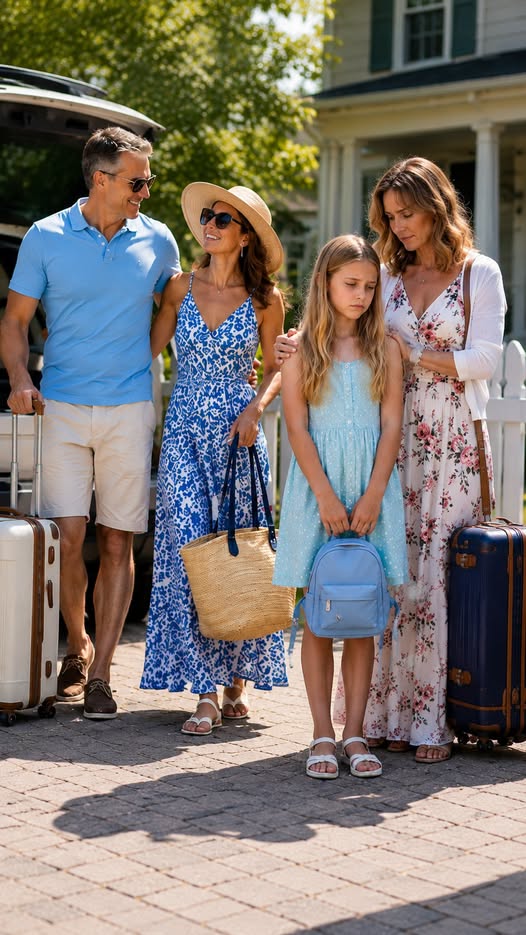
The two exclamation points felt like daggers. There were thirty-six photographs. Dad lounging by the surf. Ian screaming with joy on a rented jet ski. Mom in a floral sundress, hoisting a frozen margarita toward the lens. The three of them clustered around a wooden table at a seafood joint, their faces tan, glowing, and whole.
A family of three.
I counted the images twice, my heart hammering a dull, heavy rhythm against my ribs. I wasn’t in a single frame. Naturally, I was two hundred miles away, eating grilled cheese and reading Vonnegut. I sat frozen in that wheeled office chair for what felt like hours. I remember the digital cursor blinking rhythmically against the white screen. I remember the faint, melodic chiming of Sarah’s wind chimes on the porch. I didn’t shed a tear. I think the deepest, quietest part of my soul already knew the truth. The photos didn’t create the abandonment; they merely gave my ghost a name.
I am not part of this family, I realized, the thought crystalline and cold.
I closed the tab. I wiped my browser history. I never breathed a word of it to Aunt Sarah, nor to my parents when they picked me up. I simply filed the heartbreak away in a dark, secure vault in my chest.
At twelve years old, I learned the dangerous art of keeping my own counsel. But the realization sparked something else—a slow-burning fuse that would eventually detonate the entire facade of my mother’s perfect life.
Chapter 2: The Architecture of Escape
The summers marched on like a relentless drumbeat. Thirteen, fourteen, fifteen, sixteen. Each year heralded a new, sun-drenched destination I would never see. Gulf Shores, Savannah, Key West, Charleston. Each year, a fresh digital album materialized, captioned with nauseating platitudes: Making memories! So blessed! Every album featured three smiling faces. Every summer, I inhaled the dust of Roanoke, shelving paperbacks and constructing an impenetrable armor of apathy.
I stopped pretending to care around my fourteenth birthday. It wasn’t a loud, door-slamming rebellion. It was the quiet, terrifying serenity of a prisoner who has finally mapped the guards’ patrol routes. When you realize the people tasked with loving you have been actively demonstrating your worthlessness for six years, fighting becomes a mathematical error. You don’t fight. You plan.
By sixteen, my escape was drafted. By seventeen, it was a fully operational timeline.
During my junior year of high school, I began to pay meticulous attention to the logistics of survival—things my parents never bothered to inquire about. During my lunch blocks, I commandeered the library computers, researching universities in states I had never stepped foot in. My criteria were brutally simple: the availability of full-ride academic scholarships, and maximum geographical distance from the Commonwealth of Virginia.
Boise State University in Idaho was the golden ticket. A comprehensive academic ride, situated roughly 1,900 miles from Brenda and Mark’s front porch. I had never ventured west of the Mississippi River, which was precisely its appeal.
I navigated the labyrinth of applications entirely alone. Aunt Sarah, bless her intuitive heart, reviewed my admission essays. She noted my target schools were a grueling distance away, but she never pried. Sarah respected the silences between words. She trusts that you will tell her what she needs to know when you are ready, I thought. I was nowhere near ready.
The thick envelope from Boise arrived in March of my senior year. Scholarship secured. Housing confirmed. I stashed the documents in my gym locker. My parents operated under the lazy assumption that I would attend Virginia Tech, likely commuting from my childhood bedroom to spare them the expense of dorms. My mother mentioned it exactly once over dry chicken breasts.
“We should really look at the application deadlines for Tech,” she muttered, not looking up from her phone.
“I’ve already handled my college arrangements,” I replied, keeping my tone perfectly flat.
She offered a vague, dismissive nod and immediately pivoted to discussing Ian’s promising new entry-level sales job. That was the alpha and omega of their interest in my future.
Graduation fell on a sweltering Saturday in late May. Over the preceding fortnight, I had systematically smuggled my life into a single, unassuming suitcase. It wasn’t much: practical clothes, my laptop, a stack of cherished paperbacks from Sarah, and $4,200 in tightly rolled bills—the culmination of two years slinging turkey clubs at a local deli. I had discreetly stashed the suitcase in a rented locker at the Greyhound terminal in Richmond three days prior.
The morning of the ceremony, while my mother was busy pinning my gown, I purchased a one-way digital ticket for the 11:00 PM departure. Roanoke to Richmond, Richmond to Chicago, Chicago to Boise. Thirty-one agonizing hours on a bus.
After I walked across the stage, my parents treated Ian and me to celebratory appetizers at Applebee’s. My mother pecked at a sampler platter, lamenting how swiftly childhood evaporates. My father slid a generic greeting card across the sticky table. Inside was a crisp hundred-dollar bill.
“Proud of you, buddy,” he mumbled, glancing at the muted sports highlights on the bar TV. Ian spent the meal furiously texting someone, utterly detached.
“Thank you,” I said, looking directly into my father’s eyes. I genuinely meant it. I wasn’t thanking him for the cash; I was thanking him for making my departure so phenomenally devoid of guilt.
Around 8:00 PM, I announced I was heading to a friend’s graduation bash. My father dropped me off at a classmate’s curb. I waited in the shadows until his taillights faded, walked three blocks to a neon-lit gas station, and hailed an Uber to the bus depot.
At exactly 11:15 PM, settled into a threadbare window seat smelling faintly of diesel and old citrus, I pulled out my phone and composed a text to my mother:
Heading out early for a road trip with some friends. I’ll be gone for a while. Love you.
Her reply arrived two minutes later: Have fun sweetie!
She didn’t ask which friends. She didn’t ask for an itinerary. She didn’t ask when I would return.
Somewhere near the jagged border of West Virginia, as the bus rumbled into the pitch-black night, I powered down my phone. I wouldn’t turn it back on for nearly a month.
I learned the fallout of my vanishing act much later, entirely through Aunt Sarah, who unwittingly became my sole liaison to a past I had amputated.
Week one: Total parental ignorance. My mother fired off two texts—one inquiring if I had packed SPF 50, another reminding me of a routine dental cleaning. When I ghosted her, she chalked it up to standard teenage rebellion.
Week two: Mild annoyance. My father called twice, leaving a voicemail that sounded more inconvenienced than concerned. “Hey buddy, checking in. Give us a ring.” He asked Ian if he’d heard from me. Ian hadn’t.
Week three: The facade cracked. Brenda finally panicked. She dialed Aunt Sarah, demanding to know my whereabouts. Sarah, telling the absolute truth, said she had no idea. My mother proceeded to interrogate my high school acquaintances, yielding nothing. Finally, she called the deli, only to be informed I had officially quit two weeks before graduation.
Reality hit them like a freight train. My father dialed 911.
But here is the beautiful, bureaucratic poetry of the situation: I was eighteen years old. A legal adult. I had committed no infractions. I had left a digital paper trail stating my voluntary departure. When the police officer stood in my parents’ pristine living room, he politely informed them that their adult son had simply exercised his right to walk away. There was no foul play, no missing persons case to open.
My mother, Sarah later told me, collapsed onto the sofa, entirely unequipped to handle a narrative she couldn’t control.
I was gone. I was a ghost in the wind. But as the bus tires devoured the miles toward Idaho, I realized the hardest part wasn’t leaving. The hardest part would be staying gone when they inevitably tried to drag me back into the dark.
Chapter 3: The Ghost in Idaho
It took me four weeks to finally dial Aunt Sarah’s number. By then, I was thoroughly entrenched in Boise. I had secured a soul-crushing but stable part-time gig at a data entry firm, and my new apartment was a microscopic studio that perpetually smelled of industrial carpet cleaner and burnt toast. But the keys in my pocket were mine, and the silence within those four walls was absolute heaven.
When Sarah answered, I told her I was in Idaho. I begged her to keep my coordinates a secret from Mark and Brenda. The line stretched into a thick, heavy silence.
“Caleb,” she breathed, her voice trembling slightly. “Are you safe?”
“Yes.”
“Are you okay?”
I looked around my barren, dim room. “I’m better than I’ve been in my entire life, Sarah.”
She didn’t offer a lecture. She didn’t try to guilt me into calling my mother. She simply laid down one unbreakable law: “You call me every single Sunday. Do you hear me? Every Sunday. I don’t care if the sky is falling or if you have absolutely nothing to say.”
I honored that pact. Every Sunday for four years, Sarah and I spoke. My parents, however, were entirely cut off from the feed.
I know my silence sounds ruthless. Perhaps it was. But after enduring nine summers of being treated like a logistical inconvenience, I had zero empathy left for Mark and Brenda. I gave my trust solely to the woman they had used as a storage facility for their unwanted son.
Sarah became my window into my mother’s psychological unraveling. Brenda cycled through the classic stages of grief, heavily filtered through her narcissism. First came the frantic, wailing phone calls to relatives. “What did I do wrong? Where is my boy?”
Then, the blistering anger. “He is punishing us! He’s being incredibly selfish!”
Finally, she settled on manipulation, constructing a lie so audacious it still makes my blood boil. Around the three-month mark of my absence, my mother began telling the extended family that I was “traveling.”
“Caleb is just taking some time to find himself,” she cooed at family gatherings, according to Sarah. “He’s doing a grand cross-country trip. A gap year, really. You know how adventurous kids are these days!”
She painted a picture of me backpacking through majestic national parks, a bohemian wanderer seeking enlightenment. She scrubbed the abandonment from the narrative entirely. My desperate escape morphed into a trendy lifestyle choice endorsed by a loving mother. In her revised history, she never had to admit the crushing truth: her son fled because she had spent a decade proving he didn’t belong.
My father’s reaction was a cowardly retreat into silence. He asked Sarah about me exactly once during a Christmas dinner. When Sarah firmly stated I was healthy but desired zero contact, he simply nodded, took a sip of his beer, and changed the subject to golf. I couldn’t decide if it was acceptance or sheer cowardice.
The years in Boise flew by in a blur of hard work and hard-won peace. I earned my computer science degree. I parlayed it into a lucrative data analyst position at a regional logistics firm. I upgraded from the studio to a comfortable one-bedroom, bought a reliable, slightly dented Subaru, and cultivated a life entirely devoid of the Smith family baggage.
I was twenty-two, financially independent, and profoundly happy.
I also met Ashley. She was a fiery, pragmatic veterinary technician at a clinic down the block from my complex. I had dragged in a mangy, flea-bitten stray cat I found shivering behind a dumpster. (Yes, adopting a stray is a massive cliché, and no, I do not care). Ashley checked the cat in, her nose dusted with freckles, possessing zero tolerance for meaningless small talk.
On our first date, nursing cheap lagers at a dive bar, she bluntly asked why my family never came up in conversation. I gave her the abridged, unvarnished truth. She didn’t offer pity. She didn’t suggest therapy. She simply signaled the bartender for another round and said, “Well, their massive loss.”
That was the exact moment I knew I loved her.
Life was a tranquil, predictable rhythm. Until one brisk Thursday afternoon in late October.
Ashley and I were splitting a plate of fries at a crowded downtown bistro. I glanced up from my phone, and my breath caught sharply in my throat. Standing in the entryway, clad in a crisp suit and wearing a laminated conference badge, was Ian.
His pharmaceutical sales company had flown him to Idaho for a convention. Out of fifty states, out of hundreds of cities, out of dozens of restaurants on this specific block, my brother was staring dead at me.
The expression on his face wasn’t fury, nor was it the joy of a reunited sibling. It was profound, paralyzing confusion. He looked as though he were examining an apparition, trying to calculate if ghosts ate french fries.
“Caleb?” he choked out, his voice cracking.
Ashley’s eyes darted between us. I carefully placed my napkin on the table. My pulse was a jackhammer in my ears, but outwardly, I felt an icy calm wash over me. “Hey, Ian.”
Ian stumbled over to our booth. He flashed that practiced, charismatic smile that didn’t quite reach his eyes—the defense mechanism of a man who survives on being liked.
“I… I can’t believe it,” he stammered, his eyes wide. “How long have you been here? Do you actually live in Boise?”
I handled the introductions, leaning on the manners Aunt Sarah had ingrained in me. Ashley shook his hand firmly, her expression unreadable. She knew the entire dark history, but her instincts told her to hold the line.
Ian lingered awkwardly by the table. “Can we talk? Now? Or maybe you have some free time tomorrow?”
Every alarm bell in my nervous system screamed at me to refuse. I had built a fortress of distance. I had bought my peace with four years of silence. But looking at Ian’s genuinely rattled face, I realized something jarring: He looks like a man waking up from a coma.
“Tomorrow,” I said, my voice steady. “There’s a place called Dawson’s Coffee on 8th Street. I’ll meet you there at 10:00 AM.”
He nodded fervently and practically fled the restaurant.
Ashley watched him disappear into the autumn chill. She reached over, stole a fry, and chewed it thoughtfully. “When you figure out what the hell you’re going to say to him, let me know.”
The next morning, I sat across from my brother in a cramped booth at Dawson’s. He had pre-ordered me a black coffee—a lucky guess, or a buried memory. We spent ten excruciating minutes tap-dancing around the abyss, discussing the unpredictable Idaho weather and his pharmaceutical targets.
Finally, Ian pressed his palms flat against the scarred wooden table. His charisma evaporated. “Caleb. Tell me why you left. Just tell me.”
I stared into my black coffee. I could have offered the sanitized version. I could have said I needed independence. But the raw confusion in his eyes demanded the brutal truth. Ian had grown up under the same roof, eaten the same meals, and genuinely, deeply, never noticed that my chair was empty.
So, I dismantled his reality.
I told him about the nine summers. I detailed the ritualistic drop-offs at Aunt Sarah’s while he and our parents packed the trunk with beach gear. I described the humid afternoon I found the Hilton Head Facebook album. Thirty-six photos. Three people. Zero explanations. I told him about the Greyhound locker, the thirty-one-hour bus ride, and the absolute relief of disappearing.
Ian’s jaw went slack. He looked at me like I had just informed him the sky was actually made of green glass, and he had simply forgotten to look up.
“I thought… I swear to God, Caleb, I thought you just loved going to Aunt Sarah’s,” he whispered, his voice trembling.
I let the silence stretch, heavy and suffocating. “I did love it, Ian. But liking the place they lock you away in doesn’t change the fact that you were locked away.”
He dragged a shaking hand down his face. “Mom told everybody you were on a gap year. She told Grandma Helen you were backpacking overseas, finding yourself.”
“She found a narrative that painted her as a supportive mother, and she ran with it,” I replied coldly. “It’s what she does.”
“I didn’t know,” Ian pleaded, tears pooling in his eyes. “Caleb, I didn’t know it was like that for you. I was just… I was always in the car. I never asked why you weren’t.”
The tragedy was that I believed him. He wasn’t malicious; he was just blinded by the glare of being the golden child.
Before we parted ways on the sidewalk, Ian asked if he could reveal my location to our parents. I gave him a hard, unequivocal no.
“Can I at least tell them you’re alive? That you’re okay?” he begged.
I considered it. “You can tell them that.”
Ian flew back to Virginia, and for two weeks, the waters stilled. I returned to my spreadsheets, my stray cat, and Ashley. I thought the storm had passed.
But I had vastly underestimated my mother’s obsession with her own reflection. And I had no idea about the secret Aunt Sarah was about to drop on me—a secret that would force me to finally declare war.
Chapter 4: The Thanksgiving Trap
The phone rang on a Sunday afternoon. It was our usual check-in time, but Sarah’s tone was noticeably strained. She sounded like a bomb disposal expert deciding which wire to cut.
“Your brother came to the bookstore,” Sarah announced without preamble. “He sat in the reading nook for two hours. He is utterly furious, Caleb. Not at you. At his parents. At himself.”
I let out a dry chuckle. “Ian always had a flair for the dramatic.”
“He kept your location a secret,” Sarah continued, her voice dropping an octave. “But he informed your parents that he saw you, and that you are thriving. And now, your mother is reacting.”
“Reacting how?”
“She is orchestrating a massive Thanksgiving dinner. She’s inviting the entire extended family—Grandma Helen, Uncle David, the cousins. And she insists on hosting it at my house. She claims it’s ‘neutral ground,’ but we both know what she’s doing.”
I leaned back against my kitchen counter, a cold smile touching my lips. “She wants to control the blast radius. She wants to play the magnanimous, long-suffering mother in front of a live studio audience.”
“Precisely,” Sarah agreed. Then, she paused. It was a heavy, loaded pause that made the hairs on my arms stand up. “Caleb, there is something else. Something I’ve kept from you because it served no purpose to hurt a child. But you are a man now, and you are walking into the lion’s den.”
“Tell me.”
“When you were ten years old,” Sarah said, her voice shaking with long-suppressed rage, “your mother called me. She asked if I would be willing to formally, legally adopt you.”
The hum of my refrigerator suddenly sounded deafening. My apartment felt like it was spinning off its axis. “Adopt me?”
“She pitched it to me like a business transaction,” Sarah spat. “She said you were already spending summers here. She claimed Ian’s needs were too complex, and having a second child in the house was hindering his development. She tried to hand you off to me permanently because you were inconvenient to her perfect family portrait.”
A sickening, metallic taste flooded my mouth. “Did Dad know?”
“I threatened to tell him if she ever brought it up again. I told her you were her flesh and blood, not a returned piece of merchandise. But Caleb… I have never been entirely convinced Mark didn’t know about the idea.”
I hung up the phone and stood perfectly still for twenty minutes. Ten years old. My mother had looked at her two sons, weighed their value, and literally tried to give one away to streamline her life. And the only thing standing between me and legal abandonment was Sarah’s righteous fury.
I dialed Sarah back. “I’m coming to Virginia for Thanksgiving.”
“Caleb, are you certain? This will be a bloodbath.”
“I’m sure. She’s been spinning a fairy tale for four years. It’s time I read them the actual book.”
I flew into Roanoke the Wednesday before the holiday. Ashley offered to act as my shield, but I declined. This was a dragon I had to slay alone. I booked a sterile hotel room near the airport, requiring a sanctuary far from the battlefield.
Sarah picked me up at the arrivals curb. She looked beautifully unchanged—wild silver hair she refused to dye, a flannel shirt, and a fierce gleam in her eye. She pulled me into a rib-crushing hug.
“Your mother has been in my kitchen since Monday,” Sarah warned as we navigated the familiar Roanoke streets. “She brought her own crystal bowls. She even made a seating chart, Caleb. Place cards. From the craft store.”
“Let me guess,” I mused. “I’m seated directly to her right?”
“Naturally.”
Thanksgiving morning arrived crisp and biting. When I walked through Sarah’s front door at noon, the house smelled overwhelmingly of sage, roasted poultry, and aggressive domestic perfection. My mother was stationed by the oven, wearing an immaculate apron.
She turned. For one fraction of a second, I saw her unmasked face. It was a look of cold, calculating terror. She was assessing the variable I represented. Then, the mask slammed into place, replaced by a radiant, teary-eyed beam.
“Caleb!” she shrieked, rushing across the hardwood. She enveloped me in a hug. It was technically flawless—tight, appropriately lengthy—but it felt exactly like being squeezed by a python. “Look at you! You look so incredibly grown up! Doesn’t he look fantastic, Sarah?”
“He’s looked fantastic for years, Brenda,” Sarah replied from the doorway, her arms crossed over her chest like a bouncer.
My mother expertly ignored her, dragging me into the living room. My father was fused to a recliner, nursing a glass of amber liquid and pretending to care about the pre-game football commentary. He stood up awkwardly.
“Good to see you, buddy,” he mumbled, his handshake overly firm, his eyes darting anywhere but my face.
“You too, Dad,” I replied, feeling absolutely nothing.
The extended family arrived like actors taking their marks on a stage. Grandma Helen, sharp-eyed and regal, kissed my cheek and murmured, “Finally tired of your worldly travels, I see.” I just offered a tight smile. Uncle David clapped my shoulder; my cousins offered awkward fist bumps. Ian arrived last, clutching a bottle of Pinot Noir that cost more than a car payment. He shot me a look of sheer, unadulterated panic.
The dinner proceeded exactly as Brenda had choreographed. She funneled us to our assigned seats. She directed the conversation toward safe, shallow waters—Aunt Lisa’s prized hydrangeas, Uncle David’s boat repairs, Ian’s stellar sales quarters. Not a single soul inquired about Idaho. Not one asked how I survived the last four years. My mother had clearly issued a pre-dinner gag order to keep the vibes “positive.”
Throughout the meal, Brenda kept reaching out, patting my arm, brushing my shoulder. It was a territorial display. She was proving to the room that her prodigal son had returned to the fold, completely unbroken.
We finished the pie. The coffee was poured. The trap was set.
My mother stood up, gently tapping a silver spoon against her wine glass. The room fell into an obedient, expectant silence.
“I just want to say a few brief words,” Brenda began, her voice quivering with perfectly calibrated emotion. “This year, I am just so unbelievably thankful. Thankful for our health, for this gorgeous meal, but mostly…” She looked down at me, a solitary, gleaming tear escaping her left eye. “…mostly, I am thankful to finally have my whole family back together. Both my boys under one roof. My heart is finally full.”
It was a masterclass in manipulation. Uncle David raised his glass in solidarity. Grandma Helen smiled softly. Ian looked like he was about to vomit.
I calmly placed my linen napkin on the table.
I pushed my chair back. And I stood up to meet her gaze.
Chapter 5: The Reckoning
The atmospheric pressure in the dining room instantly shifted. My mother’s watery smile remained superglued to her face, but her eyes went flat and reptilian. I was improvising, and directors despise improvisation.
“Actually,” I said, my voice cutting through the clinking of china, loud and unwavering. “I’d like to say a few words, too.”
Nobody dared to move. Ian gripped the edge of the table so hard his knuckles turned stark white.
“There is a version of my life that most of you have been fed for the last four years,” I began, letting my gaze drift slowly from Uncle David to Grandma Helen, and finally resting on my father, who was staring furiously at his dessert plate. “The story where I graduated high school, got struck by wanderlust, and embarked on a glamorous gap year to travel the world and ‘find myself.’”
I paused, letting the silence ring in their ears.
“That story is a complete fabrication. And since we are all celebrating family today, I think it’s time you heard the truth.”
My mother sank into her chair as if her knees had been kicked out from under her.
“For nine consecutive years,” I continued, my tone devoid of anger, presenting the facts like a prosecutor laying out a murder timeline. “From the time I was eight years old until I was sixteen, my parents dropped me off at this exact house every June. They did this so they could pack their car and take Ian on luxury family vacations without me.”
Grandma Helen’s fork clattered loudly against her china plate.
“Myrtle Beach. The Outer Banks. Hilton Head. Gulf Shores. Savannah. Key West. Charleston,” I listed the destinations, watching my father shrink lower into his chair. “Every summer, a new beach. Every summer, three people in the car. I was purposefully left behind.”
Uncle David whipped his head around, glaring at my father with naked disgust.
“When I was twelve,” I said, “I found my mother’s hidden Facebook albums. Thirty-six photos of a family trip to Hilton Head. Three people smiling in every shot. I never complained. I never begged to go. Because I understood early on that Ian required the structure and the attention, and I just required a guest room.”
“Caleb, please,” my mother hissed, her voice a strangled whisper. “This is neither the time nor the place.”
“When exactly was the time, Mom?” I fired back, my voice echoing off the vaulted ceiling. “Where was the place? I waited nine summers for you to pick one, and you never did.”
She snapped her mouth shut, her chest heaving.
“The night I graduated,” I told the captivated room, “I took a Greyhound bus to Idaho. I didn’t go overseas. I have never owned a passport. I moved to Boise. I lived in a roach-infested studio apartment. I ate ramen noodles while learning to code. I paid for my own college. I built a life entirely from scratch because I needed to be as far away as possible from people who never once bothered to look for me.”
I looked directly into Grandma Helen’s shocked, ancient eyes. “She lied to you to protect her country club reputation. She didn’t want anyone to know her son ran away from her neglect.”
The silence was total, suffocating, and magnificent.
“But that’s not the finale,” I said, twisting the knife. “There is one more thing. When I was ten years old, my mother called Aunt Sarah. She asked Sarah to formally, legally adopt me.”
A collective gasp sucked the air from the room. Aunt Lisa slapped a hand over her mouth. Ian looked like he had been physically struck.
“She said it would be easier,” I said, my voice dropping to a harsh whisper. “She said raising two kids was too difficult. She wanted to give me away like a defective appliance so she could focus one hundred percent of her energy on her favored son.”
I gestured to the head of the table. “Sarah refused. Sarah is the only reason I possess a shred of humanity. She did the job you abandoned, Mom.”
Brenda finally broke. Tears streamed down her face, ruining her perfect makeup. But true to form, her grief was entirely selfish. “You are making me look terrible in front of everyone!” she wailed, clutching her napkin.
It was the final nail in her own coffin. The room recoiled.
“Brenda,” Grandma Helen said. The single word cracked like a bullwhip. It carried the weight of thirty years of matriarchal authority. My mother instantly fell silent, trembling under the older woman’s furious glare.
Uncle David leaned across the mahogany. “Mark. Did you know about the adoption?”
My father looked like a broken man. He rubbed his eyes with a shaking hand. “Sarah… she mentioned it once. I… I convinced myself she was exaggerating.”
“I have never exaggerated a single detail in my entire life, Mark,” Sarah said from the doorway, her voice cold as ice. “And you know it.”
Ian stood up abruptly, his chair scraping violently against the floor. He looked at me, tears spilling down his cheeks. “I didn’t know about the adoption, Caleb. I swear to God. I should have seen how they treated you. I am so, so sorry.”
I looked at my brother. The resentment I had harbored for him dissolved in that moment. “I believe you, Ian. You were just a kid in the backseat. It wasn’t your fault.”
“So were you,” Ian choked out.
I nodded slowly. “Yeah. I was.”
I didn’t stay for coffee. The execution was complete. I walked out of the dining room, retrieved my coat, and stepped out into the freezing November night. Ian followed me to the driveway. We stood in the dark, our breath pluming in the frigid air, watching the chaos unfold silently through the brightly lit dining room windows.
“What happens now?” Ian asked, shivering in his expensive suit.
“I fly back to my real life in Boise,” I said, opening the door to my rental car. “You drive back to yours. We figure the rest out if and when it comes.”
“Can I call you?” he asked, sounding like a lost child.
“Yeah, Ian. You can call.”
He hugged me, awkward but fiercely sincere, lingering just a second longer than comfortable. I got in the car, turned the heater on blast, and drove away from the wreckage without checking my rearview mirror.
Epilogue: Roots in New Soil
It has been five months since the Thanksgiving detonation. The dust has settled into a new, permanent landscape.
My mother has not spoken a single word to me. However, she has spoken extensively about me. According to Sarah, Brenda is on a frantic reputation-rehabilitation tour. She no longer denies the facts—there were too many witnesses—but she spins them. “Parenting is just so agonizingly complex,” she tells her book club. “We loved both boys, Caleb was just always so troubled.” She will never apologize, because a narcissist cannot perceive their own reflection as flawed. I have made a profound, lasting peace with that reality.
My father surprised me. He sent a handwritten letter to my Idaho address. The first three paragraphs were rambling nonsense about his quarterly sales figures and his cholesterol. But at the very bottom, in shaky ink, he wrote: “I knew it was wrong. I should have stood up for you. I was a coward, and I am sorry.” It doesn’t erase the past, but it is a monumental admission from a man allergic to accountability. I choose to let it count for something.
Ian and I speak every other Sunday. It isn’t a cinematic, blood-brother bond, but it is authentic. Last week, he told me he confronted Brenda about the adoption paperwork. When she tried to gaslight him, he told her Aunt Sarah doesn’t lie, and hung up the phone. He is slowly learning to navigate outside her orbit.
Grandma Helen is a revelation. She calls me bi-weekly, demanding updates on my career, and mails me greeting cards stuffed with crisp twenty-dollar bills. It is the most grandmotherly cliché in existence, and I cherish every single one of them.
And then there is Sarah. She flew out to Boise last month. She brought her new cat, a calico she naturally named Professor Plum. When Ashley drove us up to the mountains to view the sprawling river valley, Sarah took a deep breath of the pine-scented air. “It’s very pretty, Caleb,” she declared, “but it certainly isn’t Roanoke.” Coming from her, it was the ultimate blessing.
I am twenty-six years old. I live in a city I chose, with a woman who steals my food and ruthlessly calls me out when I try to suppress my emotions. I am exceptional at my job. Last weekend, Ashley and I bought a Ficus tree for the living room; she claims keeping it alive is proof of my emotional maturation.
I spent the first decade of my life being quietly informed that I was an extra in my own family’s movie. I believed them for a long time. I built high walls, crossed time zones, and severed the rotting roots to survive.
But here is the ultimate truth I discovered in the desolate quiet of Idaho: the people who try to discard you do not hold the pen to your future. They do not get to draft your final chapter. I wrote my own ending. It features no grand, tearful reconciliation. There was no Hollywood climax where my parents fell to their knees in agony.
It is just a man standing in a warm kitchen in Boise, pouring coffee for the woman he loves, answering a phone call from a brother who is finally learning how to see him. I am no longer furious. I am no longer mourning the ghost of a childhood I never had.
I am just, finally, completely free.