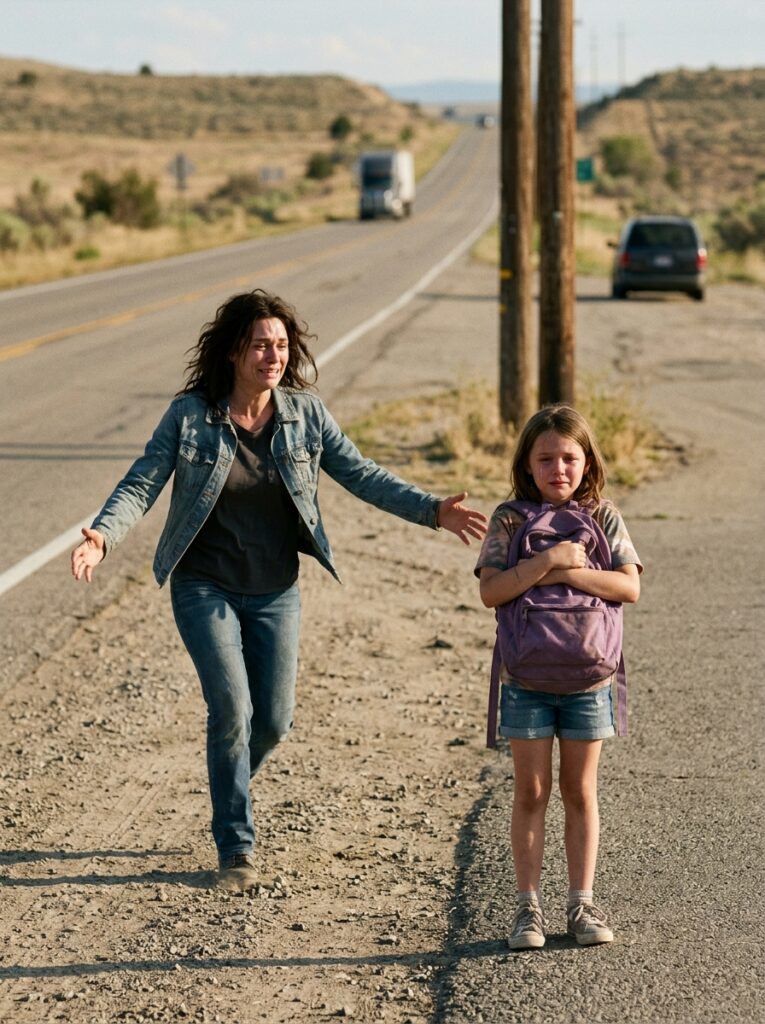
I was sitting in a high-stakes strategy meeting on a Tuesday morning when my mother called and, in the calmest voice imaginable, told me she and my father had left my eight-year-old daughter on the side of a highway.
For a second, I thought I had misunderstood her.
“What do you mean you left Chloe?” I asked, already standing up from the conference table.
My mother, Patricia Whitmore, sighed as if I was the one being unreasonable.
“She got sick in the car, Claire. We were on our way to the airport, and she started throwing up. Your father and I couldn’t risk missing our flight because she couldn’t handle a simple drive.”
My hand tightened around my phone. Across the room, my colleagues had gone silent.
“You left my child where?”
“At a roadside market off Route 17,” she said casually. “I sent you the location. She has her backpack. She’s old enough to wait.”
Then she hung up.
For one frozen second, I couldn’t move. Then pure adrenaline took over. I grabbed my purse, left the meeting without explaining, and ran straight to the parking garage.
The drive felt endless. Every red light, every slow truck, every stretch of traffic felt like torture. My hands shook against the steering wheel as I kept glancing at the location pin my mother had sent. It was thirty minutes outside the city, near a dusty roadside market surrounded by speeding cars, gas fumes, and strangers.
When I finally pulled up, my heart nearly broke in half.
Chloe was standing near a cracked concrete wall, clutching her pink backpack to her chest. Her cheeks were wet with tears. Her hair was messy from the wind, and her small shoulders trembled every time a large truck thundered past.
The moment she saw me, she ran.
“Mommy!”
I dropped to my knees and caught her in my arms. She buried her face against my neck and sobbed so hard she could barely breathe.
“I’m sorry,” she cried. “I didn’t mean to get sick. Grandma said I ruined everything.”
I held her tighter.
“No, baby,” I whispered, fighting back my own tears. “You did nothing wrong. Nothing. You are safe now. I’ve got you.”
On the drive home, Chloe sat in the back seat wrapped in my jacket. She kept asking whether Grandpa was angry and whether Grandma still loved her. Each question felt like a knife.
By the time we reached home in Cedar Falls, I understood the truth with painful clarity. My parents had not simply made a bad decision. They had looked at my sick, frightened child and decided she was inconvenient. They had treated her like extra baggage they could abandon because she interfered with their expensive vacation.
At home, I helped Chloe change into clean pajamas and settled her on the couch with a soft blanket, crackers, and water. I kissed her forehead again and again until she finally fell asleep, exhausted from fear.
Then I sat across from her in the quiet living room and let the truth I had avoided for years finally settle in.
My parents had always been selfish. This was not new. I had simply spent too long pretending it was harmless.
I had paid for their vacations. I had covered their emergency home repairs. I had sent them money every month for an “emergency fund.” I had helped with car payments, loans, and medical bills that never seemed to end. I told myself I was doing it to keep peace. I told myself Chloe deserved grandparents.
But what I was really doing was buying the illusion of family.
The next morning, I locked my office door and began cutting every financial tie between us.
First, I canceled the automatic six-hundred-dollar monthly transfer to my parents’ emergency account. Then I contacted the travel agency and revoked my payment for their upcoming luxury cruise. After that, I called the bank and started the process of removing myself as guarantor on their new SUV and their countryside home loan outside Briarwood.
Finally, I demanded a refund for the four thousand dollars I had paid so Chloe could join their vacation.
My father, Richard Whitmore, called less than an hour later.
“You’re being dramatic,” he snapped. “Your mother and I had a schedule to keep.”
“You abandoned my daughter beside a highway,” I said coldly.
“She was safe enough.”
“She is eight.”
He went quiet for a moment, then said, “You always overreact when it comes to that child.”
That child.
My daughter. His granddaughter.
That was the moment something inside me permanently closed.
My mother called next, crying about how I had “humiliated” them and ruined their plans. Not once did she ask how Chloe was. Not once did she apologize. She only complained about the missed flight, the lost deposit, and how unfair I was being.
A few days later, my cousin Melissa sent me a private recording from a family dinner I had missed. In it, my mother could clearly be heard saying she never wanted Chloe on the trip in the first place because she was “too needy” and would “make everything about herself.”
I listened to it three times with my stomach twisting.
Then I sent it to the entire family.
For years, Patricia and Richard Whitmore had built a perfect image in our town. They were the generous grandparents, the respected couple, the loving parents. That recording shattered everything.
Relatives who had once told me to “keep the peace” suddenly stopped defending them. Neighbors whispered. Friends pulled away. Invitations disappeared. And without my money quietly holding their life together, the consequences came quickly.
They lost the SUV. Then they put their large Briarwood house on the market. By the end of the year, they had moved into a small apartment and were telling anyone who would listen that I had betrayed them.
But I knew the truth.
They had betrayed Chloe first.
Six months later, my husband, Daniel Carter, and I took Chloe to a quiet beach cottage in South Carolina. One evening, while the sun turned the water gold, she ran barefoot along the shore, laughing as Daniel chased her through the waves.
Later, she crawled into my lap and whispered, “Mom, you won’t ever leave me somewhere, right?”
I kissed the top of her head.
“Never,” I said. “Not for a flight. Not for a vacation. Not for anything.”
She leaned against me and finally relaxed, as if some deep fear inside her had loosened its grip.
That was when I understood what family really meant.
Family is not blood. It is not shared last names, holiday photos, or polite smiles in public. Family is the person who turns the car around. The person who answers the phone. The person who shows up when a child is scared, sick, and alone.
My parents taught me a painful lesson that day.
But Chloe taught me the more important one.
A real family is made of the people who protect you when you are most vulnerable—and never make you feel like a burden for needing love.