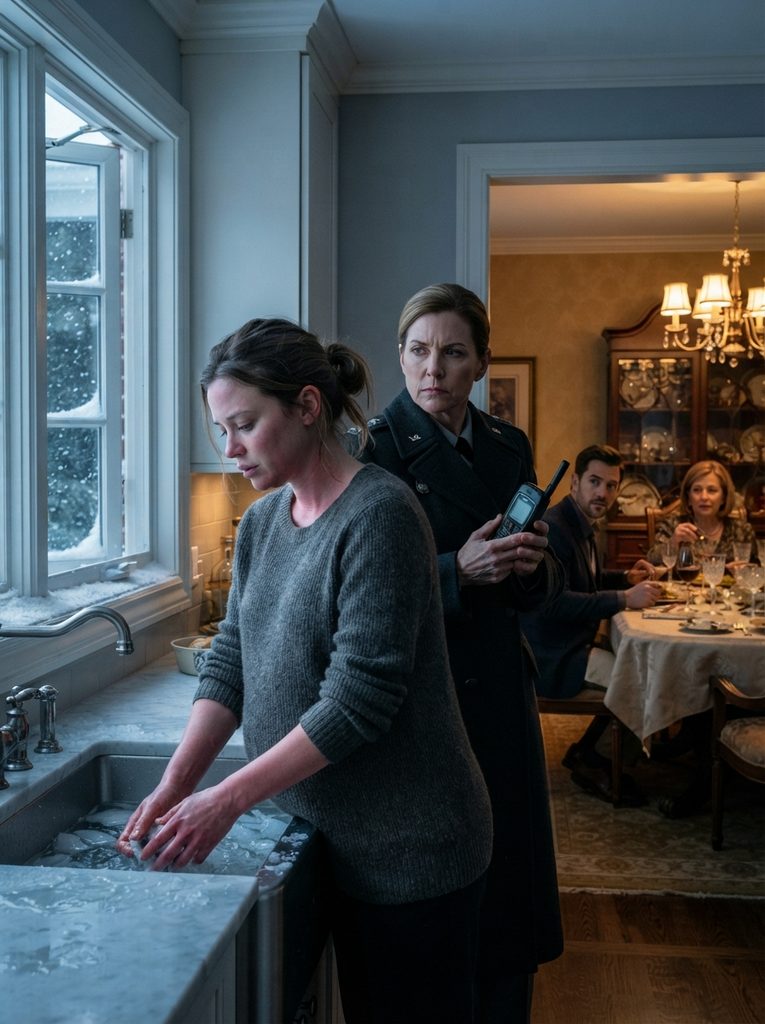
The drive to the suburbs on that slate-gray January afternoon was accompanied by the rhythmic hum of my SUV’s tires and the impending threat of a severe winter storm. I hadn’t called ahead. It was supposed to be a surprise, the kind a mother imagines will conclude with the scent of freshly brewed coffee, warm laughter, and a long-overdue embrace at the front door. I had baked a pecan pie, securing it in the passenger seat, and allowed myself to believe I was merely acting like a typical, overprotective mother waiting for her first grandchild.
But I am not a typical mother. I am Colonel Evelyn Vance, United States Army, retired. I spent thirty years deployed in the world’s most unforgiving environments, analyzing threat assessments, negotiating in hostile territories, and studying the subtle, involuntary micro-expressions of human terror.
And my daughter, Maya, had sounded deeply afraid.
During our brief phone call the week prior, her voice had been brittle and thin, entirely lacking its usual vibrant cadence. When I pressed her, she brushed it off with a hollow, breathless laugh, claiming she was “just exhausted from the pregnancy” and adjusting to her third trimester. I had tried to silence the tactical alarm bells ringing in my mind. Yet, an instinct forged in the unforgiving deserts of the Middle East refused to let it go.
I parked my vehicle two houses down from the picturesque, colonial-style home Maya shared with her husband, Julian. It was an old habit: always maintain a tactical vantage point. As I walked up the driveway, the biting wind whipping at my long wool coat, the first anomaly struck me: the absolute, deadened silence. There was no muffled television, no music playing, no signs of the vibrant life my daughter usually cultivated.
I stepped onto the porch. Through the frosted glass of the front door, I caught a glimpse of movement.
When Maya opened the door, the freezing winter air seemed to rush past me and hit a wall of even colder reality. She was eight months pregnant, her belly swollen and heavy, yet she was wearing a remarkably thin, threadbare sweater that barely stretched over her maternal frame. Her lips possessed a faint, bluish tint. Her hands were raw, chapped red, and dripping with soapy water.
For a fraction of a second, when her sunken eyes registered my face, a genuine spark of profound relief ignited. But it was instantly extinguished, replaced by a flash of sheer, unadulterated terror. It was an expression I had seen on the faces of civilian non-combatants caught behind enemy lines. It was the look of someone recalculating their survival odds in real-time. She instinctively wrapped her wet, freezing arms around her pregnant belly, as if shielding the unborn child from an unseen blast radius.
“Mom,” she whispered, her eyes darting nervously over my shoulder toward the interior of the hallway. “You… you didn’t say you were coming.”
“I brought pie,” I said, keeping my voice perfectly level, my eyes scanning her posture. Her shoulders were hunched, her breathing shallow and erratic.
“You shouldn’t be here right now,” Maya murmured, her voice trembling, barely audible over the howling wind. “Julian’s mother is here. We’re in the middle of dinner.”
Before I could respond, a sharp, rhythmic sound echoed from the dining room. Clink. Clink. Clink. Metal striking wood in a steady, demanding cadence.
Maya flinched. Her entire body went rigid at the sound, her hands tightening protectively over her eight-month bump, and the remaining blood drained completely from her face.
I pushed past her, stepping into the foyer. Because I knew with absolute, chilling certainty that whatever was waiting in that dining room was not a family dinner. It was a battlefield.
I moved silently down the hallway, the thick rubber soles of my boots making no sound on the polished hardwood floor. Maya trailed behind me, wringing her raw hands, a silent, heavy ghost in her own home.
The dining room was suffocatingly warm, filled with the rich, savory aroma of roasted meats and expensive wine. Sitting at the head of the heavy oak table was Julian, a man I had previously thought to be merely arrogant, now revealing himself as something much worse. Beside him sat his mother, Beatrice, her posture rigid and critical, wrapped in a thick cashmere shawl. They were surrounded by platters of food, half-empty crystal glasses, and stacked, dirty plates. They looked like royalty dining in a grand hall, utterly oblivious to the world outside.
But just beyond the dining room, in the attached, open-concept kitchen, the environment drastically shifted.