Mark stopped in the middle of the hospital corridor. For twenty-six years, I had known almost every version of his face. The young man who had been terrified while asking me to marry him.
The exhausted new father who had fallen asleep sitting upright beside our daughter’s crib. The proud husband applauding when I received my first promotion. The grieving son after his father’s first heart attack.
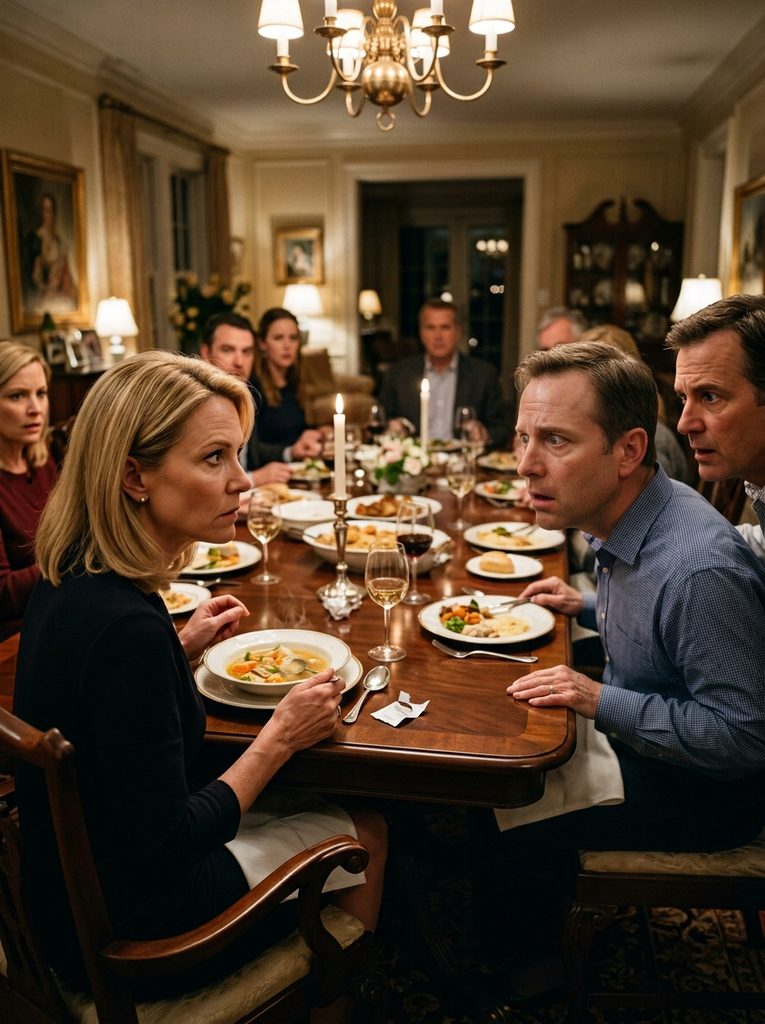
The irritated man who hated being questioned. The quiet man who retreated whenever an argument became uncomfortable. But I had never seen the expression he wore then. It wasn’t anger.
It was calculation.
His eyes moved from my face to the phone in my hand.
Then toward the hospital room where his mother lay surrounded by machines.
“Diane,” he said quietly, “what exactly are you accusing me of?”
I almost laughed.
Not because anything was funny.
Because of the wording.
Not what are you afraid happened?
Not why would you think I hurt you?
Not even are you okay?
What exactly are you accusing me of?
A defensive question.
A careful question.
A man already thinking about what I could prove.
“I haven’t accused you of anything.”
“You just said—”
“I said someone may finally tell me what you’ve been doing.”
His jaw tightened.
“That’s an accusation.”
“Then tell me I’m wrong.”
“I don’t know what you’re talking about.”
“The soup.”
“What about it?”
“I saw you.”
Something inside his face changed.
Barely.
But I saw it.
“I saw you tear open the packet.”
His eyes narrowed.
“What packet?”
That almost broke my heart.
Because until that moment, some foolish part of me still wanted an explanation.
A supplement.
Medicine Judith had asked him to add.
A powder for digestion.
Anything.
Instead, my husband of twenty-six years looked directly into my eyes and lied.
“You know exactly which packet.”
“No, Diane.”
“Then we’re done talking.”
I turned.
He caught my wrist.
Not violently.
But firmly enough that I stopped.
“Don’t do this here.”
I looked at his hand.
Then at him.
“Let go.”
He released me immediately.
“I’m trying to protect you.”
Those words sent cold through my body.
“From what?”
“From embarrassing yourself.”
I stared.
He lowered his voice.
“You’ve been confused lately.”
There it was.
The trap.
The explanation prepared long before I ever knew I would need one.
“You forget conversations.”
He continued.
“You lose things.”
“You wake up disoriented.”
My stomach turned.
“You’ve been worried about your memory for months.”
I said nothing.
Mark stepped closer.
“You’re scared.”
He softened his voice.
“You saw me seasoning soup and your mind turned it into something sinister.”
I stared at him.
It was almost impressive.
If I hadn’t watched his mother become weak after eating from the bowl intended for me, I might have doubted myself.
That was the terrifying part.
Six months earlier, I would have.
Three months earlier, definitely.
Maybe even three hours earlier.
But not anymore.
I said:
“Judith’s toxicology screen found a sedative.”
His face didn’t move.
“Mom takes medication.”
“She says she doesn’t take that.”
“She forgets things.”
“You just said I forget things.”
He exhaled sharply.
“People forget things, Diane.”
“Apparently every woman who becomes inconvenient to you does.”
His eyes flashed.
Before he could answer, Karen stepped into the hallway.
“What are you two arguing about?”
Mark turned immediately.
“Nothing.”
Karen looked at me.
I said:
“Your mother had a sedative in her system.”
Her face changed.
“What?”
“Preliminary screen.”
She looked toward Mark.
“How?”
He lifted his hands.
“I don’t know.”
Karen stared at him.
Then at me.
“What happened at dinner?”
I hesitated.
This was the moment.
Once I said it aloud, there would be no returning to ordinary family life.
No pretending Sunday dinner had simply gone badly.
No marriage counseling where we discussed communication.
No quiet drive home.
I looked at Mark.
Then told the truth.
“I saw him put something in my soup.”
Karen’s face went blank.
“What?”
Mark immediately said:
“That isn’t what happened.”
I continued.
“I switched bowls.”
Karen stared.
“With Mom?”
“Yes.”
Her mouth opened.
Mark whispered:
“Jesus Christ, Diane.”
I turned toward him.
“Don’t.”
“You gave my mother your food?”
“I moved two bowls.”
“You poisoned her!”
The corridor seemed to shrink.
Karen stared at us.
I felt the words hit me.
For half a second, guilt surged through my chest.
Then I looked at Mark.
“You prepared that bowl for me.”
He stopped.
Karen looked from him to me.
“What did you put in it?”
“Nothing.”
“Mark.”
“Nothing!”
His voice echoed.
A nurse looked toward us.
Mark lowered his voice.
“This is insane.”
Karen whispered:
“Then why is Mom sedated?”
“I don’t know.”
I said:
“And why were you staring at me instead of her when she became sick?”
He looked at me.
No answer.
Karen’s face slowly changed.
She knew her brother.
Maybe not as I did.
But enough.
“Mark?”
He turned away.
That was the first crack.
Not a confession.
Not evidence.
Just a sister saying his name and a brother refusing to meet her eyes.
Then the doctor came out.
“Family of Judith Mercer?”
All three of us turned.
Dr. Patel looked tired but calm.
“She’s stable.”
Karen exhaled.
“Thank God.”
“Her blood pressure dropped, but it’s improving.”
“What caused it?” I asked.
“We’re still evaluating.”
He looked at us carefully.
“The screening test suggests exposure to a sedating medication, but preliminary toxicology screens can produce false positives. We’ve sent confirmatory testing.”
Mark latched onto that immediately.
“False positive.”
Dr. Patel looked at him.
“Possible.”
“So this could be nothing.”
“No.”
The doctor was firm.
“Your mother’s symptoms are real. What remains uncertain is the exact cause.”
Mark went quiet.
I asked:
“Can the soup be tested?”
Dr. Patel frowned.
“What soup?”
I explained.
Not everything.
Enough.
His expression became serious.
“Do you still have it?”
“At the house.”
“I photographed it.”
“And the packet?”
“I found one near the trash.”
Mark snapped:
“You went through Mom’s garbage?”
I ignored him.
Dr. Patel looked at me.
“Don’t handle anything else.”
“Okay.”
“If you genuinely suspect intentional contamination, you should contact law enforcement.”
The sentence landed heavily.
Police.
My husband.
Twenty-six years.
I felt suddenly dizzy.
Not chemically.
Emotionally.
I sat down.
Karen sat beside me.
Mark remained standing.
Dr. Patel continued:
“We can document what we found medically. Anything beyond that requires proper investigation.”
I nodded.
“Thank you.”
He left.
Mark immediately said:
“We are not calling police.”
I looked up.
“You don’t get to decide that.”
“This is my mother.”
“And it was my bowl.”
His face tightened.
“You don’t know that.”
“I watched you prepare it.”
“I added seasoning.”
“From a packet you hid in your pocket?”
“It wasn’t hidden.”
“Then what was it?”
Silence.
Finally:
“Sleep supplement.”
Karen stared.
“What?”
Mark looked at her.
“Mom has trouble sleeping.”
Karen frowned.
“Mom hates supplements.”
“She asked me.”
“When?”
“Last week.”
I almost admired the speed.
The story had arrived.
Not good.
But usable.
I asked:
“Why put a sleep supplement in my bowl?”
“It wasn’t your bowl.”
“Yes, it was.”
“No.”
“You carried it directly to me.”
“You’re remembering wrong.”
There it was again.
I stood.
“I am calling the police.”
Mark stepped toward me.
“Diane.”
Karen moved between us.
“Don’t.”
He stared at his sister.
“Move.”
“No.”
“I wasn’t going to touch her.”
“Then you don’t need me to move.”
They looked at each other.
Something old passed between them.
Sibling history.
Family loyalty.
Fear.
Then Karen said quietly:
“If you did something, tell us now.”
Mark’s face crumpled for half a second.
Then hardened.
“I didn’t.”
I called.
The officers arrived forty minutes later.
They separated us.
That was when the night became real.
I sat in a small consultation room with a police officer named Elena Ruiz.
She listened without interrupting.
I told her about the packet.
The bowl.
The switch.
The symptoms.
Six months.
Dizziness.
Memory lapses.
Fatigue.
My doctor’s stored blood sample.
When I finished, she asked:
“Why did you switch the bowls rather than refuse to eat?”
That question haunted me.
“I wanted to know whether I was imagining it.”
She watched me.
“You understand someone else consumed it.”
“Yes.”
My eyes filled.
“I didn’t know what was in it.”
“Why not confront him?”
“Because I thought he’d deny it.”
“Did you expect anyone to become ill?”
I swallowed.
“I didn’t know.”
That was the truth.
A terrible truth.
I had gambled with uncertainty.
I would regret that decision for years.
Officer Ruiz didn’t lecture me.
She simply wrote.
Then asked:
“Where is the bowl now?”
“Judith’s house.”
“Who has access?”
“Harold. Steve.”
“And Mark?”
“Yes.”
She stood.
“We need to secure it quickly.”
By the time police reached Judith’s house, the bowl was gone.
So was the soup pot.
My stomach dropped when Officer Ruiz told me.
“Who removed them?”
“We don’t know yet.”
“Mark.”
“We don’t know.”
“But—”
“Mrs. Mercer.”
Her voice was calm.
“We need evidence, not assumptions.”
Evidence.
I nodded.
“What about the packet?”
“You said you collected one?”
“Yes.”
I handed over the sealed bag.
She looked at it.
The packet was plain white.
No printing.
No label.
Nothing.
“Where exactly did you find it?”
“Beside the kitchen trash.”
“Could it belong to anyone else?”
“Yes.”
“Did you see him discard this specific packet?”
“No.”
My hope sank.
She saw it.
“This may still be useful.”
“But?”
“But chain of custody and context matter.”
I understood.
Television had taught me to expect dramatic certainty.
Real investigations seemed built from careful disappointments.
At 2:14 in the morning, I went home.
Not with Mark.
Karen drove me.
I packed a bag.
Mark remained at the hospital.
At least that was what he told police.
Karen watched me fold clothes.
“Come stay with me.”
“I’ll get a hotel.”
“No.”
“Karen.”
“Diane, please.”
I looked at her.
She had been my sister-in-law for twenty-six years.
We had never been especially close.
Judith occupied too much emotional space in the family for most other women to become close without being compared.
But that night Karen looked less like Mark’s sister.
More like another woman who was suddenly wondering how well she knew him.
I nodded.
“Okay.”
Before leaving, I walked into our kitchen.
Everything looked ordinary.
Coffee maker.
Fruit bowl.
Dish towel.
The little ceramic container where Mark kept tea.
I stared at it.
How many times had he made tea for me?
Hundreds.
How many times had I become dizzy afterward?
I couldn’t remember.
That frightened me more than the soup.
I opened a cabinet.
Karen said:
“Don’t touch anything.”
I stopped.
She was right.
I took photographs instead.
Medicine cabinet.
Pantry.
Tea.
Supplements.
Then we left.
I didn’t sleep.
At six-thirty, my doctor called.
“Diane?”
“Yes.”
“We need to talk.”
I sat upright.
Karen woke on the sofa across from me.
“What did you find?”
Dr. Samuel Greene had treated me for fourteen years.
I trusted his voice.
That morning, it sounded different.
“Your stored blood sample from five weeks ago tested positive on expanded analysis for a sedative-hypnotic compound.”
My fingers went numb.
“What?”
“The concentration was low.”
I couldn’t breathe.
“Could it have come from something I was prescribed?”
“I’ve reviewed your medication list.”
“And?”
“I don’t see a legitimate source.”
Karen sat beside me.
I put the call on speaker.
Dr. Greene continued.
“I need to be careful. A stored sample isn’t perfect for every kind of retrospective analysis, and we’ll need confirmation through a certified toxicology laboratory.”
“But you found it.”
“Yes.”
“Same thing as Judith?”
“We don’t know yet.”
I closed my eyes.
Five weeks earlier.
I remembered that appointment.
I had gone because I nearly fainted at work.
Mark had driven me.
Before leaving home, he’d made coffee.
I remembered.
He had insisted.
“You look exhausted. Drink this.”
I opened my eyes.
“Doctor.”
“Yes?”
“Can you test anything older?”
“We have another sample from four months ago.”
“Test it.”
“We’ve already sent it.”
I started crying.
Not loudly.
Tears simply appeared.
Karen took my hand.
Dr. Greene said:
“Diane, are you somewhere safe?”
“Yes.”
“Is Mark with you?”
“No.”
“Good.”
That one word broke something inside me.
My doctor was relieved my husband wasn’t near me.
How had my life become this?
“Call the detective handling the case,” he said.
“I will.”
“And don’t consume anything from your home until police advise you.”
I nodded.
Then realized he couldn’t see me.
“Okay.”
After the call, Karen whispered:
“Oh my God.”
I stared at nothing.
Five weeks.
A sample.
Proof that at least once before Sunday dinner, something had been in my body that I had not knowingly taken.
The police investigation accelerated.
A warrant was obtained for our home.
I wasn’t there when they searched it.
I was grateful.
They found no dramatic stash beneath the floorboards.
No diary labeled HOW I POISONED MY WIFE.
Real life rarely provides such convenience.
They did find several prescription bottles.
Most legitimate.
Mark’s blood-pressure medication.
My thyroid medication.
Old painkillers from dental surgery.
Then they found something in a locked toolbox in the garage.
A prescription bottle.
The label had been peeled off.
Inside were tablets.
The active ingredient matched the class of drug suspected in Judith’s preliminary screen.
Not enough.
Possession alone wasn’t proof he’d given it to me.
Then police checked pharmacy records.
The tablets had originally been prescribed to Harold.
My father-in-law.
Two years earlier.
After surgery.
Harold was interviewed.
He said:
“I stopped taking those after three days.”
“Where were they?”
“Bathroom cabinet.”
“Did Mark know?”
“Probably.”
“Did you give them to him?”
“No.”
The investigation moved.
Slowly.
Painfully.
Mark hired an attorney.
Then he stopped speaking to me.
Twenty-six years of marriage ended not with screaming.
Not with a slammed door.
With legal advice.
Do not contact my client directly.
That sentence came by email.
I read it at Karen’s kitchen table.
Then laughed.
Karen looked worried.
“What’s funny?”
“My husband needs an attorney to talk to me.”
Then I cried so hard she had to hold me.
The confirmatory test on Judith came back.
The drug was real.
A prescription sedative.
Her concentration was consistent with a significant recent dose.
She recovered physically within twenty-four hours.
Emotionally was different.
When I visited, she wouldn’t look at me.
I stood beside her hospital bed.
“Judith.”
She stared out the window.
“I’m sorry.”
Nothing.
“I shouldn’t have switched the bowls.”
Her face tightened.
“I could have died.”
“I know.”
“Did you know what was in it?”
“No.”
“You knew enough not to eat it.”
That hurt because it was true.
“I was scared.”
“So you gave it to me?”
“I moved bowls.”
“Same thing.”
“No.”
She finally looked at me.
“Don’t hide behind words.”
I swallowed.
“You’re right.”
That surprised her.
“I made a reckless decision.”
My eyes filled.
“I wanted proof more than I thought about what could happen.”
Judith stared.
“I am sorry.”
Silence.
Then she whispered:
“My son wouldn’t poison you.”
I closed my eyes.
There it was.
Even now.
“Judith.”
“He wouldn’t.”
“Then how did the drug get into your body?”
“I don’t know.”
“How did it get into mine five weeks ago?”
She stared.
“You take things.”
“What things?”
“Medicine.”
“My doctor found no prescription explanation.”
“You forget.”
I almost laughed.
The same defense.
The family language.
Diane forgets.
Diane worries.
Diane is confused.
I looked at Judith.
“Do you know what frightens me most?”
She didn’t answer.
“For six months, every time I said something was wrong, you told me I was anxious.”
“You are anxious.”
“Maybe.”
I nodded.
“But being anxious doesn’t mean nothing is happening.”
She looked away.
“Mark said you were becoming paranoid.”
My stomach dropped.
“When?”
Judith froze.
I stepped closer.
“When did he say that?”
“I don’t remember.”
“Before Sunday?”
Silence.
“Judith.”
“A few months ago.”
My blood went cold.
“What exactly did he say?”
She hesitated.
“He said you were worried about your memory.”
“What else?”
“That you were making mistakes.”
“At work?”
“Yes.”
“How would he know?”
“You told him.”
Had I?
Maybe.
I had complained about forgetting a meeting.
But not enough to justify what came next.
Judith continued.
“He was worried.”
“About?”
“That you might have to stop working.”
My heart started pounding.
“Why?”
“If your memory was getting worse.”
I stared.
I had never discussed leaving work.
I was fifty-four.
Healthy.
Senior financial controller for a manufacturing company.
I earned more than Mark.
Much more.
“Did he say anything else?”
Judith looked uncomfortable.
“What?”
“He asked whether dementia ran in your family.”
I felt the room tilt.
Not from drugs.
From understanding.
Mark had been building a story.
Not only for me.
For everyone.
My memory.
My anxiety.
My decline.
He had planted it with his mother months earlier.
I left the hospital and called Officer Ruiz.
That conversation changed the investigation.
Police began interviewing coworkers.
Friends.
Neighbors.
My supervisor.
And a pattern appeared.
Mark had told people I was “having cognitive issues.”
A neighbor remembered him saying I had left the stove on.
I hadn’t.
A friend remembered Mark canceling dinner because I was “too confused.”
He had told me the friend canceled.
My supervisor remembered Mark calling once after I missed a meeting.
He had said:
“Diane’s embarrassed, but we’re concerned this may be neurological.”
I had missed the meeting because Mark told me it had been moved.
I still had his text.
The timestamp.
The false time.
I sat on Karen’s floor reading it.
Your 9:00 got moved to 11:30, right?
I had trusted him.
Arrived at 11:20.
The meeting had been at nine.
I had apologized.
My supervisor had looked concerned.
Mark had manufactured the mistake.
One tiny event.
Then another.
Then another.
A set of keys moved.
An appointment time changed.
A bill hidden.
A conversation denied.
And occasionally, a drug in my drink.
Not enough to kill me.
Enough to make me foggy.
Enough to make me question myself.
The question became:
Why?
The answer arrived through money.
Not life insurance.
That would have been too obvious.
Something stranger.
Six months earlier, Mark had convinced me to update our estate documents.
Nothing dramatic.
Routine planning.
We were getting older.
Our daughter, Emily, lived in Denver.
We owned our house.
Retirement accounts.
Investments.
I had inherited a significant portfolio from my aunt.
Mark handled some household paperwork, but I managed most finances.
During the update, he suggested a durable financial power of attorney.
Normal.
Married couples do that.
I signed one naming him.
Also normal.
But there was another document.
A physician-triggered trust amendment draft.
Never executed.
It would have given Mark broader control over certain inherited assets if I became cognitively incapacitated.
My attorney had rejected the first version.
I had forgotten that.
Or rather, I remembered discussing something complicated and deciding against it.
Police found emails between Mark and a private financial adviser named Victor Hale.
The emails weren’t criminal by themselves.
But they were revealing.
How much documentation is typically required before a spouse can manage assets due to incapacity?
Another:
Would repeated memory issues plus physician concerns generally be enough?
Another:
If incapacity becomes permanent, can the acting spouse liquidate separately inherited securities?
Victor had replied cautiously.
You need independent legal advice. Do not assume marriage alone gives authority over separate assets.
Mark kept asking.
Why?
Because of another secret.
Debt.
A lot of it.
Almost $480,000.
I knew about none of it.
Online trading losses.
Private loans.
A failed real-estate investment.
Credit lines opened through a small consulting company Mark had created.
He had been hiding losses for nearly two years.
Our marriage wasn’t comfortable.
It had been staged.
While I thought we were approaching retirement securely, Mark was drowning.
He couldn’t access my inherited portfolio without me.
Unless I gave permission.
Or became legally incapable of managing it.
I sat across from Detective Ruiz when she explained the financial records.
“Are you saying he was trying to make me incompetent?”
“We can’t state motive as fact yet.”
“But that’s what this looks like.”
“It is one theory supported by the evidence.”
“One theory?”
She nodded.
“Another possibility is that he wanted you to believe you were impaired so you’d voluntarily hand over control.”
That was worse somehow.
Not killing me.
Erasing my trust in myself.
Turning me into a prisoner who willingly handed him the key.
I whispered:
“Did he ever try to transfer money?”
“Yes.”
My head snapped up.
“When?”
“Three months ago.”
“How much?”
“Two hundred thousand.”
I stared.
“From the inherited brokerage account.”
“He couldn’t.”
“No.”
She nodded.
“The institution required your authorization.”
“I never authorized it.”
“We know.”
“How?”
“The request was rejected.”
“Why didn’t they call me?”
“They sent a notice.”
I laughed bitterly.
“I never saw it.”
She didn’t need to say anything.
Mark handled the mail.
I covered my face.
The betrayal was so enormous that my mind kept choosing tiny details to focus on.
Mail.
Coffee.
Soup.
Meeting times.
The man beside me in bed.
Twenty-six years.
Was all of it false?
No.
That would have been easier.
There had been love.
I knew there had.
That was what made betrayal unbearable.
A stranger cannot corrupt your memories.
Only someone who once deserved your trust can do that.
Our daughter flew in the next day.
Emily was twenty-four.
She walked into Karen’s house, dropped her suitcase, and hugged me.
Then asked:
“Where is Dad?”
I couldn’t answer.
Karen did.
“With his attorney.”
Emily stepped back.
“What does that mean?”
We told her.
Not everything.
Not immediately.
Enough.
She shook her head.
“No.”
I recognized it.
Judith’s first reaction.
Denial as reflex.
“Mom, Dad wouldn’t.”
“I know.”
“No, I mean he wouldn’t.”
“I know what you mean.”
“He loves you.”
I started crying.
“So did I.”
Emily sat.
“What proof is there?”
I told her.
Stored blood.
Drug.
Garage bottle.
Financial records.
Messages.
Debt.
Her face changed piece by piece.
Then she asked:
“Did he try to kill you?”
I looked at Detective Ruiz’s words in my memory.
Don’t state what we cannot prove.
“I don’t know.”
“What do you mean you don’t know?”
“I don’t think the doses were intended to kill me.”
“That doesn’t make it better.”
“No.”
She stood.
“I need to talk to him.”
“Emily.”
“He’s my father.”
“I know.”
“He’ll tell me.”
“Tell you what?”
“The truth.”
I almost said he wouldn’t.
Then stopped.
She needed to learn her own father.
Not inherit my conclusion.
“Okay.”
She met him with his attorney present.
I wasn’t there.
She returned three hours later.
Her face looked twenty years older.
“What did he say?”
Emily dropped onto the sofa.
“He said you were sick.”
I closed my eyes.
“He said he’d been trying to help you.”
“How?”
“He said you asked for sleep aids.”
“I didn’t.”
“I know.”
“He said the financial stuff was because you were making impulsive decisions.”
“What impulsive decisions?”
“He couldn’t give me one.”
She started crying.
“He kept saying you don’t remember.”
I moved beside her.
She looked at me.
“Mom, he tried it on me.”
“What?”
“He said you might not remember asking him to put things in your tea.”
My stomach turned.
Emily continued.
“Then I asked why you would ask him to secretly put medicine in soup.”
“What did he say?”
“Nothing.”
She wiped her face.
“I asked about the debt.”
“And?”
“He said it was temporary.”
“Half a million dollars.”
“I know.”
“He said he was going to make it back.”
Of course.
Everyone drowning in speculation believes the next trade is rescue.
Emily whispered:
“I don’t know who he is.”
I held her.
“Neither do I.”
That was the grief nobody prepares you for.
Mark was alive.
But the man we believed in was disappearing.
No funeral.
No condolences.
Just evidence.
Two weeks later, my second stored blood sample came back.
Positive.
Same drug class.
Four months earlier.
Lower concentration.
Two historical samples.
Two exposures.
Neither medically explained.
Then investigators found my hair could potentially provide a longer retrospective exposure window.
Testing was complicated.
Not every substance leaves reliable timelines.
Results had limitations.
But the analysis suggested repeated exposure over months.
Not one accidental dose.
A pattern.
Mark was arrested.
I learned from Detective Ruiz.
Not television.
Not neighbors.
A phone call at 6:12 in the morning.
Charges included aggravated assault and offenses related to administering a substance without consent, along with attempted financial exploitation allegations that prosecutors were still evaluating.
Charges are accusations.
Not convictions.
Ruiz reminded me.
I appreciated that.
Facts mattered now.
I had lived too long inside someone else’s manufactured story.
Mark pleaded not guilty.
The case took fourteen months.
Fourteen months is a long time to live inside uncertainty.
Long enough for anger to become exhaustion.
Long enough for friends to stop asking every day.
Long enough for people to choose sides.
Judith chose Mark.
Completely.
She stopped speaking to me.
Despite having consumed the soup herself.
That was the strangest part.
She blamed me.
“You switched the bowls.”
True.
“You put me in the hospital.”
Partly true.
“Mark never intended me to eat it.”
Exactly.
She never heard what she was saying.
Or couldn’t.
Harold did.
One evening, he called.
“I need to apologize.”
“For what?”
“I found something.”
My heart tightened.
“What?”
“Come over.”
I didn’t go alone.
Emily came.
So did Detective Ruiz after Harold agreed.
In Judith and Harold’s basement, he opened an old desk drawer.
Inside were papers.
Mark’s papers.
He had stored a box there months earlier.
Judith knew.
Harold didn’t.
Most were ordinary.
Tax records.
Business documents.
Then we found a notebook.
Not a confession.
Again, life wasn’t that generous.
Numbers.
Dates.
Initials.
Amounts.
Beside several dates were letters.
D – tea
D – coffee
D – dinner
My stomach turned.
Emily whispered:
“Mom.”
Detective Ruiz photographed every page.
Another section contained notes about my brokerage account.
Balances.
Transfer rules.
Incapacity language.
Then one line:
Need consistent documentation before 60.
I was fifty-four.
Emily began crying.
Harold sat down.
“Oh, God.”
I looked at him.
He seemed broken.
“This was in your house?”
“I didn’t know.”
“Judith did?”
“She said Mark asked to store business records.”
Detective Ruiz said:
“We’ll need to ask her.”
Judith came downstairs during the search.
When she saw the notebook, she froze.
I knew immediately.
“You’ve seen it.”
She shook her head.
“Judith.”
“No.”
“You have.”
She looked at Mark’s handwriting.
Then whispered:
“I saw the box.”
“Not the notebook?”
Silence.
Harold stared.
“Judy.”
She sat.
“I looked once.”
My entire body went cold.
“When?”
“Months ago.”
“Before Sunday dinner?”
“Yes.”
“What did you see?”
“Numbers.”
“What else?”
“Your name.”
“And?”
She started crying.
“I didn’t understand.”
“Did you ask Mark?”
“Yes.”
The room went silent.
“What did he say?”
“He said you were having problems.”
My hands shook.
“He said the notes were to track when you became confused.”
I stared at the page.
D – tea.
“What did you think tea meant?”
“I don’t know.”
“Judith.”
“I didn’t know!”
Her voice broke.
“I didn’t want to know.”
There it was.
Not conspiracy.
Something more ordinary.
Cowardice.
She had seen enough to become uncomfortable.
Then chosen the explanation that preserved her son.
Harold looked at his wife as though seeing her for the first time.
“You knew?”
“I knew Diane was having episodes.”
“Because Mark told you.”
“Yes.”
“You found notes.”
“Yes.”
“And you said nothing?”
“He’s our son.”
Harold stood.
“So?”
Judith stared.
He repeated:
“So?”
His voice shook.
“When did being our son mean we stop asking whether he’s doing wrong?”
Judith began sobbing.
I felt no satisfaction.
Only exhaustion.
She looked at me.
“I thought he was helping you.”
“Did you?”
“Yes.”
“Or did you need to believe that?”
She couldn’t answer.
That notebook changed the case.
Not because it proved every allegation.
But because dates could be compared.
Several matched days I had documented symptoms in messages to my doctor.
One matched the stored blood sample.
Another matched a day I left work early because I couldn’t concentrate.
Then investigators recovered deleted cloud data from Mark’s phone backup.
Searches.
Not dramatic poison searches.
More careful.
sedative detection blood duration
can medication cause temporary memory problems
spousal power attorney incapacity requirements
separate inheritance spouse access incapacity
And one search that made me leave the room:
how long confusion lasts after sleep medication
I vomited in the courthouse bathroom when prosecutors showed me.
Not because it was the worst evidence.
Because it sounded so clinical.
My suffering had been a search query.
The plea offer came three weeks before trial.
Mark would plead guilty to multiple felony counts related to administering medication without my consent and attempted financial exploitation.
Other charges would be dismissed.
Prison.
Restitution.
Protective order.
I hated the idea.
I also hated the idea of trial.
Prosecutor Hannah Lee explained:
“No outcome will make this feel proportionate.”
I looked at her.
“Then what am I choosing?”
“Certainty.”
“And if we go to trial?”
“More charges remain available, but also more risk.”
“Would I testify?”
“Yes.”
“Emily?”
“Possibly.”
“Judith?”
“Likely.”
I closed my eyes.
“What would you do?”
Hannah shook her head.
“I can’t make that decision for you.”
I appreciated her for that.
Everyone had spent months telling me what Mark had done to my mind.
I needed choices returned to me.
I asked:
“If he pleads guilty, does he have to admit what he did?”
“Yes.”
“In court?”
“Yes.”
I nodded.
“Then offer it.”
Mark accepted.
The courtroom was smaller than I expected.
No dramatic orchestra.
No gasps.
Just fluorescent lights.
Wood.
Paper.
People waiting for other cases.
Mark stood before the judge.
I sat behind the prosecutor.
Emily beside me.
Judith sat across the aisle.
Harold beside her, but with space between them.
The judge asked Mark questions.
Did he understand?
Yes.
Was he pleading voluntarily?
Yes.
Did he admit administering prescription sedating medication to his wife without her knowledge or consent on multiple occasions?
Mark’s voice was barely audible.
“Yes.”
My heart stopped.
Twenty-six years.
One word.
Yes.
Did he admit doing so in part to create or reinforce the appearance that she was cognitively impaired?
“Yes.”
Emily grabbed my hand.
Did he admit that he sought increased control over assets he could not otherwise access?
A long pause.
His attorney whispered.
Then:
“Yes.”
I cried.
Quietly.
Not because I had doubted the evidence.
Because confession is different.
Evidence tells you what happened.
Confession takes away the final hiding place.
At sentencing, I was allowed to speak.
I had written twelve pages.
I brought three.
When I stood, Mark looked at me.
For the first time in months, we made eye contact.
I said:
“For twenty-six years, I trusted you with the ordinary things that make marriage possible.”
My voice shook.
“Coffee.”
“Medicine.”
“Food.”
“Schedules.”
“Money.”
“Memory.”
I looked at him.
“You didn’t only put medication into my body.”
“You taught me to distrust my own mind.”
The courtroom was silent.
“When I forgot something, I wondered whether I was declining.”
“When I became dizzy, I wondered whether I was weak.”
“When you told me a conversation hadn’t happened, I believed you before I believed myself.”
I swallowed.
“That is the part I will carry longest.”
Mark looked down.
“I have been asked whether I hate you.”
I paused.
“I don’t know.”
“That answer changes.”
“Some days I do.”
“Some days I remember the man who held our daughter when she was born.”
“The man who slept beside me during my father’s final night.”
“The man who danced badly in our kitchen.”
My voice broke.
“I don’t know how to put that man in the same body as the man who drugged my coffee.”
Emily was crying.
“So I have stopped trying.”
I looked directly at Mark.
“I don’t need to decide that every good memory was false in order to accept that what you did was real.”
His shoulders shook.
“You made choices.”
“Repeated choices.”
“Then you built a story around me so other people would doubt me too.”
I took a breath.
“You nearly succeeded.”
Then I looked at the judge.
“I am not asking for revenge.”
“I am asking for enough consequence that what happened is treated as seriously as it felt while I was living inside it.”
I sat.
Mark was sentenced to prison.
Not forever.
No theatrical life sentence.
Years.
Real years.
Enough that retirement plans became irrelevant.
Enough that our marriage was unquestionably over.
I filed for divorce.
He didn’t contest it.
The financial settlement took months.
My inherited assets remained mine.
His debt remained largely his.
Joint property was divided.
I sold the house.
That surprised everyone.
Emily asked:
“Are you sure?”
“No.”
“Then don’t.”
I looked around the kitchen.
The place where he’d made coffee.
The cabinet.
The tea.
Twenty-six years.
“I don’t want every room to be evidence.”
So I sold it.
Bought a smaller house with large windows.
The first night there, I slept on a mattress on the floor because furniture hadn’t arrived.
At 3:00 a.m., I woke terrified.
I didn’t know where I was.
For one second, I thought:
It’s happening again.
Confusion.
Then I remembered.
New house.
New room.
No Mark.
I turned on the lamp.
Sat there breathing.
Then laughed.
I was allowed to forget where the bathroom was in a new house.
That wasn’t dementia.
It was being human.
Recovery arrived in tiny permissions.
I was allowed to misplace my keys.
Allowed to forget a name.
Allowed to walk into a room and wonder why.
Everyone does.
For months, every ordinary lapse frightened me.
I would freeze.
Then write it down.
My therapist finally asked:
“Why are you documenting normal forgetfulness?”
“Because I need proof.”
“Proof of what?”
“That I’m okay.”
She looked at me.
“Who are you proving it to?”
I started crying.
Mark.
Even absent, I was still arguing with him.
So I stopped keeping the notebook.
That was harder than leaving the house.
My doctor monitored me.
No unexplained sedatives appeared again.
The dizziness faded.
The cognitive fog lifted.
I wasn’t imagining that either.
My mind returned gradually.
Not magically.
Trauma creates its own fog.
But the frightening episodes disappeared.
One morning, six months after the divorce, I completed a complicated financial report at work without checking the numbers ten times.
I sat staring at the spreadsheet.
My colleague Nina asked:
“What’s wrong?”
“Nothing.”
“You’re crying.”
“I know.”
She looked at the report.
“Did Excel finally apologize?”
I laughed.
“No.”
Then I told her:
“I trust myself.”
She hugged me.
That sentence became more important than any verdict.
I trust myself.
Judith and I did not reconcile quickly.
For almost two years, we barely spoke.
Harold separated from her for several months.
They eventually reunited, but differently.
He stopped letting her control every family narrative.
Sunday dinner ended.
That tradition never returned.
Maybe that was good.
Traditions aren’t sacred simply because they are old.
Sometimes they’re just habits nobody questioned.
Judith wrote me letters.
I ignored the first three.
The fourth said:
I kept defending Mark because admitting what he did felt like admitting I had failed as his mother. I understand now that protecting him from truth was another failure.
I read that line many times.
Then:
You were right when you asked whether I believed him or needed to believe him. I needed to.
I answered.
Not warmly.
Not cruelly.
Thank you for finally saying that. I am not ready for more.
She respected it.
That mattered.
A year later, we had coffee.
Public place.
My choice.
Judith looked smaller.
Older.
She stirred her coffee for a long time.
“I owe you an apology.”
“Yes.”
She looked surprised by the bluntness.
I was done helping people escape uncomfortable truths.
“I called you anxious.”
“Yes.”
“I dismissed your symptoms.”
“Yes.”
“I repeated what Mark said about your memory.”
“Yes.”
Tears filled her eyes.
“I helped him.”
I thought carefully.
“You helped the story.”
She nodded.
“I didn’t know about the drugs.”
“I believe you.”
Her face crumpled.
That was the first mercy I could honestly give.
“I believe you didn’t know.”
She cried.
“But you saw warning signs.”
“Yes.”
“And chose him over questions.”
“Yes.”
“That’s what I need you to own.”
“I do.”
We sat quietly.
Then she whispered:
“Can you ever forgive me?”
“I don’t know.”
She nodded.
“Okay.”
That answer was enough.
Forgiveness came later.
Not as a dramatic declaration.
As reduced anger.
As being able to sit beside her at Emily’s wedding without my body tightening.
As sending flowers when Harold died.
As letting her hold my granddaughter.
Boundaries remained.
Forgiveness didn’t restore authority.
She never again got to tell me what I remembered.
That door stayed closed.
Emily struggled more than I did in some ways.
A husband can become an ex-husband.
A father remains part of your origin.
She visited Mark in prison twice.
The first time, she came home angry.
The second, sad.
She didn’t go again for three years.
I never told her what relationship to have with him.
That was important.
Mark hurt me.
He also betrayed her.
But her choices were hers.
Eventually she asked:
“Would it hurt you if I forgave him?”
I answered honestly.
“Maybe.”
Her face fell.
“But that’s my feeling to manage.”
She looked at me.
“You don’t have to hate your father to prove you love me.”
She cried.
So did I.
“I don’t know if I can forgive him.”
“You don’t have to.”
“What did you do?”
“I stopped making forgiveness the goal.”
“What was the goal?”
“Peace.”
She nodded.
“Did you get it?”
“Some days.”
That was true.
Years later, Mark wrote me.
Prison stationery.
I recognized his handwriting before opening the envelope.
I almost threw it away.
Then I read.
Diane,
I have written this letter many times and destroyed it because every version sounded like I was asking you to make me feel better.
I kept reading.
I told myself I wasn’t trying to hurt you. That lie allowed me to continue. I told myself the doses were small. I told myself you were safe. I told myself I only needed enough time to fix the money before you discovered the debt.
My hands shook.
When the losses became impossible to hide, I became afraid you would leave me and that I would lose everything. Instead of telling you the truth, I tried to make you doubt yourself.
There it was.
Not the money.
Fear.
Cowardice.
Control.
At first, I wanted you to give me financial authority voluntarily. When you resisted changes to the trust, I began thinking about incapacity provisions.
I stopped reading.
Walked outside.
Breathed.
Then returned.
I stole medication from Dad’s old prescription. I crushed small amounts. I convinced myself I knew what I was doing. I did not.
My stomach turned.
I watched you become frightened by your own memory and still continued. There is no explanation that makes that less cruel.
Tears blurred the page.
The night at Mom’s house, I intended to make you drowsy because you had started asking questions about our accounts. I thought if you had another episode in front of the family, everyone would believe your condition was worsening.
I covered my mouth.
Sunday dinner.
Not random.
A performance.
He wanted witnesses.
His mother.
His father.
Steve.
Karen.
He had planned to turn my impairment into family evidence.
Then I switched the bowls.
Judith became the demonstration.
When Mom became sick, I looked at you because I knew immediately what had happened.
I knew that.
But reading it hurt anyway.
I was afraid of being caught. I wish I could tell you my first thought was concern for Mom. It wasn’t.
That honesty was brutal.
You once asked me why I didn’t simply tell you about the debt. I have asked myself that every day. The answer is pride. I couldn’t bear for you to know I had failed.
I laughed through tears.
Twenty-six years destroyed because a man couldn’t say:
I lost money.
Help me.
I turned my failure into your supposed illness.
I am sorry.
I know sorry is insufficient.
You do not owe me forgiveness, a response, or even another thought.
Mark
I folded the letter.
Then put it in a drawer.
I never responded.
Not because I hated him.
Because there was nothing I needed to say.
His confession didn’t restore our marriage.
It restored one final piece of reality.
I had not imagined it.
I had not misunderstood.
I had not become confused.
He had done it.
And now he knew that too.
The strangest twist came years later.
Victor Hale, the financial adviser Mark had emailed, contacted me.
He had left the industry.
He wanted to apologize.
We met.
He looked nervous.
“I should have reported something.”
“What?”
“Mark’s questions.”
“You didn’t know what he was doing.”
“No.”
“But I knew they were unusual.”
He looked down.
“I thought he was dealing with a spouse developing dementia.”
“Because he told you that.”
“Yes.”
“So you believed him.”
“Yes.”
I smiled sadly.
“Everyone did.”
He looked ashamed.
“I told him to get independent legal advice.”
“I saw.”
“I should’ve insisted you be included.”
“Maybe.”
He looked at me.
“You aren’t angry?”
“I spent years being angry.”
I stirred my coffee.
“I’m selective now.”
That made him smile.
He later helped create professional training on recognizing potential financial exploitation within families.
I liked that.
Not because it redeemed him.
Because people should do something useful with regret.
I did too.
After retiring, I began volunteering with an organization supporting victims of financial abuse and coercive control.
I never became a public speaker.
I hated stages.
But I met people privately.
Mostly women.
Some men.
People who said:
“I think I’m going crazy.”
I always paused when I heard that.
Then asked:
“Why?”
Often, someone had been telling them they were.
A husband.
Adult child.
Caregiver.
Sibling.
Not every case involved drugs.
Most didn’t.
Sometimes it was money.
Missing documents.
Changed passwords.
Bills hidden.
Appointments canceled.
Stories rewritten.
I never told anyone:
“This is definitely abuse.”
That wasn’t my job.
I told them:
“Write down facts.”
“Talk to independent professionals.”
“Protect access to your accounts.”
“Get medical questions evaluated medically.”
“And don’t let someone else’s certainty replace evidence.”
Those lessons had cost me dearly.
Maybe someone else could learn them cheaper.
I kept the soup spoon.
Not the contaminated one.
Police retained evidence until the case concluded, then asked what should be destroyed or returned.
I didn’t want the bowl.
Didn’t want the packet.
Didn’t want the bottle.
But I asked for the spoon.
Officer Ruiz looked confused.
“Why?”
“I don’t know.”
I kept it in a box for years.
Then one day, my granddaughter Lily found it.
“Grandma, why is there a spoon in this box?”
I laughed.
“Long story.”
“Is it special?”
I looked at it.
Once, yes.
It had symbolized the night everything broke.
Now it was just stainless steel.
“No.”
I took it from the box.
Walked into the kitchen.
Put it in the silverware drawer.
Lily looked disappointed.
“That’s it?”
“That’s it.”
And something inside me loosened.
Trauma turns ordinary objects into monuments.
Healing sometimes turns them ordinary again.
A spoon.
A bowl.
A cup of coffee.
Soup.
For years, I couldn’t eat chicken soup.
The smell made my heart race.
Then, one winter afternoon, Emily came over sick.
Nothing serious.
A cold.
She lay on my sofa under three blankets like she was twelve.
I went into the kitchen.
Opened the refrigerator.
Chicken.
Carrots.
Celery.
I stopped.
Soup.
My hands shook.
Emily called:
“Mom?”
“Yes?”
“Do we have tea?”
“I’ll make some.”
I stood there.
Then I made soup.
From scratch.
I tasted it first.
Then laughed at myself.
Old habit.
When I carried the bowl to Emily, she looked at me.
“You made soup.”
“Yes.”
She understood.
Her eyes filled.
“You okay?”
“Yes.”
This time, it was true.
She took a spoonful.
“Needs pepper.”
I stared.
Then laughed so hard I had to sit down.
“What?”
“Nothing.”
I handed her the pepper.
“Do it yourself.”
She laughed.
That night, I made another bowl.
For me.
I sat alone at my kitchen table.
Steam rose.
I lifted the spoon.
For a second, Mark’s voice returned from years earlier.
Eat, Diane.
I closed my eyes.
Then opened them.
My house.
My kitchen.
My bowl.
My choice.
I ate.
It was good.
Not perfect.
Mine.
That distinction mattered.
Mark was released years later.
I knew the date because Emily told me.
He moved to another state.
Worked quietly.
Lived alone for a while.
Eventually, according to Emily, he joined a church group and financial recovery program.
I didn’t investigate.
His life no longer required my attention.
That may have been the greatest freedom of all.
He had once occupied every corner of my mind.
What did he do?
Why?
What was real?
What did he put in my food?
Was I forgetting?
Was I sick?
Did he ever love me?
Eventually those questions stopped demanding daily answers.
Some never received one.
Did he love me?
Probably.
In whatever damaged way he understood love.
But love that coexists with deliberate harm doesn’t obligate the harmed person to stay.
That took me years to understand.
We sometimes ask whether someone loved us as though a yes would erase everything else.
It doesn’t.
A person can love you and still betray you.
Love is not evidence of safety.
Behavior is.
I saw Mark once after his release.
Accidentally.
Emily’s daughter had a school performance.
He attended.
So did I.
We knew this might eventually happen.
The auditorium was crowded.
I walked through the lobby.
Then saw him.
Older.
Thinner.
Gray hair.
For a moment, my body remembered before my mind did.
Heart racing.
Hands cold.
Then he saw me.
We stood perhaps fifteen feet apart.
He didn’t approach.
Good.
I didn’t leave.
Also good.
He nodded.
I nodded.
That was all.
Then Lily came running toward me.
“Grandma!”
I crouched.
She huggedged me.
When I stood, Mark had moved away.
No confrontation.
No dramatic closure.
I didn’t need one.
My granddaughter took my hand.
“Come on! We’re starting!”
I followed her.
Forward.
That was closure.
Not one final conversation.
Direction.
Judith died at eighty-seven.
Before she died, I visited.
She was small beneath the hospital blankets.
Age had stripped away the woman who once controlled Sunday dinner with a glance.
She looked at me.
“Diane.”
“I’m here.”
“Mark came yesterday.”
I nodded.
“How was it?”
“He cried.”
I said nothing.
She smiled weakly.
“You always thought I favored him.”
“I knew you did.”
She almost laughed.
“Still direct.”
“Life got shorter.”
Her eyes filled.
“I hurt you.”
“Yes.”
“I was cruel sometimes.”
“Yes.”
“I thought defending my son made me a good mother.”
I took her hand.
“I know.”
“It didn’t.”
“No.”
She looked toward the window.
“I should’ve protected you too.”
My throat tightened.
“You should have protected the truth.”
She nodded.
“That.”
We sat quietly.
Then she asked:
“Do you forgive me?”
Years earlier, I had said I didn’t know.
Now I did.
“Yes.”
She closed her eyes.
“Thank you.”
“But Judith?”
She opened them.
“Forgiveness doesn’t make what happened okay.”
“I know.”
“It means I don’t need you to suffer anymore for me to feel safe.”
Tears rolled down her cheeks.
“That sounds peaceful.”
“It is.”
She died three days later.
I cried.
That surprised me.
Relationships don’t need to be uncomplicated to be mourned.
I mourned the woman she had been.
The mother-in-law I wished she’d been.
The Sunday dinners before everything changed.
Even the irritating holiday plans.
Human hearts are untidy.
Mine had finally learned to tolerate that.
At seventy-two, I moved again.
Smaller house.
Closer to Emily.
I found the old photograph albums while packing.
Wedding.
Mark holding Emily.
Christmas.
Beach vacations.
Sunday dinners.
I almost threw them away.
Then I didn’t.
Those years belonged to me too.
Mark’s later actions did not get ownership of my past.
I could look at a photograph and say:
I was happy that day.
Maybe he was too.
Both can be true.
I kept the albums.
Not on display.
But not hidden.
One photograph showed a Sunday dinner fifteen years before the soup.
Judith smiling.
Harold carving meat.
Karen laughing.
Mark beside me.
His arm around my chair.
I looked at my younger face.
I wanted to warn her.
Of course.
But I also wanted to tell her something.
You are not foolish for trusting your husband.
Trust is not stupidity simply because someone later betrays it.
That lesson took longest.
For years, I blamed myself.
How didn’t I know?
Why didn’t I see the debt?
Why didn’t I question the coffee?
Why did I believe him when he said I forgot?
Because he was my husband.
Because marriage depends on thousands of acts of ordinary trust.
You cannot inspect every cup handed to you by someone you love.
You cannot build intimacy while treating your kitchen like a crime scene.
The wrongdoing belonged to the person who exploited trust.
My responsibility was what I did after learning.
And after learning, I acted.
Imperfectly.
Recklessly at first.
I would never again switch a suspicious bowl to another person.
That decision haunted me.
Judith survived.
But survival didn’t make the choice wise.
I admitted that.
To police.
To Judith.
To myself.
Healing required telling the truth about my own mistakes too.
Not equating them.
Not saying my bowl switch was the same as months of deliberate drugging.
It wasn’t.
But refusing to minimize what I did.
Accountability isn’t only for villains.
It belongs to everyone.
That understanding made me softer.
And stronger.
Years later, Lily asked me:
“Grandma, what’s the scariest thing that ever happened to you?”
She was thirteen.
Old enough for some truth.
Not all details.
I said:
“Someone made me doubt myself.”
She frowned.
“That’s the scariest?”
“For me.”
“Not getting sick?”
“No.”
“Why?”
“Because if you lose trust in your own judgment, someone else can start making your choices.”
She thought about that.
“So always trust yourself?”
I smiled.
“Not exactly.”
She looked confused.
“Sometimes we’re wrong.”
“Then what?”
“Trust yourself enough to check.”
That became my answer.
Not blind self-belief.
Evidence.
Ask questions.
Get another opinion.
Write things down when necessary.
Listen to people who disagree respectfully.
Change your mind when facts change.
But never let someone shame you out of asking.
Lily nodded.
Then said:
“Mom says you used to be less intense.”
I laughed.
“Your mother is rude.”
“She says you became scary after fifty.”
“Accurate.”
We made cookies.
She measured flour incorrectly.
I didn’t accuse anyone of conspiracy.
Progress.
On my seventy-fifth birthday, Emily hosted dinner.
Not Sunday.
Saturday.
She knew better.
Karen came.
So did her children.
Harold was gone.
Judith gone.
Mark wasn’t invited.
Not because I demanded it.
Emily decided.
She had her own boundaries now.
Dinner was loud.
Messy.
Nothing matched.
Someone burned bread.
Lily spilled wine.
Karen told the same story twice.
Nobody corrected her.
Then Emily carried in soup.
Chicken soup.
I stared.
She smiled.
“Oh, come on.”
“What?”
“You did this deliberately.”
“Maybe.”
Everyone knew enough of the story to understand.
Not the younger children.
They simply wanted food.
Emily placed the bowl in front of me.
Then held out a tiny white packet.
My heart stopped.
She grinned.
“Pepper.”
I stared at her.
“You are a terrible daughter.”
The table exploded with laughter.
Even I laughed.
Then I took the packet.
Tore it open myself.
Sprinkled pepper into my soup.
Stirred.
And ate.
No fear.
No trembling.
Just dinner.
At one point, Karen watched me.
“What?”
She smiled.
“Nothing.”
“Karen.”
“You look happy.”
I thought about it.
“I am.”
Not because everything had been repaired.
It hadn’t.
My marriage was gone.
Years stolen by courtrooms and fear couldn’t be returned.
Some family relationships remained scarred.
But happiness doesn’t require an untouched life.
Sometimes it grows around damage.
Like a tree around a fence.
Changed shape.
Still alive.
After dinner, Emily asked:
“Do you ever wish you hadn’t seen him in the kitchen?”
I knew exactly what she meant.
That Sunday.
The packet.
My old life ending in one glance.
I thought.
“No.”
“Even knowing what came after?”
“Yes.”
“Why?”
“Because it was already happening.”
She nodded.
“Seeing it didn’t create the truth.”
It revealed it.
That distinction saved me.
For months, I wished I could return to the woman who hadn’t paused outside the kitchen.
The woman who still believed her husband was merely tired.
But she wasn’t safer.
She was only less informed.
Ignorance can feel peaceful.
It isn’t the same as safety.
I never wished for ignorance again.
Later that evening, everyone left.
I washed dishes alone.
A bowl slipped from my hand.
It hit the floor.
Shattered.
For one second, I froze.
Then laughed.
No symbolism.
No omen.
Just slippery hands.
I swept it up.
Threw the pieces away.
Turned off the kitchen light.
And went to bed.
That is the part nobody tells you about surviving betrayal.
Eventually, ordinary life returns.
Not the old ordinary.
A new one.
You stop checking every drink.
Stop rereading every text.
Stop analyzing every forgotten word.
You trust again.
Carefully at first.
Then naturally.
You laugh.
You burn toast.
You lose your glasses while they’re on your head.
You forget why you entered a room.
And instead of panicking, you simply walk back out and hope the reason returns.
Sometimes it does.
Sometimes it doesn’t.
Either way, you are still yourself.
I am eighty now.
My hands shake slightly.
Age, this time.
Real age.
Sometimes I forget names.
Sometimes appointments.
I write them down.
Not because someone told me my mind was failing.
Because calendars are useful.
There is freedom in knowing the difference.
On Sundays, I often make soup.
Not every Sunday.
I refuse rigid traditions now.
But often.
Chicken.
Carrots.
Celery.
Pepper.
Always pepper.
I sit near the window.
Sometimes Emily comes.
Sometimes Lily.
Sometimes nobody.
I no longer fear eating alone.
I no longer fear forgetting.
And I no longer need every question answered.
There is one thing I know with complete certainty.
The night I saw Mark tear open that white packet, my marriage ended before I understood it had ended.
But my life did not.
For a while, I confused those two things.
I thought losing the person I’d trusted most meant losing the foundation beneath everything.
It didn’t.
There was another foundation.
My own judgment.
My daughter.
Friends.
Doctors who listened.
Investigators who demanded evidence.
Work.
Time.
Truth.
And eventually, peace.
Mark tried to make me believe my mind could not be trusted.
In the end, that became the very thing I fought hardest to reclaim.
Not the money.
Not the house.
Not even justice.
Myself.
If there is one moment I remember more clearly than any other, it isn’t Mark’s confession.
It isn’t the sentencing.
It isn’t the test result.
It’s that first Sunday.
Judith reaching for the spoon.
Mark watching me.
His face changing when she became weak.
For years, I remembered that expression as the moment my world collapsed.
Now I remember something else.
I remember myself looking back.
Clear-eyed.
Awake.
Finally unwilling to dismiss what I saw.
He was frightened because he knew the secret had escaped his control.
I was frightened because I had just discovered the truth.
We were both afraid.
But only one of us had reason to fear the truth.
That difference carried me through everything that followed.
The investigations.
The divorce.
The courtroom.
The empty house.
The first bowl of soup I made alone.
The first time I forgot something and laughed instead of panicking.
The first morning I woke without wondering whether someone had put something in my coffee.
Those were my victories.
Small.
Private.
Real.
People sometimes ask whether I regret not confronting Mark immediately in that kitchen.
Yes.
And no.
I regret switching the bowls.
I regret Judith getting hurt.
I don’t regret trusting my instincts enough to stop eating what had been placed in front of me.
If I could return to that moment, I would step away.
Preserve the bowl.
Call for help.
Get evidence without putting anyone else at risk.
Age teaches us that courage and wisdom are not always the same thing.
That night I had courage.
Wisdom came later.
And perhaps that is why I tell the story now.
Not as a story about revenge.
Not as a story about a clever wife outsmarting her husband.
There was nothing clever about discovering the person beside you had been secretly harming you.
There was only survival.
Evidence.
Accountability.
And the long, quiet work of learning to trust life again.
Mark lost his marriage.
His freedom for years.
His financial future.
The respect of people who once trusted him.
Those were consequences of his choices.
But I refused to let my recovery depend on how much he suffered.
That would have kept him at the center of my life.
Instead, I moved him out of it.
First legally.
Then physically.
Finally emotionally.
That last eviction took longest.
But it happened.
Today, when I look into a bowl of soup, I don’t see betrayal.
I see dinner.
When someone hands me coffee, I don’t automatically see danger.
I see coffee.
When I forget a word, I don’t hear Mark saying:
You’re confused.
I hear myself saying:
It’ll come back.
And usually it does.
Sometimes the greatest revenge isn’t exposing someone.
It isn’t watching them lose everything.
It isn’t making them beg.
It is reaching the day when their voice no longer narrates your life.
I reached that day.
Quietly.
No courtroom.
No witnesses.
No applause.
I was standing in my kitchen.
I had misplaced my phone.
For ten minutes, I searched everywhere.
Then found it in the refrigerator beside the milk.
I stared at it.
Years earlier, that would have terrified me.
I would have wondered whether my mind was failing.
Whether Mark had been right.
Whether something was wrong with me.
Instead, I picked up the phone.
Started laughing.
And laughed until tears ran down my face.
Emily called later.
I told her.
She laughed harder.
“Mom, why was it in the refrigerator?”
“I don’t know.”
“Were you putting groceries away?”
“Probably.”
“You’re losing it.”
There was a brief silence.
Then she gasped.
“Oh my God. Mom, I’m sorry.”
I smiled.
“No.”
“What?”
“Say it again.”
“Absolutely not.”
“Come on.”
She laughed nervously.
“You’re losing it.”
I laughed.
She laughed.
And suddenly those words belonged to us.
Not Mark.
Not fear.
Us.
Just a joke between mother and daughter about a phone beside the milk.
That was when I knew.
He had lost the final thing he once controlled.
The meaning of my own mistakes.
They were mine again.
My memories.
My lapses.
My choices.
My soup.
My life.
Mine.
And after everything, that was more than enough.