Part 1: The Sunday Dinner That Changed Everything
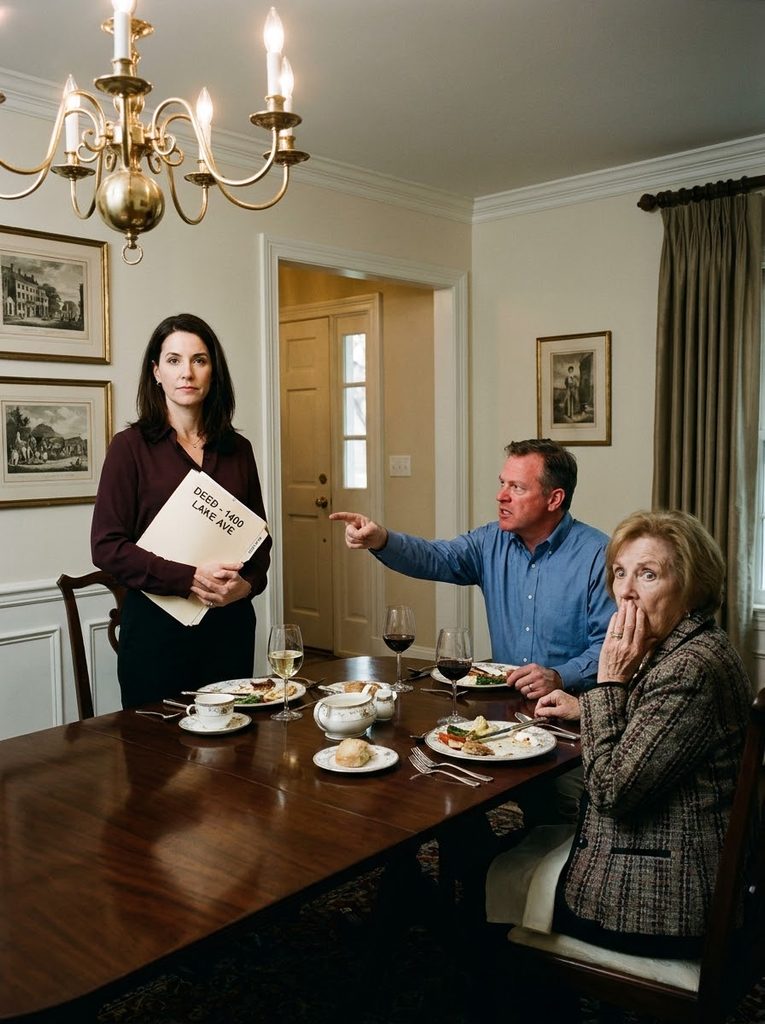
My mother struck my six-year-old son, Matthew, during Sunday dinner because he tried to retrieve a toy his cousin had taken from him. As I watched him stumble backward with blood near his ear, I realized that the people I’d spent years trying to please had never truly cared about his well-being.
“Teach your son some manners, Clara. That boy needs discipline.”
My mother spoke without the slightest remorse, while my younger sister, Valerie, immediately pulled her eight-year-old son, Dylan, into her arms. My father continued eating, and the other relatives avoided looking at Matthew as though nothing serious had happened.
For six years, my family had treated me as a struggling widow who couldn’t survive without their generosity. They believed that after my husband Julian died, I’d been reduced to working an ordinary office job while barely managing to raise my son.
I had never bothered correcting their assumptions because my actual circumstances were something I preferred to keep private. After Julian’s death, I’d started a technology business from a damp rented room, working on an old laptop while Matthew slept beside me in a secondhand crib.
That business eventually became Arcadia Systems, a technology company valued at billions of dollars. I owned substantial commercial properties, employed thousands of people, and controlled financial resources my relatives couldn’t have imagined.
Yet I deliberately concealed my wealth because I wanted Matthew to experience genuine family affection rather than attention purchased with money. I continued attending family gatherings despite the insults, convincing myself that having grandparents, an aunt, and a cousin would benefit him.
The argument that Sunday began with a small red toy car that meant far more to Matthew than its modest price suggested. Julian had bought him the original shortly before his death, and after it disappeared, I’d spent four months searching for an identical replacement.
When Matthew received it, he held it against his chest and whispered that it reminded him of his father. Since then, he had treasured the car as one of his few tangible connections to Julian.
During dinner, Dylan approached Matthew and snatched the toy from his hands. Matthew politely asked for it back, but his cousin refused and continued playing with it.
“Please give it back. It’s mine.”
When Matthew reached toward the car, my mother suddenly rushed over and slapped him. Instead of checking whether he was injured, Valerie comforted Dylan and accused Matthew of frightening her son.
My mother insisted that Matthew was badly behaved, while Valerie claimed he needed to learn how to share. Neither acknowledged that Dylan had taken something belonging to him.
I gathered Matthew into my arms and headed toward the front door, telling my mother that I was taking him to the emergency room. She accused me of overreacting and insisted that she’d barely touched him.
“Without our money, you and that boy would be homeless. You should remember who’s been helping you.”
Her words confirmed how completely she’d misunderstood our lives. I didn’t argue or reveal my financial position, because protecting Matthew mattered more than proving her wrong.
As I carried him outside, I understood that this would be the last time I allowed my family’s cruelty to pass without consequences. What none of them knew was that the woman they considered helpless had the resources to change their circumstances permanently.
Part 2: The Truth My Son Had Been Afraid to Tell
The drive to the hospital was painfully quiet as Matthew pressed tissues against his injured ear. I kept glancing at him in the rearview mirror, noticing the swelling on his cheek and the frightened expression he was struggling to hide.
“Mommy, did I do something bad?”
His question hurt more than anything my mother had said that evening. When I assured him he’d done nothing wrong, he admitted that perhaps everyone would have been happier if he’d simply allowed Dylan to keep the car.
I parked at the hospital and climbed into the back seat to comfort him. Holding his hands, I explained that he had every right to protect his belongings and that no child was responsible for an adult choosing to hurt them.
“You didn’t deserve what happened, Matthew. Grandma was wrong, and you never have to accept being hurt just to keep someone else happy.”
At the emergency department, Dr. Patel carefully examined his injuries and cleaned the small wound near his ear. She suspected that my mother’s ring had caused the cut and ordered imaging to rule out damage beneath the swelling.
When she asked who had injured him, I told her the truth. She then asked whether his grandmother had ever behaved violently toward him before.
I instinctively wanted to minimize the situation, just as I’d spent my childhood protecting my family’s reputation. Before I could respond, however, Matthew quietly explained that this wasn’t the first time his grandmother had hurt him.
“Grandma grabs my arms when you’re not looking. Sometimes she pinches my neck where my clothes hide it.”
I felt sick as he described incidents he’d concealed because my mother had threatened to blame him. She’d told him that I already suffered enough after Julian’s death and that reporting her behavior would only make my life harder.
Then Matthew revealed something even more disturbing. Three months earlier, my mother had locked him inside the dark laundry room after Dylan broke an expensive blue porcelain bowl.
I remembered that afternoon because my mother had insisted Matthew was responsible for the damage. Although he’d denied touching the bowl, I’d eventually paid for it to end the argument.
“Dylan broke it with his baseball bat. Grandma saw him, but she told me to say I did it.”
When Matthew refused to accept the blame, my mother had frightened him into silence. He explained that she’d wanted to protect Dylan because Valerie became upset whenever her son faced consequences.
Dr. Patel documented Matthew’s statements and explained that the disclosures required a report to child protective services and law enforcement. This time, I didn’t hesitate or attempt to protect my mother’s reputation.
“Please report everything. I want my son protected.”
A social worker arrived and interviewed Matthew, who repeated the incidents he’d described. He also revealed that his grandmother had repeatedly warned him that we depended on her financially and could become homeless if he displeased her.
I held his hands and assured him that we had a secure home and would never be abandoned because he told the truth. Shortly before midnight, a police officer photographed his injuries and took my formal statement.
When the officer asked whether I wanted the matter investigated and pursued, I agreed without reservation. For the first time, I understood that keeping the family together had never been worth sacrificing Matthew’s safety.
Part 3: The Fortune They Never Knew Existed
It was after one in the morning when Matthew and I returned to our actual home, a secluded estate surrounded by twelve acres of woodland. My family believed we lived in a cramped rented townhouse, but our residence was a modern, heavily secured property with beautiful gardens and a custom-built treehouse Matthew adored.
After putting him to bed, I went into my private office and contacted Daniel Mercer, Arcadia Systems’ chief legal counsel. Daniel had helped establish my company years earlier, and I trusted him to handle sensitive matters with discretion.
“Daniel, my mother assaulted Matthew tonight. The hospital has documented his injuries, and the police have opened an investigation.”
Daniel immediately asked about Matthew’s condition, then listened as I explained what needed to happen. I wanted our attorneys to examine every appropriate legal protection, including criminal proceedings, civil remedies, and restrictions on contact.
My second instruction concerned the financial support I’d secretly provided my relatives for years. Despite believing they were supporting me, my parents and sister had unknowingly depended on my money.
Five years earlier, my father’s disastrous investments had nearly caused my parents to lose their house. Through an anonymous investment entity, I’d purchased their debt and arranged affordable repayment terms.
I’d also covered their substantial property taxes through a private trust and helped fund my father’s expensive heart medication. Meanwhile, Dylan’s private-school tuition had been paid through a scholarship program I’d quietly financed for three years.
“I want every voluntary subsidy reviewed and terminated as soon as legally possible. Honor all required notice periods, but don’t authorize any additional support.”
Daniel explained that some financial arrangements couldn’t be ended immediately because they involved contractual obligations. I agreed to follow the law while making it clear that my relatives would no longer benefit from my generosity.
The following morning, my phone displayed forty-seven missed calls from my parents and Valerie. Their messages accused me of humiliating the family by involving the police, but not one expressed concern for Matthew.
My mother eventually left a voicemail demanding that I withdraw my statement and describe the incident as an exaggeration. I forwarded the recording to Daniel as evidence of her priorities.
Two days later, my father arrived at the security gate of my estate. He called angrily, demanding to know whose enormous property I was visiting.
“I live here, Dad. I own this estate.”
He initially laughed, insisting that someone in my supposed financial position couldn’t possibly afford the property. When I refused to open the gate, he accused me of destroying the family over a single mistake.
I reminded him that Matthew had described months of mistreatment and that he’d watched my mother hurt him without intervening. My father dismissed the allegations before insisting that our family had supported me ever since Julian died.
I finally told him about the mortgage assistance, property taxes, medical expenses, and Dylan’s tuition. His confidence disappeared as he realized that the daughter he’d considered financially dependent had secretly been sustaining much of their lifestyle.
“You’ll receive formal notices explaining the changes. Goodbye, Dad.”
Three days later, Valerie arrived at Arcadia Systems’ forty-story headquarters and demanded to see me. When she entered my executive conference room, she stared at the company logo and asked whether I really worked there.
“I founded Arcadia Systems, Valerie. I’m its CEO.”
I then explained that our latest financing round had valued the company at $7.2 billion. Valerie sat speechless as she began to understand that the sister she’d spent years belittling was a billionaire.
Part 4: The Sister Who Knew Everything
Valerie’s astonishment quickly turned into anger when she realized how much I’d concealed from the family. She accused me of deliberately allowing everyone to believe I was poor, but I reminded her that I’d never actually claimed to be struggling financially.
“You let us pity you for years, Clara. Why would you hide something this important from your own family?”
I explained that I’d wanted Matthew to be loved without anyone knowing how much money I controlled. Revealing my wealth would have made it impossible to distinguish genuine affection from financial self-interest.
When Valerie complained that our parents had been struggling, I placed a folder of financial records on the conference table. It documented the anonymous assistance I’d provided, including mortgage support, medical expenses, property taxes, and Dylan’s education.
“You paid for Dylan’s academy?”
“For the last three years, Valerie. I paid every bill.”
She studied the documents with trembling hands before demanding to know why I’d kept the arrangements secret. I told her that I’d never wanted Matthew to become a bargaining chip in a family that measured people’s worth by their financial usefulness.
Valerie accused me of testing everyone, but I explained that simply living privately wasn’t a test. Their treatment of Matthew had revealed their priorities without my needing to arrange anything.
Then she tried to excuse our mother’s behavior, describing the assault as one regrettable incident involving a disobedient child. I corrected her immediately.
“She didn’t make one mistake, Valerie. She was caught doing something she’d apparently been doing for months.”
I explained that Matthew had described being grabbed, pinched, threatened, and locked in the laundry room. When I mentioned the broken blue bowl, Valerie suddenly avoided looking at me.
Her reaction made me suspect that she’d known far more than she’d admitted. I confronted her about allowing Matthew to be blamed whenever Dylan misbehaved.
“Sometimes Mom protected Dylan because he’s sensitive. She didn’t want him getting into trouble.”
I asked whether protecting Dylan justified frightening or punishing my son. Valerie became emotional and insisted that Dylan was the most important person in her life, but she couldn’t explain why Matthew deserved less consideration.
That conversation ended any remaining possibility of maintaining our previous relationship. I informed her that she, Dylan, and our parents were no longer welcome around Matthew and that future contact would be handled through appropriate legal channels.
“You can’t just erase his family because you’re rich!”
“I’m not protecting him because I’m wealthy, Valerie. I’m protecting him because I’m his mother.”
As the investigation continued, detectives obtained archived recordings from my parents’ cloud-based security cameras. One video showed my mother dragging Matthew down a hallway while Dylan carried pieces of the broken blue bowl, and another supported his account of being intimidated near the laundry room.
My father eventually acknowledged that he’d witnessed my mother physically disciplining Matthew on multiple occasions. His admission undermined her insistence that the incident at dinner had been an isolated loss of temper.
My mother later called me, distressed about her legal expenses, the investigation, and the withdrawal of financial support. She complained that Valerie had been forced to remove Dylan from his expensive academy, yet still failed to ask how Matthew was recovering.
I reminded her of an incident from my own childhood, when she’d punished me harshly after I accidentally spilled grape juice on Valerie’s birthday dress. She’d told me that crying couldn’t change consequences, and I repeated those words before ending the call.
“Crying doesn’t change consequences, Mother.”
I blocked her number afterward, determined to stop allowing her to control our lives. Whatever happened next, Matthew would never again be expected to endure cruelty for the sake of preserving the family’s reputation.
Part 5: The Safe Line and the Meaning of Home
While the legal proceedings continued, Matthew began working with a pediatric trauma therapist. His recovery became my highest priority, far more important than the business acquisitions and financial decisions that usually filled my schedule.
During one session, the therapist asked him to draw his family. His picture showed three figures beneath a bright sun: Matthew, me, and Julian holding a guitar.
On the opposite side of the page, he’d drawn his grandmother, grandfather, aunt, and cousin. Between the two groups, he’d placed a thick black line that separated them completely.
“What’s this line, sweetheart?”
“That’s the safe line, Mom.”
His answer brought me to tears because it showed how clearly he understood the difference between people who protected him and people who frightened him. I promised myself that his boundaries would be respected as he continued healing.
Months later, my mother accepted a plea agreement rather than face a public trial. She received a suspended sentence, mandatory anger-management requirements, and a protective order restricting unsupervised contact with Matthew until he turned eighteen.
I chose not to arrange supervised visits either, because rebuilding contact wasn’t something Matthew needed to endure for the adults’ comfort. Our legal team also completed the termination of voluntary financial assistance according to the applicable agreements and notice requirements.
My parents weren’t stripped of their property or deliberately bankrupted. They simply had to manage their own expenses without the anonymous financial support they’d enjoyed for years.
Valerie enrolled Dylan in a public school and complained to relatives that I’d ruined her son’s future. I ignored those accusations and focused on creating a peaceful environment for Matthew.
Later that spring, Arcadia Systems acquired a major European artificial-intelligence company. After a technology conference in Silicon Valley, a journalist asked what had motivated me to build such a successful business while remaining largely unknown to the public.
“My son. Everything else is secondary.”
The interview attracted enormous attention, and financial publications began reporting on my career, wealth, and journey from widowed single mother to technology executive. Suddenly, relatives who hadn’t contacted me in years began sending congratulations and pretending we’d always been close.
I declined their attempts to reconnect. Six months after the dinner, however, a handwritten letter arrived from my father, admitting that his silence had allowed Matthew to be mistreated.
He acknowledged that he’d chosen his own comfort rather than challenge my mother and said he didn’t expect forgiveness or another opportunity to see his grandson. I kept the letter but didn’t respond, understanding that remorse didn’t automatically restore trust.
My mother continued blaming everyone else for what had happened. Her refusal to accept responsibility only strengthened my confidence that distancing ourselves had been necessary.
On Matthew’s seventh birthday, I took him to the Pacific coast, where we sat together watching the sunset. He brought the little red toy car because he wanted to keep his father’s memory close.
“Do you think Daddy can still see us?”
“I don’t know, sweetheart, but I know how much he loved you.”
Matthew smiled and said he believed love couldn’t simply disappear. We talked about Julian, laughed about his habit of avoiding long walks to the kitchen for midnight snacks, and enjoyed being together.
Eventually, Matthew asked whether his grandmother would ever attend another birthday celebration. I explained that I would never allow contact unless I was completely certain he would be physically and emotionally safe.
Then he quietly asked whether I was angry with him for telling Dr. Patel about the laundry room. I pulled him close and made sure he understood that speaking honestly had never been a betrayal.
“You didn’t break our family by telling the truth, Matthew. The people who hurt you were responsible for what happened.”
He relaxed against my shoulder, and I told him how proud I was of his courage. A little later, he surprised me by asking whether the rumors at school about our wealth were true.
“Are we really billionaire rich, Mom?”
“Technically, yes.”
He immediately demanded to know why I’d made him save his allowance for three months to buy a Millennium Falcon Lego set. I laughed and explained that being able to afford something didn’t mean he shouldn’t learn patience, responsibility, and the value of earning it.
As he played with his red car in the sand, I realized that Arcadia Systems wasn’t my greatest accomplishment. The most important part of my life was the little boy beside me, whose kindness had survived experiences that should never have happened.
When the sun disappeared below the horizon, Matthew placed his hand in mine and asked whether we were ready to go home. I smiled because I finally understood that home wasn’t defined by wealth, family names, or the approval of relatives.
Home was wherever Matthew felt loved, respected, and safe enough to speak without fear. My mother’s actions hadn’t destroyed a healthy family; they’d exposed problems that had existed for decades and given me the courage to stop accepting them.
For the first time in my life, I no longer needed my family’s approval to feel complete. All I needed was to make certain my son would never again question whether he deserved to be loved and protected.