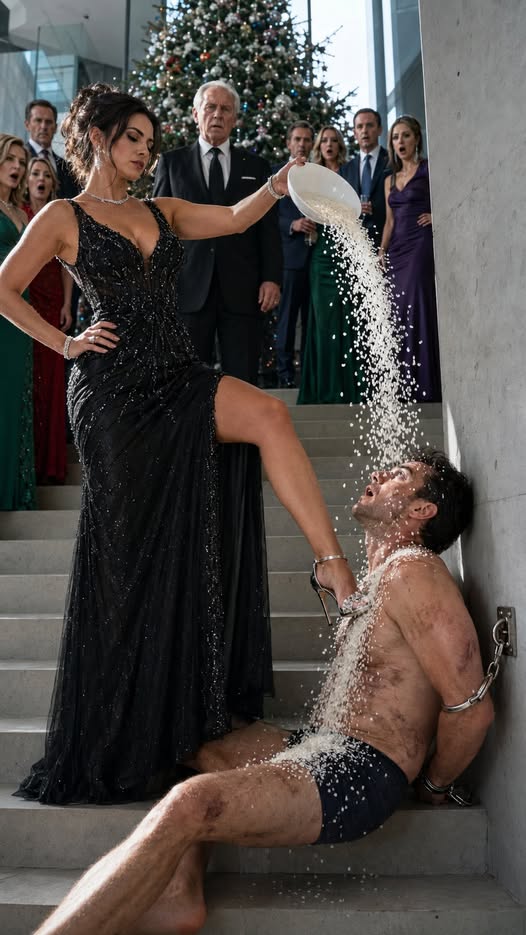
The Iron Chain and the Empty Ledger
“Whatever you do, Dad, do not come here. If you step through that front door tonight, they are going to eliminate you.”
The line went dead before I could even formulate a question. I stood in the center of my dimly lit kitchen, the dial tone buzzing against my ear like an angry hornet.
New Year’s Eve was merely seven days away. The voice that had just spoken to me did not belong to a man gripped by sudden panic; it carried the hollow, hollowed-out resonance of a soul that had already surrendered to a grim fate. At thirty-four years of age, my son, Wyatt, was built like the collegiate boxer he used to be—resilient, proud, and fiercely independent. He was a man who had cracked a rib during a sparring match in his twenties and simply wrapped it himself, entirely too stubborn to ask for my help.
That stubbornness was precisely why his warning terrified me, and it was the singular reason I absolutely refused to heed it.
To the quiet, unassuming residents of Springfield, I was Abraham Yates: a sixty-eight-year-old retired truck driver who lived a solitary existence in a weather-beaten apartment complex, puttering around town in a rusted, twenty-year-old pickup. I wore faded flannel and boots with worn soles. I bought my coffee black from the corner gas station.
Not a single soul in this neighborhood suspected that the man driving that sputtering truck was the sole architect and founder of Heartland Freight Systems. My logistics empire controlled sprawling freight yards, massive storage warehouses, and a fleet of hundreds of semi-trucks dominating the vital trade routes between Kansas City and Omaha.
Life had taught me a brutal lesson in my early thirties: visible wealth is a magnet for counterfeit smiles and parasitic intentions. Consequently, for the better part of four decades, I deliberately cloaked myself in the guise of a man who possessed nothing worth taking.
I pulled my rattling pickup onto the pristine, snow-dusted pavement of Chestnut Hill shortly after eleven o’clock on the night of December thirty-first. The neighborhood was a fortress of affluent excess. From the street, the deep, rhythmic bass of loud music, the shrill echoes of forced laughter, and the sharp clinking of crystal champagne flutes spilled from Wyatt’s sprawling suburban estate.
Standing in the biting cold, I peered through the towering, illuminated bay windows. There was my daughter-in-law, Sabrina, holding court in a sleek, obsidian-black evening gown, greeting her high-society guests with practiced elegance. Beside the marble fireplace, her father, Irving Palmer, was ostentatiously uncorking an impossibly rare bottle of vintage wine—a bottle I had personally gifted to Wyatt to commemorate a recent corporate promotion.
Then, a sight twisted the knife in my chest: Sabrina’s mother, Piper. She was casually draped in a vintage, fur-collared coat. It was not hers. It was my late wife’s favorite garment, an irreplaceable keepsake that Wyatt kept purely out of deep maternal affection.
Yet, amid the swirling glittering dresses and tailored suits, the host of the party was entirely absent. My son was nowhere to be found.
A cold dread coiled in my gut. I circumvented the manicured hedges, moving like a phantom toward the rear of the sprawling property. I bypassed the main entrances, heading straight for the heavy steel door of the mechanical room. I didn’t need to guess the security code; I possessed the keypad combination because I was the one who had silently financed the original construction of this very house.
The heavy door yielded with a quiet click. I slipped inside, descending the concrete stairs into the subterranean depths of the estate.
The atmosphere shifted violently. Gone was the scent of expensive perfume and roasted hors d’oeuvres. The damp basement reeked of stagnant water, harsh industrial bleach, and the sharp, undeniable odor of clinical antiseptics.
My eyes adjusted to the gloom, and the breath was instantly violently stolen from my lungs.
Wyatt was lying motionless on the freezing concrete floor, dressed in nothing but a thin, soiled t-shirt. His right leg was grotesquely deformed, the knee joint swollen to a terrifying, unnatural proportion that barely registered as human anatomy. A thick, industrial-grade steel chain was coiled tightly around his left ankle, the other end bolted securely into a massive concrete load-bearing column.
My heart felt as if a fault line had cracked open right through my chest. I fell to my knees, gently resting a trembling hand on his shivering shoulder.
He instantly flinched, curling inward like a beaten animal, throwing his arms up to shield his face.
“It’s just me, son,” I whispered, my voice thick with unshed tears. “I’m here.”
With immense, agonizing effort, he pried his bruised, swollen eyes open. The sheer exhaustion in his gaze was enough to shatter my soul.
“I explicitly told you not to come here, Dad,” he breathed out, his voice scraping like dry leaves on pavement.
“Who did this horrific thing to you?” I demanded, fighting to keep the volcanic rage in my voice reduced to a whisper.
“Sabrina… and her father,” Wyatt gasped, clutching at his ribs as he spoke. “They shattered my knee with a heavy construction sledgehammer. Once I couldn’t run, they started injecting me with strange chemical sedatives. They are trying to break my mind, Dad. They want me to sign a full, irrevocable power of attorney so they can liquidate my logistics companies and drain every last dollar from the commercial accounts.”
He swallowed hard, his eyes darting frantically toward the ceiling. “As soon as the countdown finishes upstairs… they are going to stage a fatal reaction. They plan to make it look like a tragic, self-inflicted chemical dependency issue.”
I scrambled to my feet, locating a small, plastic water bottle on a nearby workbench. I returned to his side, carefully tilting it to his cracked lips, feeding him the liquid drop by drop so he wouldn’t choke. As the dim light caught his skin, I saw the fresh, livid puncture marks scattered along the veins of both forearms. He had been down here for days, completely losing track of time in a chemically induced haze.
He explained that he had only managed to send me that desperate, fleeting text message a week prior because Sabrina, in a rare moment of arrogant carelessness, had left her smartphone resting on the boiler while carrying a tray of discarded food back upstairs.
Before I could ask another question, the sharp, rhythmic clack-clack-clack of high heels echoed down the wooden staircase.
My blood turned to ice. I quickly squeezed myself into the heavy shadows behind a massive, metal storage shelving unit. With trembling fingers, I retrieved my smartphone, silenced it completely, and activated the audio recording application.
Sabrina descended into the cold purgatory holding a small, unappetizing plate of cold, unseasoned rice. She crouched down right in front of her shackled husband, an eerily calm, fabricated smile painted across her flawless face.
“This is your final chance tonight, my love,” Sabrina cooed, her tone dripping with toxic sweetness. “Just sign the legal papers. Do it now, and all of us can finally get some much-needed rest.”
“I am never… going to sign those documents,” Wyatt answered, his voice weak but laced with the last remnants of his formidable spirit.
Sabrina sighed, a sound of theatrical disappointment. She casually placed the ceramic plate on the dusty floor. Then, without a flicker of hesitation, she raised her leg and deliberately drove the sharp, stiletto heel of her designer shoe directly down into his crushed, swollen knee joint.
Wyatt threw his head back, a muffled, agonizing scream tearing from his throat, echoing terribly off the concrete walls.
“Then I suppose we will just have to keep practicing until your hand learns how to obey its wife,” Sabrina mocked softly, adjusting her dress as she stood.
In the suffocating darkness behind the shelves, my fingernails dug so deeply into my own palms that the skin nearly broke. Directly above our heads, I could hear the muffled, joyous roar of the party guests beginning their drunken countdown to the new year. Ten… nine… eight…
I stood paralyzed in the shadows, entirely unable to comprehend the sheer, unadulterated evil that had infiltrated my son’s life. But as the clock struck midnight upstairs, a terrifying calm washed over me. The time for sorrow was over.
PART 2
The absolute second Sabrina’s footsteps faded back into the cacophony of the upstairs celebration, I stepped out from the oppressive shadows. My hands were no longer shaking.
Wyatt looked up at me, his face pale and shining with cold sweat. Through labored breaths, he confessed a crucial piece of information that completely altered the legal landscape of his captivity.
“They don’t understand, Dad,” he wheezed, a bitter, pained smile touching his lips. “The house, the luxury SUVs, the massive commercial bank accounts Sabrina is trying to seize… none of it belongs to me.”
My eyes widened as I processed his words.
“I don’t own it,” he continued. “They are entirely registered to the parent holding entity of Heartland Freight Systems. I am merely serving as an appointed director of a smaller regional subsidiary. I occupy this suburban estate under a standard corporate lease agreement.”
It was a revelation of monumental proportions. Because I, Abraham Yates, the man in the faded flannel, remained the sole, undisputed shareholder of that parent corporation. Sabrina had spent years blinded by her own greed, completely ignoring the complex legal paperwork, purely interested in draining the lifestyle without understanding the mechanics of the machine that funded it. She was torturing my son for keys to a kingdom he did not legally possess.
Moving with mechanical precision, I pulled out my phone and activated the camera. I carefully snapped high-resolution, undeniable photographic evidence of the heavy iron chain biting into his ankle. I documented the horrific swelling and discoloration of his shattered leg. I took macro shots of the fresh, bruised injection sites tracking up his veins. Near the concrete pillar, I found a small, discarded medical cotton pad stained with fresh crimson from his last injection; using a clean plastic bag from the workbench, I preserved it meticulously.
Once the evidence was secured in my pocket, I knelt beside him. “Listen to me,” I whispered fiercely. “I am going to leave this basement, but I am not leaving you. I am going to walk through the front door of this house like an unexpected, foolish old man. Hold on just a little longer.”
He nodded weakly, closing his eyes as a fresh wave of pain washed over him.
Ten minutes later, I stood on the grand, sweeping front porch of the Chestnut Hill estate. I hunched my shoulders, allowed my hands to tremble slightly, and rang the ornate doorbell while clutching a cheap, five-dollar box of pharmacy holiday chocolates.
When Sabrina swung the heavy oak door open, all the color instantly drained from her flawless face. For a fraction of a second, raw panic flashed in her eyes. But surrounded by fifteen wealthy, laughing party guests in her extravagant foyer, she could not risk a scene. She had no choice but to invite the ‘poor, simple father-in-law’ inside out of the freezing cold.
I shuffled clumsily into the grand living room, feigning absolute awe at their massive, glittering Christmas tree. I played the part of the fragile elder to perfection. I smiled politely and patiently endured a barrage of endless, condescending teasing from Irving, who had the audacity to openly sip champagne while wearing my son’s engraved, gold college graduation watch on his thick wrist.
After twenty agonizing minutes of playing the court jester, I signaled my intention to leave. As I headed for the foyer, I gently pulled Sabrina aside into a quieter alcove.
“I am so sorry to intrude on your beautiful party, Sabrina,” I stammered, looking down at my scuffed boots. “But I am actually here regarding an urgent, highly confidential land matter. You see, a massive commercial parcel of real estate that I purchased years ago, alongside Wyatt, is about to be seized by the state for a new highway expansion project.”
I paused, letting the silence hang before delivering the bait. “The state compensation check is guaranteed at around eighteen million dollars. But the highway officials absolutely require both of our physical signatures, in person, stamped by a notary before the third of January, or the funds get tied up in court for a decade.”
The transformation was instantaneous. The sheer, unadulterated greed illuminated her eyes like a struck match.
“Oh, Abraham,” she lied with practiced smoothness, her voice dripping with sudden, syrupy concern. “Wyatt is actually home right now. He is feeling quite terribly ill tonight, resting upstairs. But… perhaps with something this important, he can manage to wake up and sign your documents.”
She kindly asked me to wait alone in the spacious, marble-countered kitchen while she went to “check on him.”
I did not wait. I silently crept toward the dark hallway leading to the master study. Through the cracked door, I overheard the three conspirators aggressively debating their newly complicated situation in frantic whispers.
“We cannot let him see the boy,” Piper hissed anxiously.
“Just give the old man the exact same chemical mixture,” Irving instructed his daughter, his voice hard and utterly devoid of humanity. “Spike his drink. Once he falls sound asleep in the armchair, we can search his battered truck for the land deeds. If his old heart fails to wake up tomorrow morning, we will simply inform the local authorities that he suffered a sudden, tragic cardiac event due to his advanced age.”
My stomach turned, but my resolve hardened into diamond. I slipped silently back into the kitchen, standing near the island counter.
Moments later, Sabrina returned, her smile radiant, carrying a warm, steaming cup of spiced holiday punch.
“Drink this, Abraham, it will warm your bones,” she insisted gently. “I am going to go help Wyatt sit up.”
I accepted the ceramic mug, offering a grateful, trembling smile. I brought the rim to my lips, pretending to take a long, deep sip. The absolute second she turned her back to grab a linen napkin from the drawer, I swiftly inverted the mug, pouring the entire, chemically-laced liquid contents into the soil of a massive, decorative potted poinsettia plant sitting by the window.
“Delicious,” I coughed slightly, setting the empty mug down. “If you don’t mind, my dear, I desperately need to use the restroom before we handle the paperwork.”
Without waiting for her permission, I shuffled down the hall. But instead of entering the guest bathroom, I slipped silently back through the concealed servant’s corridor and descended rapidly back down into the freezing basement.
It was precisely eleven-forty-six in the evening. I pulled out my phone and hit record.
I filmed a clear, undeniable video of Wyatt. Despite his immense pain, he looked directly into the camera lens, stating his full legal name, the current date, and the exact identities of his captors. He detailed the mysterious, burning substances they had been forcing into his veins. Without breaking the continuous video frame, I panned the camera to capture the heavy ankle chain, the horrifying state of his kneecap, and then, a chilling discovery in the far corner: a thick roll of heavy industrial plastic sheeting, a construction shovel, and three large bags of quicklime lined up neatly against the concrete foundation. They had never planned to let him survive the overdose.
“Dad, please, you cannot walk out through the front entrance,” Wyatt whispered, his eyes wide with renewed terror as I pocketed the phone. “Irving keeps a loaded hunting rifle concealed near the hall closet, and Sabrina’s cousin currently works as an active municipal officer for the local town police. They will intercept you.”
I squeezed his hand one last time. “I’m bringing thunder, Wyatt. Hold on.”
I safely escaped the property by bypassing the alarm sensors on the side garage door, slipping out into the freezing night. But as I sprinted across the frosty lawn toward my rusted pickup, Irving spotted my movement from a second-story window.
I heard a heavy window smash open, followed instantly by the deafening, concussive roar of a firearm discharging a warning shot into the winter sky.
I dove into my truck, cranking the ignition. The old engine roared to life just as Irving burst through the front doors, sprinting toward Wyatt’s high-performance SUV parked in the driveway.
I slammed the truck into gear and tore down Chestnut Hill Avenue. Irving aggressively pursued me, the SUV’s high beams blinding my rearview mirrors. He was closing the distance rapidly. But Irving was a man accustomed to smooth rides, not high-speed chases on slick, black-ice pavement. As he accelerated blindly around a sharp, descending curve, he catastrophically lost control. The heavy SUV skidded violently, crashing with a sickening crunch of metal into a massive, municipal stone planter box on the shoulder.
I didn’t tap the brakes. I kept driving straight until I reached the blinding canopy of a brightly lit, twenty-four-hour gas station on the edge of the county line. I locked my truck doors, rolled up the windows, and immediately placed a call to Arthur Montgomery, the ruthless chief legal counsel for my enterprise.
“Arthur, wake up,” I ordered him coldly. “I need you to activate the internal corporate fraud protocol immediately. Right this second. Cancel all executive corporate credit cards assigned to Wyatt’s subsidiary. Revoke every existing power of attorney, freeze all external routing numbers, and contact the State Attorney General’s Office directly.”
“Abraham? What is going on?” Arthur demanded, the sleep vanishing from his voice.
“Inform the state task force that an innocent victim is currently being held hostage, severely injured, and forcibly sedated inside a Chestnut Hill residence. And Arthur? Make absolutely certain to highlight that the local municipal police department might be compromised. We need state troopers. Now.”
My second phone call went directly to Samuel, the grizzled head of my private corporate security division.
“Samuel. Deploy your team to Chestnut Hill. Do not attempt to breach the premises or physically engage anyone on the property. Simply establish a secure, impenetrable perimeter outside the neighborhood and await the immediate arrival of the state investigators. Nobody leaves that house.”
By eleven-fifty-eight in the evening, the upscale quiet of Chestnut Hill was violently shattered. A fleet of state police cruisers, their sirens wailing like banshees, flooded the avenue. As the unsuspecting, inebriated party guests happily shouted “Happy New Year” upstairs, flashing blue and red emergency lights illuminated the entire grand, aristocratic facade of the Palmer residence.
Just moments before heavily armored state troopers forced their way through the front doors, Sabrina rushed into the main hall, triumphantly waving a signed piece of white paper in her hands, completely unaware that the empire she thought she had just stolen was already crumbling to dust.
PART 3
“He completely agreed to everything! You have no right to be here!” Sabrina screamed frantically, her carefully curated elegance evaporating as heavily armed state troopers stormed into the grand foyer of her home.
She pointed a trembling, manicured finger directly at me as I walked through the front doors flanked by authorities. “My husband officially authorized me to manage all of his personal assets, and this crazy old man is currently attempting to kidnap him!”
The document she brandished like a shield was a basic, off-the-internet private power of attorney form, bearing a shaky, clearly forced signature that barely resembled my son’s handwriting.
Arthur Montgomery, having arrived precisely on time, stepped forward. He adjusted his glasses and reviewed the paper from a distance without even bothering to touch its surface.
“Even if we were to humor the absurd notion that this signature is authentic, Mrs. Yates, it grants you zero legal authority over the corporate assets you are so desperately trying to claim,” Arthur stated, his voice devoid of any emotion. “Your husband does not hold personal ownership of this home, these luxury vehicles, or any operational aspect of Heartland Freight Systems.”
Sabrina stopped screaming. She stared directly at me, her mouth slightly open, as though I had suddenly begun speaking a dead language. “That is a complete, malicious lie! Wyatt personally runs the entire corporation!”
“He manages the daily logistics operations,” I corrected her firmly, stepping into the light. “He does not hold an ounce of equity in the parent entity.”
Before she could process the catastrophic failure of her plan, members of the specialized state abduction unit moved directly past her, swarming down into the basement to secure what the Attorney General had classified as an active, critical hostage situation.
The scene below brought hardened troopers to a halt. One tactical paramedic immediately deployed heavy hydraulic tools to sever the thick steel ankle chain, while another medic rushed to stabilize Wyatt’s plummeting vital signs. His blood pressure was dropping dangerously low. The initial assessment confirmed his injured knee had suffered a complex compound fracture, and his pale skin was showing visible, terrifying signs of a rapidly spreading systemic infection.
As the emergency responders finally carried him up the stairs and out on a reinforced stretcher, his head rolled to the side. He frantically searched the chaotic crowd of police and bewildered party guests with glazed eyes until he finally found me.
I walked alongside the stretcher, gripping his cold hand. “I am right here with you, son,” I assured him, my voice thick with emotion. “I am not going to leave your side ever again. You’re safe.”
Chaos erupted in the hallway behind us. Irving, nursing a bleeding forehead from his SUV crash, foolishly attempted to physically block the paramedics from exiting. He was instantly and violently tackled to the hardwood floor, disarmed of a concealed handgun, and aggressively handcuffed by three state troopers.
Piper, who had spent the entire evening sipping champagne and acting like the proud matriarch of the estate, collapsed against a wall. She began loudly weeping, clutching my late wife’s coat, hysterically claiming to the officers that she knew absolutely nothing about the horrors occurring directly beneath her feet.
Sabrina, however, remained rooted to the center of the foyer, desperately clutching her useless forged document with both hands.
“This is my legal residence!” she shrieked at a commanding officer who was instructing her to step outside. “You have no legal right to remove me from my own home!”
Arthur casually opened a thick, genuine leather legal folder. “Actually, ma’am, this real estate property belongs exclusively to Yates Real Estate Holdings, a direct, wholly-owned subsidiary of our parent corporation. You reside here solely because your husband’s corporate employer permitted it as a temporary perk. Furthermore, as of twenty minutes ago, all corporate access, legal powers, and financial cards tied to your name have been formally and permanently revoked.”
Sabrina froze in utter disbelief. The walls of her fabricated reality were collapsing inward. Desperation clawed at her throat. “My husband is a secret, severe drug addict!” she lied wildly to the commanding officer. “He begged me to lock him downstairs so he would not harm himself during a relapse!”
I slowly pulled my smartphone out of my heavy winter coat pocket. “Then you had better explain to the state prosecutor why you were feeding a ‘recovering’ man cold rice off a concrete floor, while deliberately digging your designer shoe heel directly into his fractured leg.”
I chose not to play the horrific recorded audio in front of the stunned, whispering party guests. Instead, I handed the digital device directly to the lead state investigator, along with the high-resolution photographs, the blood-soaked cotton pad secured in plastic, the basement confession video, and the exact physical location of the poisoned kitchen potted plant. I wanted this criminal case to be built on a cold, unassailable chain of forensic custody, rather than public theatrical drama.
At the regional medical center, a team of orthopedic surgeons worked tirelessly on Wyatt for four continuous, agonizing hours.
Early on the morning of New Year’s Day, a forensic toxicologist arrived to collect fresh blood samples before emergency intravenous fluids could entirely clear his system. The subsequent, expedited lab report completely destroyed Sabrina’s defense. It ruled out any trace of illegal recreational street narcotics, instead uncovering massive, toxic concentrations of stolen prescription sedatives dangerously combined with xylazine—a highly potent veterinary tranquilizer capable of causing severe respiratory depression and horrific tissue necrosis. They were not treating an addiction; they were systematically executing a deliberate, agonizing attempt to render him completely helpless before silencing him permanently.
I spent those early morning hours sitting silently in a hard plastic chair beside my son’s hospital bed, listening to the rhythmic beeping of his heart monitor.
Around five o’clock in the morning, Arthur sent me a link. Sabrina, having been temporarily released while charges were being finalized, had initiated a live video stream from the courthouse parking lot. She was sobbing uncontrollably into her phone, performing for her social media followers. She vehemently claimed that her wealthy, tyrannical, and controlling father-in-law had orchestrated a massive invasion of her private home to tear her beautiful family apart over a petty corporate inheritance dispute.
Her public, theatrical broadcast took a sudden, profoundly embarrassing turn when she attempted to pay for a waiting local taxi using a sleek, black corporate credit card.
The transaction was instantly declined.
Looking panicked, she dug through her purse and tried a second, platinum corporate card, which was likewise loudly rejected by the driver’s machine on live camera. Online viewers immediately began flooding the comment section, mocking her frantic, entitled behavior. Yet, watching her public downfall on a glowing screen, I felt no satisfying surge of victory. A foolish man might enjoy the brief, intoxicating satisfaction of petty revenge, but a father who has just rescued his only child from heavy iron chains feels nothing but a deep, bone-weary exhaustion.
At exactly nine o’clock that morning, state forensic technicians executed a sweeping, formal search warrant on the Chestnut Hill residence.
The findings were damning. Inside Irving’s leather travel bag, investigators discovered six prescription vials entirely missing proper pharmacy labeling, boxes of clinical syringes, sterile medical gloves, and live shotgun ammunition.
In the kitchen, the massive poinsettia plant was completely withered and dying. A forensic chemist extracted soil samples that yielded the exact, lethal chemical sedative mixture found coursing through Wyatt’s bloodstream. That ruined, decaying plant served as definitive, undeniable legal proof that the warm drink served to me with a smile had been deliberately poisoned.
The final nail in their coffin arrived two days later. State cyber-investigators secured Sabrina’s private, encrypted text messages under a federal judge’s warrant.
Her extensive text conversations with a man named Harrison Cole—a bitter rival within the Heartland corporate sphere—exposed the true depth of the criminal conspiracy. They had meticulously planned to publicly ruin Wyatt’s professional reputation, use the forced power of attorney to seize control of the regional enterprise, transfer highly lucrative shipping contracts to Harrison’s competing firm, and eventually stage the fatal, untraceable overdose in the basement. They had even negotiated explicit, documented cash payments to Sabrina’s cousin within the local police force to intentionally delay or reroute any emergency 911 responses sent to the house.
The police cousin was immediately suspended without pay and later federally indicted for official misconduct and conspiracy. Harrison Cole was intercepted by federal agents at an international airport while frantically attempting to flee the state.
Irving, Piper, and Sabrina were swiftly remanded into state custody, denied bail entirely based on the overwhelming evidence of severe felony charges, including aggravated kidnapping, massive corporate fraud, and attempted homicide. The signature document Sabrina had waved so triumphantly during her arrest was proven completely useless; forensic handwriting experts quickly confirmed she had forcibly guided my heavily sedated son’s hand across the paper.
My son survived the physical ordeal, but his team of doctors were brutally honest about his long-term recovery. He would eventually learn to walk again, but his shattered knee joint would never regain its full, natural mobility.
The psychological wounds cut far deeper than the physical ones. For several agonizing weeks after leaving the hospital, Wyatt would wake up gasping for air in the middle of the night, violently convinced he was still trapped in the dark, suffocating basement. He could not tolerate the mundane sound of jingling keys, and he absolutely refused to sleep in a room with a closed door.
I had spent my entire adult life falsely believing that protecting my family meant quietly financing expensive, safe homes, securing top-tier doctors, and providing elite private education. I realized, far too late, that true protection required paying profound attention when someone you love says they are ‘fine’ using a voice vibrating with unspoken, hidden pain.
When Wyatt finally woke up with a clear mind two days after his reconstructive surgery, his very first words to me were a quiet, shame-filled apology.
He confessed, tears streaming down his face, that he had desperately hidden the growing, vicious verbal abuse, the rapid financial drain, and Sabrina’s terrifyingly controlling behavior because he was absolutely terrified I would view him as a weak, failed man.
I sat on the edge of his bed and held him. I told him firmly that shame belongs entirely and exclusively to the abuser who holds the keys to the chains, never to the survivor who possesses the monumental strength to endure them. For the first time since he was a frightened young boy, he wept openly against my shoulder. In that hospital room, I made him a sacred promise: every future medical, legal, and business decision regarding our family would be made with him fully awake, completely informed, and entirely, unequivocally free.
Fourteen months later, the high-profile, highly publicized criminal trial finally commenced.
Sabrina arrived at the sprawling state courthouse wearing simple, unbranded clothing without a trace of makeup, her hair pulled back tightly in a severe attempt to appear meek and victimized. Her expensive legal defense team centered their argument on the premise that she had acted entirely under intense psychological pressure from her domineering father, claiming she was merely attempting an informal, misguided “home detoxification program” to save her husband.
That flimsy defense shattered into a million pieces the absolute moment my audio recording was played in open court.
The jury sat in stunned, horrifying silence as they listened to her voice—cold and mocking—offering and withholding food, ridiculing his immense suffering, and the sickening sound of her deliberately stepping on his broken, vulnerable joint.
Next, the basement video taken on New Year’s Eve was projected across a massive screen in the courtroom. It showed Wyatt, pale, chained, and trembling, yet clearly and lucidly identifying his captors and their insidious financial motives, directly contradicting the narrative of a delusional addict.
The state toxicologist took the stand to patiently explain the lethal, dangerous drug cocktail found in his blood, while the forensic chemist presented the perfectly matching soil samples extracted from the withered houseplant.
Finally, the state prosecutor displayed the damning, arrogant text messages between Sabrina and Harrison Cole on the projector. The final message displayed was one where Sabrina explicitly stated that her father would “handle the final emergency cleanup once the papers were signed.”
Sabrina stopped looking up at the judge entirely. She stared blankly at the wooden table.
Piper desperately begged the prosecutor to let her testify against her own daughter and husband in exchange for a lighter sentence, but the state rejected her plea deal; the evidence proved she actively participated in the surveillance and forgery. Irving, cornered like a rat, attempted to shift all the violent blame onto Sabrina. Sabrina blamed Harrison’s greed, and Harrison pathetically claimed the entire detailed plot was merely an “exaggerated, hypothetical business discussion” they never truly meant to carry out.
Wyatt requested special permission to address the court at the conclusion of the grueling proceedings. He walked slowly, painfully to the wooden podium, leaning heavily on a polished wooden cane.
“I did not build a home so that people would love me for the wealth I accumulated,” Wyatt stated quietly, his voice echoing in the silent, packed courtroom. “I offered them my complete, unprotected trust. Stolen money can eventually be replaced. A shattered knee can be reconstructed by talented surgeons with metal and screws. But there are still quiet, terrifying nights when I wake up in a cold sweat, feeling the heavy bite of an iron chain that no longer exists. That… that is the permanent, unforgivable damage they caused.”
The court convicted Sabrina and Irving as the primary, malicious orchestrators of the crime, handing down maximum, consecutive prison sentences without the possibility of early parole. Piper received a substantial, mandatory sentence for her direct, complicit role in the conspiracy, while Harrison Cole was convicted on multiple federal counts of corporate fraud and criminal conspiracy. The former municipal police officer lost his badge, his pension, and faced his own separate, federal trial.
When the heavy sentences were officially read by the judge, Sabrina turned around and desperately searched the crowded courtroom for my eyes. She seemed to expect me to gloat, to show a triumphant smirk. But I remained entirely motionless, my face a mask of stone. True, profound justice cannot restore lost time, nor can it erase deep, agonizing physical scars; it simply, firmly establishes an impenetrable boundary where cruelty once ran entirely unchecked.
Three weeks after the trial officially ended, I received an unexpected, automated collect phone call from the state correctional facility. Against my better judgment, I accepted the charges.
“Mr. Yates, please, you have to listen to me,” Sabrina pleaded frantically over the crackling line, the background noise of the prison echoing behind her. “I know I do not deserve an ounce of your mercy. But I am currently pregnant. It’s Wyatt’s child. You are a family man, Abraham; you surely would not allow your own innocent grandchild to be born and raised behind these steel bars.”
I reached into my desk drawer and quietly opened a thick, certified medical file that state prosecutors had included in the official court discovery record.
Months prior to the kidnapping, while she was secretly planning to leave Wyatt for Harrison, Sabrina had undergone a voluntary, permanent tubal ligation procedure. She had deliberately hidden the permanent surgery from Wyatt by forging documents claiming it was a routine, minor abdominal procedure.
“You are not pregnant, Sabrina,” I answered her plainly, my voice devoid of anger or pity. “And even if you were, a newborn child would never serve as a bargaining chip to unlock a prison door that you deliberately locked from the inside with your own two hands.”
I hung up the heavy receiver without uttering another word, severing her from our lives forever.
In the ensuing months, our rigorous internal financial audit revealed that several of Sabrina’s extended, greedy relatives had happily received luxury vehicles, property rentals, and massive, unexplained wire transfers funded directly by corporate accounts that Wyatt had been forced to approve under extreme duress.
I did not throw these families out onto the street out of vindictive spite; I simply let Arthur Montgomery loose. He initiated aggressive, relentless legal actions to recover every single asset purchased directly with stolen corporate funds and legally voided all fraudulent, coerced contracts. Some relatives quietly and quickly returned the vehicles to avoid prosecution; others were forced to sign formal, legally binding repayment plans. Those who had once enthusiastically celebrated Sabrina’s sudden, unearned wealth vanished like smoke the absolute moment she could no longer fund their lavish lifestyles.
During his grueling, painful physical rehabilitation, Wyatt sat with me on my apartment balcony and finally asked the question that had lingered between us. He asked why I had spent so many decades keeping the true, massive scale of our corporate enterprise hidden from him.
I poured him a cup of coffee and explained. “When I was younger, and building all of this, I deeply, profoundly feared raising an heir who could not distinguish genuine, hard-earned affection from financial interest. I wanted you to be loved for the man you were, not the bank account you controlled.”
I sighed, looking out over the town. “Yet, my prolonged, stubborn silence produced the exact opposite, disastrous result: I allowed you to enter a toxic, predatory relationship completely unprepared. Everyone around you—your wife, her family, her lovers—understood the exact, lucrative extent of my wealth, while you remained entirely unaware of your true ownership, your leverage, and your legal protections.”
A year after the trial concluded, Wyatt and I traveled away together for a few quiet, uninterrupted days at a remote, rustic cabin nestled near the Table Rock Lake reservoir. The air was crisp, smelling of pine and woodsmoke.
I stood over an old, cast-iron stovetop, preparing a thick grilled steak. Wyatt, leaning his cane against the counter, jokingly complained that I had severely overcooked the meat.
“I run a massive, national freight logistics enterprise, son, not a Michelin-star steakhouse,” I replied with a faint, rare smile.
“Then you really ought to hire a professional corporate cook,” he countered playfully, taking a bite anyway.
“You can start by taking the lead on that,” I told him earnestly, turning to face him. “Starting this coming Monday, you are going to work directly alongside me out in the field. I want you to shake the hand of every fleet operator, inspect every freight yard, and drive every major distribution route. Because you are not going to inherit an enterprise from behind a mahogany desk.”
I reached into my bag and placed a clear, heavy organizational folder on the wooden table. It detailed the full, uncensored corporate hierarchy of Heartland Freight Systems, offering him a structured, transparent path to become a gradual managing partner based on actual performance, independent external audits, and board approval.
I also added one firm, non-negotiable personal boundary.
“Any future personal relationship you build moving forward must be grounded in absolute, complete financial transparency,” I added firmly, tapping the folder. “Not because you should constantly suspect others of treachery, but so that no one ever again mistakes your genuine love for unlimited access to a corporate bank account.”
Wyatt reviewed the thick stack of legal documents in silence for a long time before slowly closing the folder.
“I accept your terms, Dad,” he said softly. “But I have one major condition of my own.”
“Let us hear it,” I replied, crossing my arms.
“Whenever something is troubling me, or whenever I am hurting, do not make major, sweeping decisions on my behalf without listening to me first,” Wyatt said, looking me dead in the eye, his gaze stronger than it had been in years. “And I promise… I will never again tell you that I am ‘fine’ just to keep you from worrying about me.”
We shook hands firmly, the grip of equal business partners, and then we embraced warmly, with the unbreakable bond of a father and son who had walked through the fire and survived.
Later that afternoon, as the sun began to dip below the tree line, we stood on the wooden dock and burned the final, manipulative letter Sabrina had sent to him from her prison cell. The page contained not a single word of genuine apology, focusing entirely and pathetically on demands for corporate legal defense funds.
We watched in silence as the paper curled inward, consumed by bright, cleansing orange flames, until the cold wind carried the light gray ashes out over the dark, open water, scattering them into nothingness.
I understood with absolute clarity then that family loyalty has its strict, absolute limits. It does not magically end when someone merely disagrees with you, refuses to go along with your ambitious plans, or fiercely protects their own hard-earned property. It ends the moment people demand that you endure physical abuse, public degradation, or silent, agonizing suffering just to maintain a false, picturesque illusion of domestic harmony.
Wyatt was left with a long, jagged surgical scar and a permanent limp that would stay with him forever. I was left with the absolute, unshakeable certainty that no material asset, no matter how vast, is worth more than a human life. But I also learned a harder truth: that unconditional love, when given without clear, enforceable boundaries, can far too easily become an open invitation for cruelty.
On the following New Year’s Eve, there was no lavish suburban house. There was no large, superficial crowd of wealthy guests, and there were certainly no impossibly expensive bottles of vintage wine.
We shared simple, hot meals inside my modest, weather-beaten apartment, drinking dark, bitter coffee. The front door was left completely unlocked, opening to the quiet, empty hallway—a silent testament to a fear that no longer ruled us.
As the midnight clock finally struck, signaling the death of the old year and the birth of the new, Wyatt slowly raised his ceramic coffee mug into the air.
“To those who showed up right on time,” he said softly, a genuine smile reaching his eyes.
I tapped my chipped mug against his. “And to those who finally learned how to ask for help before it was entirely too late.”
Outside our frosted window, colorful, brilliant fireworks began lighting up the freezing night sky over the quiet town. For the very first time in many long, hard years, the loud, concussive booms echoing in the distance did not feel like a violent threat. Instead, they felt like absolute, undeniable proof that both of us were still standing—scarred, but fully free, and truly alive.