For the better part of six months, the threshold of my own dining room had felt less like a welcoming embrace and more like the entry point to a firing squad. I am Diane Mercer, and Sunday family dinners—a tradition I had once woven into the very fabric of my week with love and anticipation—had curdled into something I secretly, desperately dreaded.
It wasn’t a sudden aversion to culinary labor. I adored cooking. It wasn’t the fatigue of hosting, nor was it a newfound cynicism toward family gatherings. I dreaded those evenings because I knew, with the chilling certainty of a ticking clock, that sooner or later my daughter-in-law, Vanessa, would glance across the mahogany table. She would flash a smile that masqueraded as harmless, and she would release a verbal barb designed to suck the oxygen out of the room, leaving everyone uncomfortable—except herself.
The campaign of attrition began with microscopic, almost imperceptible cuts.
“Diane, are you absolutely sure you want another serving?” she would ask, her voice dripping with faux-concern as she passed the garlic-roasted potatoes. Or she would tilt her head, eyes tracing my outfit, and purr, “That sweater is… well, it’s terribly brave on you.” Sometimes, she opted for the backhanded admiration route, laughing lightly before declaring, “I wish I had your sheer audacity. I could never walk into a room dressed like that and just not care.”
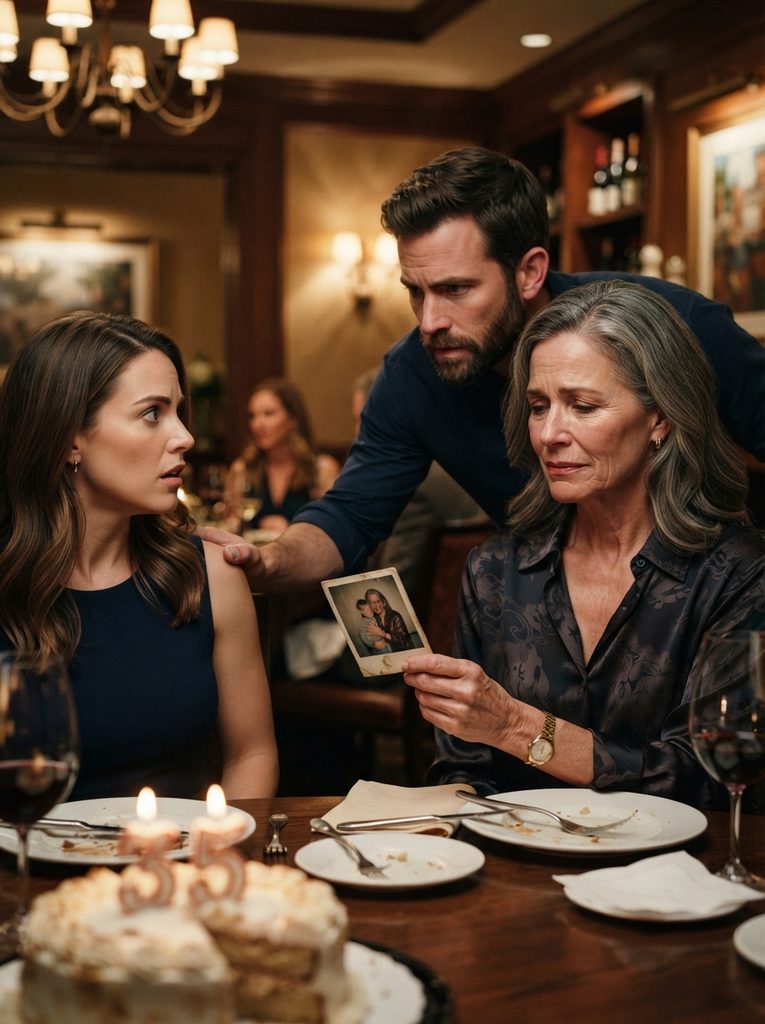
The table would invariably descend into a chorus of nervous, fragmented chuckles. I would swallow my pride, painting a serene, forced smile across my face. I bit my tongue because the alternative was sparking a wildfire of tension between my son, Ryan, and the woman he had chosen to marry.
But the veiled jests mutated. They crawled out from the shadows of plausible deniability and became aggressively personal. Vanessa’s crosshairs locked onto my weight, my wardrobe, the inevitable march of my age, and eventually, my livelihood.
I was fifty-nine years old, anchored as the office manager for a modest architectural firm just outside the sprawling suburban sprawl of Columbus, Ohio. I possessed not a single ounce of shame regarding my profession. For three decades, I had clawed my way forward, supporting myself after a devastating divorce, raising Ryan on a shoestring budget, and meticulously constructing a life of which I was fiercely proud. Yet, Vanessa seemed to operate under the delusion that my history and my existence were commodities she had unilateral permission to audit and critique.
The psychological warfare escalated on a crisp Sunday evening. We were dining at their sprawling new suburban home, a pristine fortress of modern architecture and minimalist decor. Vanessa had orchestrated a visually flawless pot roast, and for a fleeting, deceptive fifteen minutes, the atmosphere masqueraded as normal.
Then, the trap snapped shut.
Her manicured fingernail tapped against her crystal wine glass. She stared pointedly at my plate. “Diane, that’s your second serving, isn’t it?”
I looked down at the sliver of beef and the solitary carrot resting on my porcelain plate. “Yes,” I replied, keeping my tone measured. “The roast is truly delicious.”
Her smile widened, though her eyes remained flinty. “I was just surprised. You’ve been trying so hard to lose weight, remember?”
The dining room plunged into an abyssal silence. It lasted only half a second, but it felt like a century. Ryan, oblivious or deliberately deaf, continued carving his meat, the scrape of his knife echoing like a gunshot.
A cold dread coiled in my gut, but I carefully placed my silver fork upon the napkin. “I never once mentioned that I was trying to lose weight,” I stated, my voice a calm, flat line.
Vanessa released a theatrical, tinkling laugh. “Oh, please. Don’t be coy! You confided in me that you wanted to fit into your old clothes again.”
“That was a private conversation,” I murmured, the heat rising to my cheeks.
She offered an elegant, dismissive shrug. “I’m just helping.”
Helping. That single, two-syllable word became her bulletproof shield. Whenever she hurled an insult, she packaged it as ‘help.’ Whenever she engineered my public humiliation, she rebranded it as ‘playful teasing.’ And whenever the raw sting of her words bled through my stoic facade, she would sigh heavily and diagnose me as being ‘far too sensitive.’
I thought I could endure the thousand paper cuts. I thought a mother’s endurance was infinite. But I had no idea that Vanessa was just warming up, preparing to strike at the very foundation of my life’s work.