My Parents Charged Me $1,500 A Month To Sleep In The Basement While My Brother Lived Upstairs For Free. At Dinner, Mom Said, “He’s Our Son. You’re Just Helping With Expenses.” Dad Added, “If You Don’t Like It, Move.” I Did. Thirty Days Later, Mom Called 14 Times. Her First Text: “Why Did The Mortgage Double?”
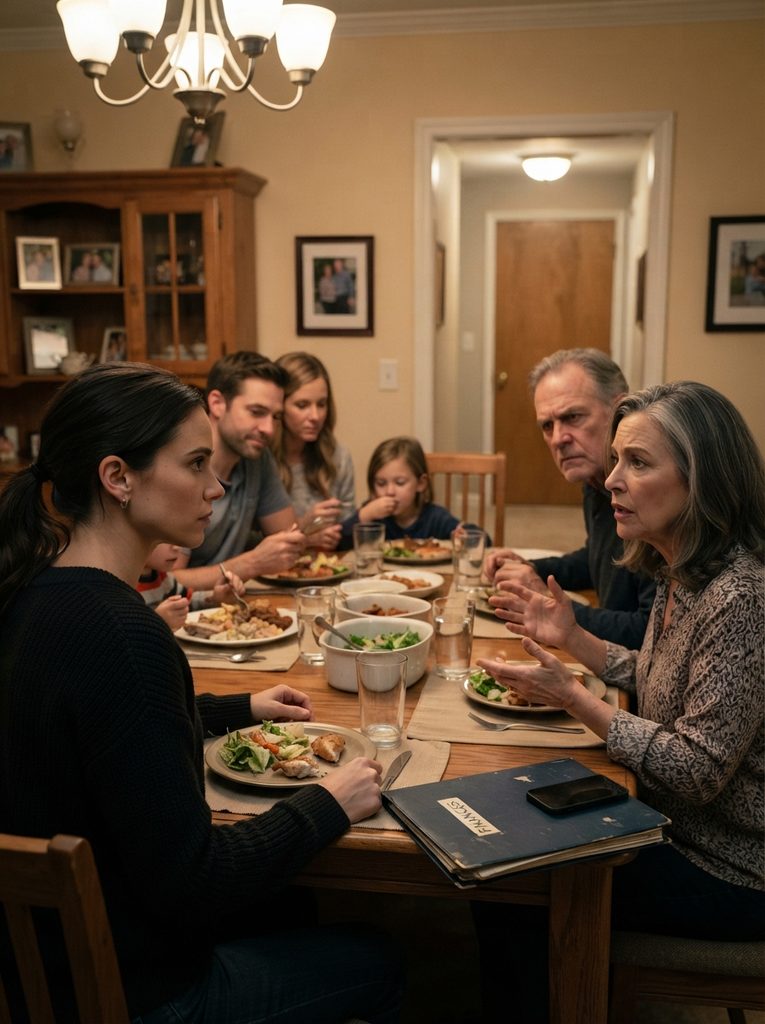
At Mother’s Day dinner, I finally asked why I paid $1,500 every month for a damp basement while my brother, his wife, and their two children lived upstairs for free. My father pointed toward the basement door and said, “If you don’t like it, move.” So I did. Thirty days later, I woke to fourteen missed calls from my mother and one terrifying text: “Why did the mortgage double?” The answer exposed a lie my family had been living inside for two years.
### Part 1
My name is Natalie Mercer, I’m thirty-three years old, and for two years I paid more to sleep underground in my parents’ house than I later paid for an entire apartment of my own. The basement room in Canton, Michigan, had beige carpet laid directly over concrete, a bathroom barely wide enough to turn around in, and one small egress window facing a window well that collected wet leaves every fall. The first week I moved in, I bought a dehumidifier because the room smelled faintly of soil after rain, and within a month its steady mechanical hum had become part of the background noise of my life.
The laundry room was directly outside my door, and my mother, Elaine, liked starting loads before six in the morning. Every last weekday of the month, I transferred $1,500 to her and typed one word in the memo: House. She had asked me to do that the first time, standing beside me at the kitchen island as I made the payment. “It helps me keep everything organized,” she’d said, and because I had spent most of my life trying to make things easier for my family, I never questioned what exactly she was organizing.
Upstairs, my older brother Jason lived with his wife Melissa and their children, Chloe and Mason. Their family used three bedrooms, the bonus room, most of the garage, and enough storage space that Melissa had once joked they needed a map to find the kids’ winter coats. I parked on the street, scraped ice from my windshield before dawn, and listened through the heating vents while the kids watched movies above my ceiling. On the refrigerator hung a family Christmas photograph showing my parents, Jason, Melissa, and the children in matching sweaters; I was missing because the picture had been taken while I was working, and my mother had promised, “We’ll make sure you’re in the next one.”
My father, Robert, was a production supervisor at an automotive supplier outside Detroit, and he ran his life through rules. He woke at the same time every morning, drank from the same chipped coffee mug, and believed there was no financial surprise he could not prevent with enough discipline. One morning his phone buzzed while he was buttering toast, and he glanced at the screen before saying, “Thirty-eight dollars at the gas station. Your mother.” Then he lifted the phone like evidence and added, “Every dollar that leaves our joint account gives me an alert. Nothing gets past me.”
He followed that with his favorite financial rule: never take on a payment you couldn’t cover with one paycheck. I had heard him say it since I was a teenager, especially after the recession nearly cost him everything, and I believed he meant it. What I failed to notice was that in two years, none of my $1,500 transfers had ever triggered one of those alerts. I assumed my contribution was simply too ordinary to mention, when the truth was that my father did not know it existed.
My family had trained me to accept unequal things so gradually that I mistook endurance for maturity. When I graduated from my dental hygiene program at twenty-two, I saved two seats for my parents at the pinning ceremony, but both chairs remained empty because Jason needed help moving out of an apartment that same afternoon. My mother hugged me afterward and said, “You always figure things out, sweetheart. Girls land on their feet.” Then she smiled and added the sentence she had repeated for years: “Boys fall through the floor.”
I used to hear affection in that sentence. It meant I was capable, dependable, strong. It took me another decade to understand the hidden message: Jason would be rescued because he was allowed to fail, while I would be charged for the privilege of succeeding.
There had been clues even earlier. One Thanksgiving, while searching my grandmother’s old recipe tin for a handwritten pie crust recipe, I found a yellowed envelope with my mother’s maiden name written across the front beside the word Rent. Mom snatched it away before I could open it and explained that my grandmother had made her pay rent from the time she was seventeen because “responsibility makes women strong.” I knew her older brother had lived in the same house without paying anything until his mid-thirties, but I said nothing because in our family, pointing out hypocrisy was treated as worse behavior than practicing it.
In the spring of 2023, I was renting a one-bedroom apartment in Ypsilanti for $1,225 when my landlord announced the rent would rise by two hundred dollars. A few days later, my mother texted me that she and Dad were buying a bigger house in Canton because Jason had been laid off and needed somewhere to stay with Melissa and the children. “There’s a finished basement,” she wrote. “Come home, save money, and get ahead. We’ll figure out something small for expenses.” For the first time in years, I felt as though my parents were making space for me instead of asking me to create space for everyone else.
They closed on the house before the end of April. When I moved in a month later, Jason’s family had already taken over the upstairs, and my mother sat me at the kitchen island with tea and announced that my “something small” would be $1,500 a month. “That includes everything,” she said quickly. “Utilities, internet, groceries, all of it. You’d pay more to a stranger.”
The number felt wrong, but questioning my mother felt worse. I told myself family housing came with invisible benefits, that I was helping, that two years would pass quickly and I would leave with enough money for a condo. My mother squeezed my hand and said, “You’ll be surprised how much you save.”
She was right about one thing.
Two years later, when I finally opened my spreadsheet and calculated how much I had actually saved, I was surprised.
But not in the way she had promised.
### Part 2
I have always kept spreadsheets because numbers make more sense to me than people do. Numbers don’t sigh when you question them, remind you of everything they’ve sacrificed, or accuse you of being selfish because subtraction produced an answer they didn’t like. At the end of 2024, I sat on my basement bed with my laptop balanced across my knees and compared the goal I had written when I moved home with the balance in my savings account. I had planned to save $30,000 in two years, but after eighteen months I had barely crossed $13,000.
The $1,500 payments explained only part of it. There had been a $640 dishwasher after Mom said Dad was having a tight month, a daycare deposit for Mason that Jason promised to return after his first paycheck, a dental bill for Mom that I quietly covered through the practice where I worked, and a new battery when Jason’s truck wouldn’t start. There were birthday dinners, groceries, school fundraiser orders, emergency runs to the hardware store, and hundreds of dollars of expenses too small individually to create an argument. I had created a spreadsheet category called Family Miscellaneous, and when I totaled it, I discovered that generosity had cost me thousands more than rent.
My coworker Diane was the first person who reacted as though any of this was strange. She was fifty-two, had worked as a hygienist longer than I had been an adult, and possessed the kind of bluntness people acquire after they stop believing politeness is worth being exploited. When I mentioned my rent, she stopped arranging instruments and stared at me. “You pay fifteen hundred dollars for a basement in your parents’ house?”
“It includes utilities.”
“Natalie, my nephew pays nine hundred for a room with a private entrance.”
“It helps with the house.”
Diane dried her hands and asked, “Which part?”
I opened my mouth and realized I couldn’t answer. In almost two years, I had never seen a mortgage statement, utility bill, insurance notice, property tax document, or household budget. Mom told me what was needed, and I sent money because that was how our relationship worked. The one time I had accidentally picked up an envelope from a mortgage servicer while bringing in the mail, my mother reached across me so quickly that her fingernails scraped my wrist. “Escrow paperwork,” she’d said, tucking it beneath her arm. “I handle the house mail.”
Meanwhile, Jason had recovered spectacularly from his layoff. By the fall of 2024, he had become finance manager at a dealership, and Mom celebrated by grilling steaks and taping a congratulatory banner across the dining room. A week later, he arrived in a new black pickup with polished running boards, and nobody asked whether his improved finances meant he might start contributing to the home. When I was promoted to lead hygienist three months later, Mom said, “That’s wonderful, honey,” and immediately asked whether I could stop for milk.
I don’t want to pretend Jason was cruel every day. He could make a room laugh within minutes, adored his children, remembered everyone’s favorite dessert, and occasionally brought me coffee without being asked. But his phone buzzed constantly with sports alerts, and he watched those notifications with an intensity that never matched anything else happening around him. Some nights he disappeared into the garage during games, then returned either unusually cheerful or silent enough that Melissa watched him carefully.
One evening he came downstairs and asked me for six hundred dollars until payday because of “car registration stuff.” I sent it while he was still standing beside the dryer. He hugged me, promised I would have it back Friday, and never mentioned it again. Neither did I.
.
Melissa was different. She came downstairs sometimes simply to talk while folding clothes, and she was the only person who seemed uncomfortable with how money worked in the house. One night she held up Mason’s dinosaur pajamas and said, “At least you and I pay our way, right?” I assumed she meant chores until she lowered her voice and added, “Jason says your mom gets weird whenever anybody talks about money, so I’ve learned not to ask questions.”
Before I could ask what she meant, she carried the laundry upstairs.
By April 2025, Jason was doing well enough to announce a weeklong family vacation to Gulf Shores. He passed his phone around the dinner table showing us photographs of a rental house near the beach, and my mother looked at him with open pride. “You deserve this,” she said. “You’ve worked so hard.”
That night, I went downstairs and sent my twenty-fourth $1,500 payment.
House.
I stared at the confirmation screen until it dimmed.
Mother’s Day was eleven days away, and I had already decided that at dinner I was going to ask the question Diane had asked me.
Which part of the house was I actually paying for?
Mother’s Day arrived with roses, grilled chicken, potato salad, and a $150 spa gift certificate I had bought for Mom. Jason gave her a greeting card with shiny gold lettering, read the sentimental message aloud, and received more applause than I had received for my last promotion. When Mom opened my gift, she smiled, said, “You shouldn’t have,” then tucked the certificate into the kitchen junk drawer beside expired coupons and charging cables.
We sat down for dinner, and I waited until everyone had food before setting down my fork. “Mom, can I ask you something?”
She continued cutting her chicken. “Of course.”
“Why do I pay fifteen hundred dollars every month for the basement when Jason, Melissa, Chloe, and Mason have the whole upstairs without paying rent?”
Melissa froze with her knife above Mason’s plate. Jason leaned back. My mother never looked up.
“He’s our son,” she said. “You’re just helping with expenses.”
The words were so strange that for a second I wondered whether I had misunderstood them. “I’m your daughter.”
.
“You know what I mean.”
“No, actually. I don’t.”
My father put down his fork and pointed toward the basement door. His face wasn’t angry; that almost made it worse. He sounded bored, as though he were solving a problem that didn’t deserve another minute of discussion.
“If you don’t like it,” he said, “move.”
The entire table went silent. Jason reached for another dinner roll, Chloe asked for lemonade, and Melissa looked at me with an expression I couldn’t read. I said only, “Okay.”
I finished my dinner, carried my plate into the kitchen, rinsed it, and put it inside the dishwasher I had purchased.
Behind me, Jason laughed softly.
“Relax,” he said. “She’ll be downstairs until she’s forty.”
Nobody corrected him.
That night, however, my mother came down the basement stairs and stood outside my room in the dim laundry light.
“Your father didn’t mean it,” she whispered. “Don’t do anything dramatic.”
Then she added something that made me look at her differently.
“We count on you.”
### Part 3
My mother had spent my entire life insisting she could handle anything, so hearing fear in her voice changed something. Dad had thrown out the challenge casually, yet she had followed me downstairs two hours later to soften it as if the sentence carried consequences he didn’t understand. I asked her why moving would be dramatic when Dad had specifically told me to move. She crossed her arms, glanced toward the ceiling, and said, “You know how he gets. Just let everything settle down.”
The next morning, I told Diane exactly what happened. She listened without interrupting, then opened the property management website for her apartment building and rotated her computer monitor toward me. A one-bedroom unit had become available on the second floor for $1,350 a month, complete with covered parking. “A hundred and fifty dollars less than your family’s underground luxury suite,” she said.
I toured it during lunch. The building was in Plymouth, less than fifteen minutes from work, and the apartment had old hardwood floors, a narrow kitchen, and a living room window large enough to fill the room with afternoon sunlight. I stood in the empty living room imagining furniture I didn’t have and realized that sunlight itself felt luxurious after two years of seeing daylight through a dirty window well. I signed the lease the next day.
That evening, I sent both parents the same text and left a handwritten copy on the kitchen counter. I told them I would move on May 31, that the April 30 payment had covered May, and that there would be no additional transfer. Dad replied within minutes: “Good for you, kiddo. Proud of you.”
Mom said nothing.
Her silence bothered me more than anger would have. The following morning, my note had disappeared from the counter, and my mother had already left for work before I came upstairs. Dad drank coffee like nothing had happened and asked whether I needed boxes. I started wondering how two married people living in the same house could react so differently to the same financial change.
A few days later, Mom came downstairs while I was loading the dryer. She waited until the machine started rumbling before leaning close enough for me to smell her hand lotion. “What if we made it a thousand?”
I stared at her. “Why?”
“Just to make things easier.”
“For who?”
She ignored the question. “Don’t tell your father I offered.”
That sentence hit harder than the discount. My parents argued openly about everything from thermostat settings to vacation routes; Mom had never once asked me to hide a financial conversation from Dad. I asked why he would care if they charged me less, and a flash of panic crossed her face before disappearing.
“I already signed the lease,” I said.
She looked at the dryer instead of me. “You move too fast.”
Moving day came on the last Saturday of May. Diane arrived with her husband and a rental van, Melissa helped wrestle my mattress around the basement staircase, and Dad carried exactly one box before leaving for a fishing trip he said he had promised a friend weeks earlier. Mom stayed in her bedroom with the door closed. Jason was working at the dealership, which meant the person who had predicted I would remain until forty wasn’t there to see me leave.
At the top of the stairs, Melissa leaned against the doorway to catch her breath. “At least one of us is getting out,” she said.
She tried to make it sound funny.
It wasn’t.
Chloe ran outside before we closed the van and handed me a piece of paper folded into quarters. She had drawn my basement bedroom in crayon, including my bed, lamp, and dehumidifier. In the little window near the ceiling she had drawn an enormous yellow sun.
“Your old window never had one,” she explained. “So I put one there.”
For about five seconds, I wanted to unpack the van. That is the embarrassing truth about leaving unhealthy family systems: sometimes the thing that almost pulls you back isn’t guilt from the adults but love from the innocent people still inside. I hugged Chloe, promised she could visit my new apartment, then walked into the kitchen and placed my house key on the counter.
Before driving away, I changed one setting on my phone. My mother had a lifelong habit of calling repeatedly until I answered, sometimes six or seven times in a row, because she believed persistence transformed her emergencies into my obligations. I turned off the feature that allowed repeated calls to break through sleep mode.
Halfway to Plymouth, a text appeared.
“The basement will still be here when you come to your senses.”
She wasn’t saying goodbye.
She was predicting my failure.
But during my first month alone, I discovered something I had forgotten existed: quiet. Nobody ran the washing machine outside my bedroom at dawn, nobody asked me to pick up groceries while I was already driving home, and nobody knocked because a child needed money for an activity someone else had forgotten. Diane brought me a plant and placed it beside the window, saying, “First rule of your own place: other people’s emergencies need appointments.”
On my first June payday, I transferred $650 into a new savings account and named it Mine.
The balance did not disappear.
A week later, Mom texted that Mason missed me. Then Jason wrote that Mom was stressed and hoped “the apartment was worth all this.” A few days later, Mom asked whether I had taken the basement dehumidifier because the room smelled damp.
I had.
I had paid $260 for it.
Father’s Day fell in the middle of June, and despite everything, I visited with a card and a silver fishing lure. Dad smiled, hung it above his workbench, and mentioned casually that Mom said the grocery budget had become “tight” since I left. “Guess you were covering more milk than we realized,” he joked.
I laughed automatically.
But the sentence followed me home.
Ten days later, a payment request appeared on my phone.
Elaine Mercer requested $1,500.
Memo: July House.
I pressed Decline.
Five nights later, I went to sleep early.
When I woke at 5:45 the next morning, my screen showed fourteen missed calls from my mother and two unread messages.
The first said:
“Why did the mortgage double?”
The second said:
“Do not discuss numbers with your father. Call me.”
### Part 4
I sat upright and read both messages until the words stopped looking like English. The first had arrived shortly before ten at night, the second nearly two hours later, and the difference between them felt important. “Why did the mortgage double?” sounded like a question someone might ask in front of another person. “Do not discuss numbers with your father” sounded like a warning written after privacy had returned.
I did not call.
Instead, I showered, dressed, drove to work, and sat in the employee parking lot with a coffee cooling between my hands. For two years I had paid $1,500 toward a house without knowing the mortgage balance, monthly payment, interest rate, lender, or even whose account received the payment after it reached my mother. My father supposedly monitored every dollar leaving their joint account, yet Mom was suddenly terrified of my discussing a mortgage with him. The more I considered it, the less the story resembled a misunderstanding.
At 6:40 my phone rang.
Dad.
He never called before seven.
“Natalie,” he said, sounding exhausted. Behind him I could hear machinery and the warning horn signaling the beginning of first shift. “Did your mother talk to you?”
“Not exactly.”
“Twenty-nine hundred and fifty dollars left our joint account last night. Mortgage payment. I was sitting beside her when the alert came through.”
I gripped the steering wheel. “What did she say?”
“She said the loan company raised it. Then she texted you while I was sitting there and said you’d know why.”
That explained the first message. Dad believed Mom had been asking me for an explanation. She had actually been alerting me to the problem.
I asked him one question. “Dad, how much do you think the mortgage payment has been?”
“Fourteen fifty.”
I closed my eyes.
“Then where did you think my fifteen hundred dollars every month went?”
There was a short pause. “Groceries. Utilities. Your mother said you wanted to help because there were seven people living there.”
My stomach went cold.
For two years, Dad believed I was living downstairs without paying rent. When I confronted my parents on Mother’s Day about paying $1,500, he had apparently heard something completely different: an adult daughter complaining about the household expenses she voluntarily covered while supposedly living in his basement for free. His cruel response remained his responsibility, but suddenly I understood why he had said it with such confidence.
“Dad,” I said slowly, “I paid Mom fifteen hundred every month for twenty-four months. She told me that was my rent.”
The factory noise behind him seemed to vanish.
“Every month?”
“Every month.”
“And you called it rent?”
“She told me to write House in the memo.”
Another silence.
“Send me everything.”
He hung up.
Thirty seconds later, my mother texted.
“What did you tell him?”
That sentence erased any remaining possibility that this was an accounting mistake.
During lunch, I sat in my car and downloaded two years of payment history. Twenty-four identical transfers appeared on one page: $1,500, every month, to Elaine Mercer, each labeled House. The total was $36,000.
Then I did the simplest calculation of all. Dad believed the mortgage had always been $1,450, but the previous night $2,950 had left the joint account. The difference was exactly $1,500.
Mine.
I sent Dad the payment history without commentary. At six that evening, Mom called, and for once I answered immediately.
“I told your father you offered,” she began before saying hello. “That’s what happened. You wanted to help, and I let you.”
“No.”
“You never said no.”
“Not saying no to a price you gave me is not the same as offering you thirty-six thousand dollars.”
“Don’t twist this.”
“I’m not twisting anything.”
She lowered her voice. “He slept in the recliner last night. He won’t talk to me. All you need to do is tell him you knew you were helping with the mortgage. Back me up.”
I almost laughed because she said “back me up” as if this would be the first time.
“I’m not lying for you.”
Her breathing changed. “After everything we’ve done for you?”
“You charged me fifteen hundred dollars for a basement while telling Dad I lived there free.”
“You benefited from that house.”
“So did Jason.”
“That’s different.”
There it was again.
Different.
Jason was always different.
I said, “Then explain the difference to Dad.”
She was silent for several seconds.
Finally she said, “Don’t bother coming to Chloe’s birthday.”
Then she hung up.
The next afternoon, Dad called the mortgage company himself. His name was on the loan, so they gave him the payment history.
His text arrived while I was cleaning the last room of the day.
“Payment has been $2,250 since the beginning. Never $1,450.”
I stared at the message.
Not only had Mom lied about my money.
She had lied to Dad about the mortgage itself.
When I showed Diane, she read it twice and handed my phone back carefully. “Your mother wasn’t asking why it doubled,” she said. “She was asking why the real number finally appeared where your father could see it.”
That weekend, Mom moved the argument into our extended-family group chat.
“Please keep us in your prayers,” she wrote. “Natalie moved out without warning and left us responsible for bills we took on because she needed somewhere affordable to live.”
Eleven relatives reacted with prayer emojis before lunch.
I did not defend myself publicly. Instead, when my aunt Janet messaged privately asking whether I had really left without warning, I sent her a screenshot of the message I had sent my parents eighteen days before moving. Janet replied, “That answers my question.”
Then she added something else.
“Your father never reads the family chat. Your mother knows that.”
The following Sunday, I began disconnecting myself from everything still attached to the house. I removed my credit card from Mom’s grocery-delivery account, logged out of the shared streaming services, and opened the family notes folder to retrieve measurements I had once saved for my basement furniture.
At the bottom of the folder was a note I had never seen before.
Its creation date was March 14, 2023.
Nineteen days before Mom invited me home.
The title was simply:
Room Plan.
I opened it.
And four lines changed the entire story.
### Part 5
The note was short enough to read in seconds.
“Upstairs — Jason, Melissa, kids. Free until stable.”
“Basement — Nat. $1,500.”
“Robert thinks $1,450 mortgage. Keep simple.”
Then, beneath those lines, surrounded by parentheses:
“She won’t say no.”
I stared at the screen until my vision blurred.
My mother had not improvised after I moved in. She had not looked at higher grocery bills and decided she needed more help. Before she invited me home, before I packed one box, before she promised I could save for my future, she had already assigned me a price, assigned Jason’s family nothing, decided what my father would be told, and predicted my response.
She won’t say no.
Four words explained most of my adult relationship with my mother.
I printed the note the next day and placed it in a folder with my payment history, but I did not send it to Dad yet. Learning that you were deceived is one kind of pain; finding written proof that someone calculated your personality as part of the deception is another. I needed time to understand that my reliability had not merely been appreciated—it had been treated like guaranteed income.
Dad texted a few days later.
“Told your mother if that basement is worth $1,500, she can rent it to somebody who isn’t family.”
She tried.
Diane found the listing in a local rental group. The photographs showed my old basement bedroom, now emptier and somehow smaller, with a dark stain beginning near the window because Mom had apparently decided replacing my dehumidifier could wait. The listing described a “private basement suite in quiet family home” for $1,500.
Nobody responded.
Three days later, it dropped to $1,100. People started commenting that the price was high for a basement with a shared kitchen and limited daylight. Then it fell to $950, and a local realtor named Marlene Price—my parents’ neighbor and the woman who had helped them buy the house—commented publicly, “Elaine, please call me.”
The listing disappeared the following morning.
It took the open market ten days to determine what my family had refused to admit for two years: the room was worth roughly $950.
I had paid $550 more every month.
While I was processing that, Melissa texted me.
“Can I ask you something weird?”
“Sure.”
“Did your mom ever tell you what Jason and I pay her?”
I wrote back, “She always said you pay nothing.”
The typing bubbles appeared, disappeared, returned, then vanished completely.
Melissa did not answer until the next day.
Instead, I found a handmade birthday invitation from Chloe in my mailbox. Purple marker, stickers, uneven letters, and beneath the party details: “You HAVE to come, Aunt Natalie.” On the back, Melissa had written, “She insists. So do I.”
A few days before the party, Dad called.
“Janet showed me what your mother wrote in the family chat.”
“I figured she might.”
“She said you left without warning.”
“I gave you eighteen days.”
“I know. I answered the message.”
He sounded tired, but beneath the tiredness was anger I had never heard directed toward Mom.
Then he said, “Come to Chloe’s party. Your mother doesn’t get to remove you from your niece’s life.”
“She told me not to come.”
“It isn’t her birthday.”
A pause followed.
Then Dad added, “Bring whatever else you found.”
I knew exactly what he meant.
Chloe’s birthday was held in my parents’ backyard under a bright August sky. There was a rented bounce house, pink cupcakes arranged in a tower, paper decorations tied along the deck railing, and enough shrieking children to make conversation difficult. I entered through the side gate carrying Chloe’s gift in one hand and a canvas bag containing my folder in the other.
Chloe hit me at full speed and wrapped both arms around my waist. Mason joined her, and for a minute I could pretend nothing had changed. Then I looked toward the deck and saw Mom holding a pitcher of lemonade.
“I didn’t think you’d come,” she said.
“Chloe invited me.”
Dad stood beside the grill and noticed the canvas bag immediately. He gave me one small nod.
Jason looked worse than I had ever seen him. His eyes were red, his shoulders tense, and he avoided looking directly at Melissa. For the first hour, nobody said anything about money, and I was relieved because whatever the adults had done, Chloe deserved a birthday that was not permanently attached to our financial disaster.
Aunt Janet eventually joined the adults around the deck table, along with Marlene, who had brought her granddaughter. Mom was performing normalcy beautifully, pouring lemonade and discussing school schedules as if half the family had not spent two months comparing conflicting versions of reality. Then Janet asked, almost casually, “So, Elaine, how are you managing since Natalie moved?”
Mom gave her church smile.
“Oh, we’re perfectly fine. We never needed her money. Natalie wanted to contribute to groceries because she’s generous.”
I felt Melissa go still beside me.
Mom continued. “And of course we’ve never charged Jason and Melissa. They have children. Family helps family when they’re getting back on their feet.”
Melissa lowered the juice box she had been opening.
“Never?” she asked.
Mom turned toward her. “What?”
“You said you’ve never charged us.”
“That’s right.”
Melissa’s voice remained quiet.
“What about the thousand dollars every month?”
Dad looked up immediately.
Mom’s face emptied.
“What thousand?”
From the opposite side of the table, Dad said the exact same words.
“What thousand?”
Jason reached for Melissa’s arm.
“Mel, not here.”
She pulled away.
Then she unlocked her phone, opened her banking app, and laid it faceup beside the birthday cupcakes.
Twenty-three monthly transfers.
$1,000 each.
All sent to Jason.
Every memo said:
Mom — House.
The same word I had typed twenty-four times.
And suddenly my mother was no longer the only person at that table with a secret.
### Part 6
Melissa stared at Jason instead of Mom. “You told me your mother required a thousand dollars every month but didn’t want your dad to know because he’d be embarrassed taking money from us.”
Jason rubbed both hands over his face. “I was holding it for the house.”
“For almost two years?”
“I was going to give it to Mom.”
“When?”
“When things settled down.”
“What things?”
He had no answer.
The table seemed to contract around him. I thought about his constant sports notifications, the way his mood shifted after checking scores, the six hundred dollars he had borrowed from me, and the Gulf Shores vacation he had claimed his bonus covered. Melissa apparently thought of those things too because her expression changed before anyone said another word.
Mom finally found her voice.
She looked at me.
“Is this what you wanted? To come here and destroy Chloe’s birthday?”
I kept my hands on my lap. “Dad asked me to bring something.”
Dad extended his hand.
I removed the folder from my bag and gave it to him.
The first page contained my payment history, which he had already seen. He placed it aside and unfolded the printout of Mom’s planning note. I watched his eyes move line by line until they stopped on “Robert thinks $1,450 mortgage. Keep simple.”
Then he reached the last line.
“She won’t say no,” he read aloud.
His voice barely rose above the hum of the bounce-house blower.
He looked at me.
“Looks like she finally did.”
Mom pushed back her chair so fast the legs scraped hard across the deck. “That note means nothing. It was brainstorming. You’re all twisting something I wrote two years ago.”
Dad held the paper up. “You wrote the number you planned to charge her before she moved in.”
“She was going to have expenses anywhere.”
“And you wrote the fake mortgage number.”
“I was trying to protect you from stress.”
“You lied to me.”
“You wouldn’t have understood.”
Dad laughed once, but there was no humor in it.
Mom turned toward Marlene. “Tell them why we bought this house. Tell them the basement was supposed to give Natalie somewhere safe to stay.”
Marlene set down her cup slowly. “Elaine, at the first showing you told me the basement would help cover the payment.”
Nobody moved.
Marlene continued reluctantly. “You said Natalie was dependable and would probably pay more than a regular renter because she’d want to help family. And when you listed the room last month for fifteen hundred, I called because I thought the price was unrealistic.”
Mom’s face flushed.
Aunt Janet held up her own phone. “And I saw Natalie’s move-out message. Eighteen days isn’t leaving without warning.”
For once, Mom could not redirect the conversation.
She walked into the house and slammed the screen door.
Outside, children kept laughing.
Chloe ran toward us barefoot a moment later and shouted, “Cake now?”
Every adult at the table looked as though we had been caught doing something shameful.
I stood.
“Yes,” I said. “Cake now.”
I found the lighter in the kitchen drawer, lit eight candles, and joined the weakest rendition of “Happy Birthday” I had ever heard. Chloe closed her eyes, made a wish, and blew out every candle at once. Everyone clapped because children should not have to earn normal birthdays by understanding adult betrayal.
After cake, Dad asked me to follow him into the garage.
His garage smelled like cut grass, gasoline, and the faint metallic odor that seemed permanently attached to his work clothes. The fishing lure I had given him for Father’s Day still hung above the workbench. He stood beneath it for a long time before speaking.
“I get an alert for every dollar,” he said. “I thought I was watching everything.”
“I know.”
“Gas. Restaurants. Your mother’s salon. Everything that left our joint account.”
He tapped the folder.
“But not the money coming into the account I didn’t know existed.”
I said nothing.
Dad lowered himself onto a stool. “When I got laid off years ago, your mother saved us. She handled every bill because I couldn’t stand looking at them. I told myself trusting her meant I never needed to check again.”
He stared at the concrete floor.
“I thought you were living in my basement for free and throwing grocery money at your mother because you wanted to. That’s what I believed when you asked that question at Mother’s Day dinner.”
I remembered his finger pointing toward the stairs.
“If you don’t like it, move.”
His face tightened.
“I told the person carrying half the house to get out.”
“You didn’t know the truth.”
“I didn’t ask for it.”
He looked at me then.
“That’s on me.”
I had spent two months wondering whether Dad would defend himself once he knew everything. Hearing him accept responsibility didn’t erase what he had done, but it changed the shape of the anger. There is a difference between someone who caused harm because they were deceived and someone who discovers the truth and still chooses comfort over accountability.
When I left the garage, Jason was waiting beside my car.
He shoved his hands into his pockets.
“I swear I didn’t know about your fifteen hundred.”
“I believe you.”
His shoulders dropped.
Then he said something that made them tense again.
“Melissa’s money is gone.”
I stared at him.
“Gone where?”
He pulled out his phone.
I recognized the sports-betting application before he even explained.
“Most of it,” he whispered. “Almost twenty thousand.”
Suddenly the score alerts, loans, mood swings, beach vacation, and secrecy all aligned.
Jason looked back toward the house. “Mom knew I was having money problems. She didn’t know everything.”
“Does Melissa?”
He shook his head.
“Tell her tonight.”
“Natalie—”
“Not tomorrow. Not after you figure out the perfect explanation. Tonight.”
For once, my brother did not argue.
Driving home, I kept calculating because numbers were easier than feelings.
Thirty-six thousand dollars from me.
Twenty-three thousand from Melissa.
Two women had contributed fifty-nine thousand dollars to the same household.
One had been told she was paying fair rent.
The other had been told she was helping the house through her husband.
Dad had been told both families were effectively living there free.
And the men who benefited most had spent years believing the system simply worked.
I reached my apartment, parked beneath the carport, turned off the engine, and cried for the first time since Mother’s Day. Not loudly and not for long. I cried because I finally understood how exhausting it had been to keep earning a place in a family that had already assigned everyone else theirs for free.
At 11:02 that night, Mom texted.
“Can I come see you? Alone. There’s something I should have told you years ago.”
For most of my life, if my mother said she needed me, I moved immediately.
This time I let the message sit overnight.
### Part 7
I told Mom she could visit the following Sunday. Making her wait eight days felt petty for about fifteen minutes, then healthy for the remaining seven days. She arrived carrying her purse in both hands, and when I opened the door she looked past me at the large living-room window, the plant Diane had given me, and Chloe’s drawing taped to the refrigerator.
“It’s bright,” she said.
“It is.”
“How much?”
“Thirteen fifty.”
She flinched.
We sat at my kitchen table. I made coffee because habits survive betrayal longer than trust does, but she never touched hers. Instead, she opened her purse and removed an old yellow envelope with softened corners.
I recognized it immediately.
The envelope from Grandma’s recipe box.
Mom laid it between us.
“My mother started charging me rent when I was seventeen.”
I waited.
“Forty dollars every week. I worked evenings at a drugstore and gave her cash every Friday until I married your father.”
“What about Uncle Dean?”
Her mouth tightened.
“Dean paid nothing. He stayed until he was thirty-five. When my mother died, he got the house.”
I leaned back.
Mom smoothed the envelope with two fingers. “I hated her for it. Not only because of the money. Because she acted like charging me proved I was capable, while giving him everything proved he needed love.”
That sentence sounded painfully familiar.
“When you found the envelope years ago,” she continued, “I told you it made me strong because that was easier than admitting it made me angry.”
“So you did the same thing to me.”
Her eyes filled.
“Yes.”
There was no excuse after that. No explanation about expenses, no accusation that I had misunderstood, no claim that families should sacrifice for one another. She simply sat there with the evidence of one generation’s damage between her hands and admitted she had reproduced it.
“When I wrote ‘she won’t say no,’” she said, “I wasn’t thinking of you as much as I should have been. I was remembering myself. I knew you would pay because I would have paid.”
I looked at her.
“You also knew Jason wouldn’t.”
She lowered her eyes.
“Yes.”
“That’s why you didn’t charge him.”
“He had children. He had lost his job. I thought—”
“You thought his problems were emergencies and mine were resources.”
She started crying.
I did not move to comfort her.
“I swore I’d never treat my daughter the way my mother treated me,” she whispered. “Then I did worse because I hid it behind helping the family.”
“I believe you regret it.”
She looked up hopefully.
I continued.
“That doesn’t mean I forgive it.”
The hope disappeared, but she nodded.
I explained my boundaries. No money between us, ever. No emergency loans, no shared accounts, no paying for dinners that somehow became my responsibility. She would never speak for me in the family chat again, and if she wanted a relationship with me, we could meet for coffee once a month in public until I decided otherwise.
“Will you ever come back home?”
“No.”
“If we fix the house?”
“It isn’t about the basement.”
That was the part she needed to understand.
“I won’t live somewhere my value depends on how much pressure I can absorb.”
I pushed Grandma’s envelope toward her.
“This belongs to you. I’m not carrying it.”
Mom slipped it back into her purse.
At the door, she paused.
“Your father has been sleeping in your old room.”
“Why?”
“He says he wants to understand what he told you to accept.”
Dad lasted two weeks downstairs. He bought a dehumidifier the first night and later told me the room was louder and damper than he had imagined, even after thirty years around industrial machinery. He stopped calling it “the finished basement” and started calling it “Natalie’s old room.”
My parents began counseling in September. Mom gave Dad access to every financial account, including one she had opened years earlier during his layoff and continued using without him. Dad created a handwritten household budget and taped it to the refrigerator, listing every expense where anyone could see it.
At the top:
Mortgage — $2,250.
Dad called me after putting it up.
“I spent years bragging that nothing got past me,” he said. “Turns out I was only watching the screen I wanted to watch.”
Then he made a bigger decision.
“I’m selling the house.”
I thought I had misheard him.
He continued. “I won’t keep a house that needed my daughter’s paycheck and my wife’s lie to stay affordable.”
My parents listed it with Marlene in September and accepted an offer the following month. They bought a modest two-bedroom ranch back in Westland, close to the neighborhood where Jason and I grew up. Before signing, Dad called the lender himself and calculated the payment against his income.
“One paycheck,” he told me.
For him, it was almost a confession.
Jason and Melissa moved into a rented townhouse with their children before the Canton house sold. Melissa took full control of their finances, and Jason voluntarily entered Michigan’s gambling self-exclusion program, deleted every betting application from his phone, and began attending a recovery group each week. He also took additional shifts and started repaying Melissa.
He texted me after his second meeting.
“Two weeks. No bets.”
I answered, “Keep going.”
That was all.
Melissa and I began meeting for coffee sometimes. She told me Jason had handed her his unlocked phone after Chloe’s birthday and let her go through every transaction while he sat silently beside her. “I still don’t know if I’m staying forever,” she admitted. “But I’m not making that decision for the kids or for your parents. I’ll make it for me.”
I respected her more for saying that than I would have respected a promise that everything was fixed.
Then one afternoon in late September, my phone displayed an unexpected payment.
Robert Mercer sent you $300.
Memo: Owed.
I called Dad.
“What is this?”
“I did the math.”
He had spoken with Marlene about realistic rent for my old basement. Around $950, she said. I had paid $1,500.
The difference was $550 every month for twenty-four months.
$13,200.
“I’ll pay the rest after the house closes,” Dad said.
My immediate instinct was to refuse.
I almost said, “Forget it.”
I almost said, “I’m fine.”
I almost said the words that had cost me more than money my entire life.
Instead, I said, “Okay.”
And accepting repayment turned out to be one of the hardest boundaries I ever set.
### Part 8
When the Canton house closed in November, Dad sent me $12,900.
The memo read:
Paid in full.
I stared at the notification for several minutes. In the past, I would have transferred some of it back, bought my parents something expensive, or invented a reason they needed the money more than I did. This time I moved it directly into the savings account labeled Mine.
That month, the balance crossed $30,000.
It was the exact goal I had written in my spreadsheet two years earlier when I first moved into my parents’ basement. I had believed returning home would help me reach it faster. Instead, leaving was what finally made reaching it possible.
Dad never asked me to forgive Mom. He never asked me to forgive him either. He came by occasionally to repair things in my apartment that were not broken, which I eventually understood was his awkward way of showing up without demanding anything from me. Once he tightened a perfectly functional cabinet hinge for twenty minutes before saying, “I should’ve listened before I pointed at those stairs.”
“I know.”
“I’m sorry.”
“I know that too.”
We did not hug and pretend the conversation repaired everything. Some apologies deserve acknowledgement without receiving absolution. My relationship with Dad became more honest because I stopped protecting him from the consequences of what he had failed to notice.
Mom kept to the agreement. We met once a month at a coffee shop halfway between our homes, and she never asked me for money again. Sometimes the conversations were almost normal; sometimes twenty minutes felt like two hours.
I never told her I forgave her.
Because I didn’t.
I understood how she became the woman who wrote “she won’t say no.” I understood Grandma had taught her that daughters proved their worth through sacrifice while sons received protection simply for existing. Understanding the origin of a wound did not require volunteering to be cut by it again.
Jason continued attending recovery meetings. Melissa kept separate control of the household money, and whether their marriage ultimately survives is their decision, not mine. I stopped rescuing Jason financially, stopped reminding him about birthdays, and stopped being the person he called before asking himself whether he could solve his own problem.
The first time he asked me for help after everything happened, his truck needed tires.
He said, “I’m short until Friday.”
I waited.
Old Natalie would already have been opening her banking app.
New Natalie said, “Then you may need to wait until Friday.”
He was quiet.
Then he said, “Yeah. Probably.”
Nothing terrible happened.
That was another lesson nobody had taught me: sometimes saying no does not create a catastrophe. Sometimes it merely forces another adult to experience Tuesday.
Near the end of November, Mom texted asking for my work schedule before booking a family photographer for the Christmas card. She had never asked before.
I sent her the dates I was available.
We took the picture on the first Saturday in December outside my parents’ new little ranch in Westland. Mom and Dad stood in the middle, Jason and Melissa beside the children, and I stood at the end wearing a red sweater Melissa had loaned me because I refused to buy one for a photograph. Nobody made a speech about how meaningful it was that I was included.
I preferred that.
Real change does not always need narration.
A week later, Chloe spent the night at my apartment for the first time. Snow began falling after midnight, and by morning the street was white. My car sat beneath the covered parking space, dry and untouched, while my old ice scraper remained forgotten in the trunk.
Chloe sat at my kitchen table drawing.
When she finished, she brought me the picture.
It showed my apartment with the big living-room window dominating one wall. Inside the window she had drawn a huge yellow sun.
“You don’t really need me to draw one anymore,” she said seriously. “Because you have a real window now.”
My throat tightened.
I taped her new picture to the refrigerator beside the old drawing of the basement. Then I placed the family Christmas card underneath both.
Not because everything was fixed.
It wasn’t.
Not because my mother had earned forgiveness.
She hadn’t.
And not because my family had finally learned how valuable I was.
That wasn’t the point anymore.
For years, I believed being useful was the safest way to be loved. If I paid enough, solved enough, covered enough, stayed calm enough, and never forced anyone to choose between my needs and theirs, then eventually I would become indispensable. I thought indispensable meant cherished.
It doesn’t.
Indispensable people are often the easiest people to exploit because everyone assumes they will keep functioning.
The strangest change in my life was not moving into my own apartment or recovering the money. It was learning to let other adults struggle without automatically stepping underneath whatever they were dropping. Mom could be upset. Jason could be short on money. Dad could feel guilty. Melissa could decide what happened in her marriage.
None of those things required me to fix them.
By the following spring, I had started looking at small condos. Nothing extravagant—two bedrooms, decent light, a little balcony if I got lucky. Diane came with me to the first few showings and rejected one instantly because its basement storage room smelled suspiciously damp.
“You’ve served your sentence underground,” she said.
I laughed so hard the realtor looked confused.
Eventually, I made an offer on a small condo with tall windows and a kitchen barely large enough for two people. The first night after closing, I sat alone on the living-room floor surrounded by unopened boxes, eating takeout directly from the container. There was no furniture, no television, and nothing hanging on the walls.
It was the most at home I had ever felt.
Dad helped me move but did not choose where anything went. Mom brought one plant and did not comment on the mortgage, neighborhood, or what I had paid. Jason carried boxes for four hours and never once asked to borrow money.
Before everyone left, Chloe taped another drawing to the refrigerator.
This one showed me standing in front of the condo with an enormous sun overhead.
I asked why she always drew the sun so large.
She shrugged.
“So nobody forgets it’s there.”
After the door closed behind my family, I stood in the quiet kitchen looking at that picture.
My parents charged me $1,500 a month for a basement and called it helping. My mother planned the arrangement before I ever moved in because she believed I would never say no. My father told me to leave because he had spent years choosing not to look closely enough to understand what was holding his own household together.
I left anyway.
Thirty days later, fourteen missed calls revealed what my usefulness had been hiding.
But I did not return simply because they finally understood what losing me cost.
I did not forgive betrayal because the people responsible became sorry after the consequences reached them. I did not confuse regret with repair, history with obligation, or being needed with being loved.
My mother and I may someday have something better than monthly coffee.
Or we may not.
Either way, I no longer measure my life by whether my family approves of my boundaries.
The basement taught me that.
The apartment proved it.
And the home I finally bought for myself made it permanent.
For two years, I paid $1,500 every month because I thought belonging was something I had to earn.
Now I know better.
Love that requires you to keep paying for your place in it is not love.
And when I finally stopped paying, I discovered something far more valuable than the money I saved.
I discovered that I had never needed their permission to leave.
THE END!